The best smart thermostat for most homes is the ecobee Smart Thermostat Enhanced, which balances connected controls with room-comfort features. The Google Nest Learning Thermostat (4th Gen) is a standout for people who want adaptive scheduling, while the Sensi ST55 suits buyers seeking a simpler Wi-Fi upgrade. The main tradeoffs are how much automation and room sensing you need, whether the thermostat works with your HVAC wiring, and how much setup you are willing to handle. This roundup compares 15 smart thermostats, from straightforward app-controlled models to sensor-equipped systems. Read on for the full breakdown and help matching a thermostat to your home.

Get the latest gadgets delivered free with Prime
- Fast, free delivery on millions of items
- Prime Video, Amazon Music and more included
- Member-only deals all year
Complete the kit



Key Takeaways
- Room sensors separate feature-rich systems from basic app control: the ecobee Premium and Google Nest Learning Thermostat bundle sensor-based approaches, while simpler models focus more on schedules and remote adjustments.
- HVAC compatibility should shape the shortlist before smart-home features do: the Riseem model is listed for single-stage 1H/1C systems, while other thermostats still require a wiring and equipment check before purchase.
- ecobee offers several distinct levels rather than one interchangeable choice: Essential favors a simpler setup, Enhanced adds more connected comfort features, and Premium pairs a SmartSensor with voice-assistant capabilities.
- Google Nest choices split between adaptive control and straightforward scheduling: the Learning Thermostat is the automation-oriented pick, while the standard Nest models are better suited to buyers who want connected control without that focus.
- Buying a two-pack only pays off when both zones are compatible and need their own controls: the Amazon Smart Thermostat pack can suit multi-thermostat homes, but a single-unit household may prefer an individual model.
| Sensi ST55 Wi-Fi Smart Thermostat |  | Best for DIY Installation Flexibility | Model: ST55 | Connectivity: Wi-Fi | HVAC compatibility: Air conditioner, boiler, furnace, and heat pump | VIEW LATEST PRICE | See Our Full Breakdown |
| Google Nest Smart Wi-Fi Thermostat, Charcoal | 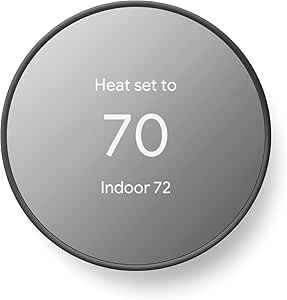 | Best for Google Home Households | Color: Charcoal | Connectivity: Wi-Fi, 2.4 GHz and 5 GHz; Bluetooth Low Energy | Power: Battery powered | VIEW LATEST PRICE | See Our Full Breakdown |
| ecobee Smart Thermostat Premium with Wi-Fi, Siri and Alexa, and SmartSensor |  | Best for Room-Level Comfort | Connectivity: Wi-Fi | Voice assistants: Siri and Alexa built in | Included sensor: SmartSensor | VIEW LATEST PRICE | See Our Full Breakdown |
| Google Nest Smart Thermostat, Wi-Fi, Snow |  | Best for a Simple Google Nest Setup | Color: Snow | Connectivity: Wi-Fi, 2.4 GHz and 5 GHz; Bluetooth Low Energy | Display: 1.07-inch LCD | VIEW LATEST PRICE | See Our Full Breakdown |
| Sensi Lite Wi-Fi Smart Thermostat, Alexa Compatible, ENERGY STAR Certified, ST25 | 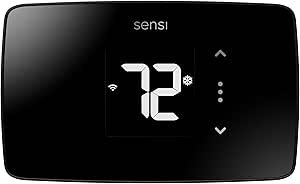 | Best Value for Essential Smart Controls | Model: ST25 | Connectivity: 2.4 GHz Wi-Fi | Voice assistants: Amazon Alexa and Google Assistant | VIEW LATEST PRICE | See Our Full Breakdown |
| Riseem Wi-Fi Smart Thermostat for Single-Stage 1H/1C Systems |  | Best for Basic Single-Stage Systems | System compatibility: Conventional single-stage 1 heat/1 cool | Compatible fuel types: Gas, oil, or electric | Required wiring: 24 V C-wire | VIEW LATEST PRICE | See Our Full Breakdown |
| ecobee Smart Thermostat Essential, Wi-Fi |  | Best for Smart-Home Beginners | Supported systems: Gas, oil, electric, dual fuel, forced air, conventional HVAC, heat pumps, and boilers | System voltage: 24 VAC | Connectivity: Wi-Fi | VIEW LATEST PRICE | See Our Full Breakdown |
| Amazon Smart Thermostat for Home, Wi-Fi, Works with Alexa and Ring, Pack of 2 |  | Best Two-Thermostat Pack for Alexa Homes | Pack size: 2 thermostats | Connectivity: Wi-Fi | Compatibility: Alexa and Ring | VIEW LATEST PRICE | See Our Full Breakdown |
| Vine Smart Wi-Fi Thermostat with Alexa and Google Assistant, 7-Day Programmable |  | Best Feature-Rich Value Alternative | System compatibility: 24V AC conventional, heat pump, heat-only, or cool-only systems | Connectivity: Wi-Fi | Voice assistants: Amazon Alexa and Google Assistant | VIEW LATEST PRICE | See Our Full Breakdown |
| ecobee Smart Thermostat Enhanced |  | Best for Occupancy-Based Comfort | HVAC compatibility: Compatible with 90% of HVAC systems | Supported systems: Air conditioner, boiler, furnace, heat pump, and humidifier | Connectivity: Wi-Fi | VIEW LATEST PRICE | See Our Full Breakdown |
| Honeywell Home T5 Smart Wi-Fi Thermostat |  | Best for Flexible Scheduling | Model: RTH8800WF2022 | Connectivity: Wi-Fi | System compatibility: Air conditioner, furnace, heat pump, and most heat/cool oil furnace systems | VIEW LATEST PRICE | See Our Full Breakdown |
| Amazon Smart Thermostat with Alexa and Ring Compatibility | | Best for Alexa Households | Model: S6ED3R | Dimensions: 3.56 × 3.56 × 0.84 inches | Wi-Fi: 2.4 GHz, 802.11 b/g/n; does not support 5 GHz | VIEW LATEST PRICE | See Our Full Breakdown |
| Honeywell Home RTH9585WF1004 Wi-Fi Smart Color Programmable Thermostat |  | Best for At-a-Glance Control | Model: RTH9585WF1004 | Connectivity: Wi-Fi | Display: Customizable color touchscreen; LED | VIEW LATEST PRICE | See Our Full Breakdown |
| Google Nest Learning Thermostat (4th Gen) with Nest Temperature Sensor (2nd Gen), Obsidian |  | Best for Adaptive Comfort Across Rooms | Generation: 4th-generation Google Nest Learning Thermostat | Connectivity: Wi-Fi | Temperature control: Heating and cooling | VIEW LATEST PRICE | See Our Full Breakdown |
| Sensi Touch 2 Wi-Fi Smart Thermostat, Model ST76 |  | Best for Expandable Room Sensing | Model: Touch 2 ST76 | Connectivity: Wi-Fi, 2.4 GHz and 5.0 GHz | Display: LCD touchscreen | VIEW LATEST PRICE | See Our Full Breakdown |
| smart thermostat | Connectivity | Display |
|---|---|---|
| Sensi ST55 Wi-Fi Smart Thermos | Wi-Fi | 5-inch LED |
| Google Nest Smart Wi-Fi Thermo | Wi-Fi, 2.4 GHz and 5 GHz; Bluetooth Low Energy | 2-inch LCD |
| ecobee Smart Thermostat Premiu | Wi-Fi | — |
| Google Nest Smart Thermostat | Wi-Fi, 2.4 GHz and 5 GHz; Bluetooth Low Energy | 1.07-inch LCD |
| Sensi Lite Wi-Fi Smart Thermos | 2.4 GHz Wi-Fi | LCD |
| Riseem Wi-Fi Smart Thermostat | — | Backlit LCD |
| ecobee Smart Thermostat Essent | Wi-Fi | 3.74-inch LCD touchscreen |
| Amazon Smart Thermostat for Ho | Wi-Fi | — |
| Vine Smart Wi-Fi Thermostat wi | Wi-Fi | 2.8-inch LCD |
| ecobee Smart Thermostat Enhanc | Wi-Fi | 4-inch LCD |
| Honeywell Home T5 Smart Wi-Fi | Wi-Fi | 4.95-inch LCD touchscreen |
| Amazon Smart Thermostat with A | — | — |
| Honeywell Home RTH9585WF1004 W | Wi-Fi | Customizable color touchscreen; LED |
| Google Nest Learning Thermosta | Wi-Fi | — |
| Sensi Touch 2 Wi-Fi Smart Ther | Wi-Fi, 2.4 GHz and 5.0 GHz | LCD touchscreen |
More Details on Our Top Picks
Sensi ST55 Wi-Fi Smart Thermostat
The Sensi ST55 suits buyers who want useful remote control and scheduling without giving up familiar thermostat buttons. Its built-in level and app-guided setup make a DIY install more approachable, while a C-wire is unnecessary in most applications—a practical advantage over systems that need extra power accessories. Compared with the more feature-heavy ecobee Smart Thermostat Premium, the ST55 keeps its job focused: schedules, usage reports, maintenance alerts, and voice control rather than room sensing or air-quality monitoring. That simpler approach also means fewer extras for buyers to configure. Check HVAC compatibility before ordering, since support depends on the equipment in your home. The plastic housing is functional rather than premium, but the traditional shape and button controls make this a sensible fit for households that prefer a straightforward wall thermostat.
Pros:- Built-in level and app instructions support DIY installation.
- C-wire is not required in most applications.
- Includes scheduling, remote access, energy reports, and maintenance alerts.
- Physical buttons retain a familiar thermostat control experience.
Cons:- HVAC compatibility depends on the equipment and wiring in the home.
- Plastic construction feels less premium than more feature-focused alternatives.
Best for: Homeowners who want app scheduling and remote control but prefer physical buttons and a DIY-friendly installation.
Not ideal for: Buyers seeking room-by-room temperature sensing, air-quality monitoring, or a more feature-rich smart-home hub.
- Model:ST55
- Connectivity:Wi-Fi
- HVAC compatibility:Air conditioner, boiler, furnace, and heat pump
- Compatible platforms:Amazon Alexa, Apple HomeKit, Google Assistant, SmartThings, and Vera
- Power:24 V AC; corded electric
- Display:5-inch LED
- Controls:Buttons, app, touch, and voice
- Mounting:Wall mount
- Certification:ENERGY STAR
Our verdict“Choose the Sensi ST55 for practical scheduling and a guided DIY setup; pick the ecobee Premium instead if room sensing and air-quality features matter more.”
Google Nest Smart Wi-Fi Thermostat, Charcoal
The Google Nest Smart Wi-Fi Thermostat is a strong match for households already using Google Home: scheduling and remote adjustments sit in the same app, and the thermostat can change settings when the home is unoccupied. HVAC monitoring alerts add a useful layer beyond basic temperature control. Like the Snow Google Nest model in this roundup, it is designed to work without a C-wire in most homes, but certain systems still need one or a compatible power accessory. Its 2-inch LCD gives it a more clearly specified display than the Snow model’s 1.07-inch screen, while both rely on app-based setup and connectivity for remote features. Compared with the Sensi ST55, the Nest leans more heavily on Google’s ecosystem and less on traditional physical controls. Skip it if your HVAC wiring or unreliable Wi-Fi would limit those connected features.
Pros:- Adjusts temperature when the home is unoccupied.
- Schedules and remote controls are available through the Google Home app.
- Provides HVAC monitoring alerts and maintenance reminders.
- Designed to operate without a C-wire in most homes.
Cons:- Some heating, cooling, zone-controlled, and heat pump systems need a C-wire or compatible power accessory.
- Remote control and notifications require working Wi-Fi and internet.
- Its strongest fit is within a Google-centered setup rather than a physical-button-first routine.
Best for: Google Home users who want app-based schedules, occupancy-related adjustments, and HVAC monitoring alerts.
Not ideal for: Households with HVAC systems that require a C-wire or buyers who need remote control and alerts during internet outages.
- Color:Charcoal
- Connectivity:Wi-Fi, 2.4 GHz and 5 GHz; Bluetooth Low Energy
- Power:Battery powered
- Voltage:24 volts
- Display:2-inch LCD
- Mounting:Wall mount
- Compatibility:Google Home, Google Assistant, and Matter-certified voice assistants
- Batteries:2 A batteries included
- Certification:ENERGY STAR
Our verdict“Choose this Nest for convenient Google Home scheduling and monitoring, but favor the Sensi ST55 if broad platform support and physical buttons are higher priorities.”
ecobee Smart Thermostat Premium with Wi-Fi, Siri and Alexa, and SmartSensor
The ecobee Smart Thermostat Premium is the most feature-rich choice here for households where one thermostat reading does not reflect comfort in every room. Its included SmartSensor can help the system respond to occupancy and temperatures in the rooms people use, unlike the single-thermostat approach of the Sensi ST55 or either Google Nest model listed here. An air-quality monitor, filter reminders, and built-in Siri and Alexa broaden its role beyond heating and cooling control. The tradeoff is a more involved smart-home setup: Siri requires an Apple home hub, and smoke-alarm sound detection requires an ecobee Smart Security subscription. Doorbell viewing and two-way talk also depend on a compatible ecobee camera. With a Power Extender Kit and trim kit included, it can suit homes without a C-wire, but its extra capabilities are most worthwhile when you plan to use them.
Pros:- Included SmartSensor helps account for occupancy and conditions in another room.
- Built-in air-quality monitoring offers alerts and filter reminders.
- Includes Siri and Alexa voice control alongside app controls.
- Power Extender Kit and trim kit support installation flexibility; warranty is three years.
Cons:- Siri features require an Apple home hub.
- Smoke-alarm sound detection requires an ecobee Smart Security subscription.
- Doorbell video and two-way talk require a compatible ecobee Smart Doorbell Camera.
Best for: Households with uneven room temperatures that want occupancy-aware sensing, air-quality alerts, and built-in voice assistants.
Not ideal for: Buyers seeking a simple thermostat or those unwilling to depend on an Apple home hub or paid security service for specific features.
- Connectivity:Wi-Fi
- Voice assistants:Siri and Alexa built in
- Included sensor:SmartSensor
- HVAC compatibility:Compatible with 95% of HVAC systems
- Installation accessories:Power Extender Kit and trim kit
- Air-quality monitoring:Built-in monitor with alerts and filter reminders
- Warranty:3 years
- Certification:ENERGY STAR
- Siri requirement:Apple home hub required
Our verdict“Choose the ecobee Premium if room sensing and air-quality monitoring justify its extra ecosystem requirements; choose the Sensi ST55 for simpler everyday control.”
Google Nest Smart Thermostat, Wi-Fi, Snow
The Google Nest Smart Thermostat in Snow brings Google Home scheduling, remote adjustments, and away-based temperature changes into a streamlined self-install model. It makes sense for buyers who want those essentials without the ecobee Premium’s extra sensor, air-quality monitor, and voice-speaker functions. Compared with the Charcoal Nest model in this roundup, its listed display is smaller at 1.07 inches, and control is described as button-based; choose between them based on the display and interface details that matter in your setup. The thermostat is designed to install without a C-wire in most homes, but some heating-only, cooling-only, zone-controlled, and heat pump systems may need additional power support. Remote access and voice control also depend on internet, Wi-Fi, and a compatible assistant device. It is a focused pick, not the right one for buyers seeking room-by-room sensing.
Pros:- Can adjust temperature when the home is unoccupied.
- Supports schedules and remote control through the Google Home app.
- Works with compatible voice assistants and smart-home platforms.
- Designed for self-installation and does not need a C-wire in most homes.
Cons:- Some heating-only, cooling-only, zone-controlled, and heat pump systems may need a C-wire or compatible power accessory.
- Remote controls and notifications require working internet and Wi-Fi.
- Voice control requires a compatible device, and the listed display is 1.07 inches.
Best for: Google Home users who want a self-install smart thermostat for schedules, remote control, and away-based adjustments.
Not ideal for: Owners of systems that need a C-wire or shoppers who want room sensors, an air-quality monitor, or reliable connected features without Wi-Fi.
- Color:Snow
- Connectivity:Wi-Fi, 2.4 GHz and 5 GHz; Bluetooth Low Energy
- Display:1.07-inch LCD
- Control type:Button
- Power:Battery powered
- Voltage:24 volts
- Compatibility:Amazon Alexa, Android, Google Assistant, iOS, and Nest
- Temperature control:Heating and cooling; heat pump use listed
- Installation:Designed for self-installation; C-wire not required in most homes
Our verdict“Pick the Snow Nest for core Google Home scheduling in a self-install package, but choose the ecobee Premium if room sensing is a priority.”
Sensi Lite Wi-Fi Smart Thermostat, Alexa Compatible, ENERGY STAR Certified, ST25
The Sensi Lite ST25 covers the smart-thermostat basics—scheduling, geofencing, remote access, and usage reports—without adding room sensors or integrated air-quality monitoring. That makes it a more focused alternative to the ecobee Smart Thermostat Premium, while its built-in level and step-by-step instructions give DIY installers practical help. It also supports app, touch, and voice control, with Alexa and Google Assistant compatibility. A key distinction from the Sensi ST55 is its narrower Wi-Fi specification: the ST25 requires 2.4 GHz Wi-Fi, so check your network before choosing it. Like several models in this roundup, it works without a C-wire in most homes, but some systems need one or a compatible power accessory. It is a sensible pick for routine control, provided your HVAC system and network fit.
Pros:- Built-in level and step-by-step instructions support DIY installation.
- Offers scheduling, geofencing, remote access, and usage reports.
- Supports app, touch, and voice controls with Alexa and Google Assistant.
- Designed to work without a C-wire in most homes and includes a three-year warranty.
Cons:- Some heating-only, cooling-only, and heat pump systems require a C-wire or compatible power accessory.
- Requires a 2.4 GHz Wi-Fi connection.
- Does not include the SmartSensor or air-quality monitor found on the ecobee Premium.
Best for: DIY-minded homeowners who want scheduling, geofencing, and remote controls on a compatible 2.4 GHz Wi-Fi network.
Not ideal for: Households using only 5 GHz Wi-Fi or buyers who want room sensors, built-in air-quality monitoring, or broader smart-home integration.
- Model:ST25
- Connectivity:2.4 GHz Wi-Fi
- Voice assistants:Amazon Alexa and Google Assistant
- Compatible systems:Air conditioner, boiler, furnace, and heat pump
- Power:Battery or C-wire; 24 volts
- Display:LCD
- Mounting:Wall mount
- Batteries:2 AAA batteries included
- Warranty:3 years
Our verdict“Choose the Sensi Lite ST25 for essential connected controls and guided DIY setup, but favor the Sensi ST55 if its listed platform compatibility better matches your smart home.”
Riseem Wi-Fi Smart Thermostat for Single-Stage 1H/1C Systems
The Riseem is a straightforward choice for a home with a compatible single-stage 1H/1C system and a C-wire already in place. Its app provides remote adjustments, while 7-day scheduling lets households set different temperatures across the week without relying on voice-assistant features. The backlit LCD also makes local adjustments easier in a dim hallway. Compared with the Vine Smart Wi-Fi Thermostat, Riseem is more narrowly limited to conventional single-stage equipment, while Vine lists broader 24V system support and adds alerts and reminders. That simplicity comes with firm limits: Riseem does not support heat pumps or multi-stage systems, needs 2.4 GHz Wi-Fi, and cannot run without a C-wire. I would shortlist it only after checking the HVAC wiring and system type.
Pros:- App-based remote temperature adjustments and HVAC monitoring
- Seven-day scheduling supports different temperature periods
- Backlit LCD aids local operation in dark rooms
- Temperature control is specified within 2°F
Cons:- Limited to compatible conventional single-stage 1H/1C systems
- Requires a 24 V C-wire and has no battery operation
- Supports 2.4 GHz Wi-Fi only
Best for: Owners of gas, oil, or electric conventional single-stage systems who have a 24 V C-wire and want app control plus weekly scheduling.
Not ideal for: Homes with heat pumps, multi-stage HVAC, no C-wire, or a 5 GHz-only Wi-Fi setup.
- System compatibility:Conventional single-stage 1 heat/1 cool
- Compatible fuel types:Gas, oil, or electric
- Required wiring:24 V C-wire
- Wi-Fi:2.4 GHz only
- Scheduling:7-day programmable
- Display:Backlit LCD
- Temperature control accuracy:Within 2°F
- Dimensions:0.98 × 4.72 × 3.86 in (D × W × H)
Our verdict“Choose Riseem for a compatible single-stage system when basic app control and scheduling matter more than broad HVAC support.”
ecobee Smart Thermostat Essential, Wi-Fi
The ecobee Smart Thermostat Essential suits buyers who want touchscreen and app control without stepping up to the occupancy and humidity features of the ecobee Smart Thermostat Enhanced. Auto-scheduling and away adjustments can reduce the need to keep revising settings manually, while support for Alexa, Google Assistant, and Apple HomeKit makes it a flexible fit in mixed-platform homes. Its stated compatibility spans common 24 VAC equipment, including heat pumps and boilers, although the exact system still needs checking before installation. The tradeoff is that a home without a C-wire may need a separately sold Power Extender Kit, and room-by-room sensing requires a separately purchased SmartSensor. Compared with Enhanced, Essential is the simpler ecobee option, but it gives up that model’s occupancy and humidity-based adjustments.
Pros:- Works with Alexa, Apple HomeKit, and Google Assistant
- Touchscreen and app offer two control methods
- Auto-scheduling and away adjustments reduce manual changes
- Listed support includes heat pumps, boilers, and conventional systems
Cons:- Compatibility varies by HVAC system and needs verification
- Homes without a C-wire may need a separately sold Power Extender Kit
- SmartSensor and trim kit are sold separately
Best for: First-time smart thermostat buyers with a compatible 24 VAC system who want a touchscreen, app access, and major voice-assistant support.
Not ideal for: Buyers seeking included room sensors, advanced occupancy and humidity adjustments, or a solution that definitely avoids separate wiring accessories.
- Supported systems:Gas, oil, electric, dual fuel, forced air, conventional HVAC, heat pumps, and boilers
- System voltage:24 VAC
- Connectivity:Wi-Fi
- Smart-home compatibility:Amazon Alexa, Google Assistant, Apple HomeKit, Android, and iOS
- Display:3.74-inch LCD touchscreen
- Power:Battery powered
- C-wire option:Power Extender Kit sold separately for homes without a C-wire
- Room sensor:Not included; SmartSensor sold separately
Our verdict“Pick ecobee Essential if you want approachable touchscreen and app controls across major smart-home platforms without paying for Enhanced-style sensing features.”
Amazon Smart Thermostat for Home, Wi-Fi, Works with Alexa and Ring, Pack of 2
This two-pack is aimed at Alexa households that need to control two thermostat locations and want both units managed in one app. Schedules cover home, away, and sleep periods, while compatible Alexa devices can use temperature readings or presence to adjust settings. That automation depends on having the right Alexa devices; the thermostats alone do not provide the listed presence-based sensing. Compared with the Vine Smart Wi-Fi Thermostat, this Amazon option is more tightly tied to Alexa and Ring, while Vine also lists Google Assistant support and features such as filter reminders and a child lock. Amazon’s app-guided DIY installation may appeal to hands-on owners, but it also makes the app central to setup and control. I would choose this pack for an Alexa-first home needing two units, not for buyers who want platform flexibility.
Pros:- Pack includes two thermostats for separate locations
- Supports home, away, and sleep schedules
- Alexa app enables remote monitoring and control
- App-guided DIY installation and Honeywell Home thermostat technology
Cons:- Presence-based adjustments require select compatible Alexa devices
- Controls and installation guidance rely on the Alexa app
- Listed smart-home compatibility is limited to Alexa and Ring
Best for: Alexa and Ring households that need two thermostats and already use compatible Alexa devices for voice or presence-based adjustments.
Not ideal for: Buyers who prefer Google Assistant or Apple HomeKit, want platform-independent controls, or do not need two thermostat units.
- Pack size:2 thermostats
- Connectivity:Wi-Fi
- Compatibility:Alexa and Ring
- Controls:Alexa app, schedules, and compatible Alexa devices
- Installation:Do-it-yourself with Alexa app guidance
- Thermostat technology:Honeywell Home
- Energy certification:ENERGY STAR
Our verdict“Choose this pack when you need two thermostats for an Alexa-centered home and are comfortable managing setup and controls through the Alexa app.”
Vine Smart Wi-Fi Thermostat with Alexa and Google Assistant, 7-Day Programmable
Vine packs several practical controls into a 7-day programmable thermostat: remote app access, Alexa and Google Assistant commands, Auto Home/Away mode, temperature alerts, filter reminders, and a child lock. That makes it a more feature-rich alternative to the Riseem Wi-Fi Smart Thermostat, which is limited to conventional single-stage equipment and lacks Vine’s listed reminders and broader system support. Vine is specified for several 24V system types, including heat pumps and heat-only or cool-only setups, but compatibility still needs to be checked against the actual wiring. The C-wire requirement is a hard boundary for installation, not a minor inconvenience, and the supplied details do not establish battery operation. Its 2.8-inch LCD offers local control, while its broader feature set will matter most to households that actually use schedules, alerts, or voice control.
Pros:- Remote control through Vine Thermostat or Smart Life apps
- Supports Alexa and Google Assistant voice control
- Seven-day schedules and Auto Home/Away mode
- Includes temperature alerts, filter reminders, and child lock
Cons:- Requires a C-wire
- System compatibility should be verified before installation
Best for: Owners of compatible 24V systems who want weekly scheduling, voice control, and built-in reminders without moving to an ecobee model with separately sold room sensors.
Not ideal for: Homes without a C-wire or buyers who want a thermostat that works with their HVAC system without a compatibility check.
- System compatibility:24V AC conventional, heat pump, heat-only, or cool-only systems
- Connectivity:Wi-Fi
- Voice assistants:Amazon Alexa and Google Assistant
- Programming:7-day schedules
- Display:2.8-inch LCD
- Power requirement:C-wire required
- Certification:ENERGY STAR
- Dimensions:0.98 × 3.54 × 3.54 in (D × W × H)
Our verdict“Pick Vine if your 24V system is compatible and you want scheduling, voice control, and reminders in one thermostat.”
ecobee Smart Thermostat Enhanced
The ecobee Smart Thermostat Enhanced is the stronger fit for households that want temperature control shaped by occupancy, schedules, preferences, and humidity, rather than schedules alone. It also connects with Alexa, Google Assistant, Apple HomeKit, and SmartThings, giving it broader smart-home reach than the ecobee Smart Thermostat Essential. The included Power Extender Kit can help homes without a C-wire, and the trim kit gives installers another fit option at the wall. Those additions make Enhanced a more capable package, but it still does not include room sensors: buyers wanting room-by-room sensing must purchase SmartSensors separately. The stated HVAC coverage is broad, yet individual system compatibility should still be confirmed. I would favor it over Essential when occupancy and humidity adjustments matter, but skip the upgrade if basic scheduling is enough.
Pros:- Adjusts temperature based on occupancy, schedule, preferences, and humidity
- Works with Alexa, Google Assistant, Apple HomeKit, and SmartThings
- Power Extender Kit is included for homes without a C-wire
- Trim kit and three-year warranty are included
Cons:- Additional SmartSensors for room-by-room sensing are sold separately
- HVAC compatibility should be confirmed before installation
Best for: Households seeking occupancy- and humidity-aware temperature adjustments, broad smart-home compatibility, and a C-wire workaround included in the box.
Not ideal for: Buyers who only need basic scheduling or expect room-by-room sensing to be included without purchasing SmartSensors separately.
- HVAC compatibility:Compatible with 90% of HVAC systems
- Supported systems:Air conditioner, boiler, furnace, heat pump, and humidifier
- Connectivity:Wi-Fi
- Smart-home compatibility:Amazon Alexa, Google Assistant, Apple HomeKit, and SmartThings
- Display:4-inch LCD
- Power:Corded electric; 24 volts
- Included accessories:Power Extender Kit and trim kit
- Warranty and certification:3 years; ENERGY STAR
Our verdict“Choose ecobee Enhanced over Essential if occupancy and humidity-based adjustments justify a more feature-rich setup, and plan separately for room sensors.”
Honeywell Home T5 Smart Wi-Fi Thermostat
The Honeywell Home T5 suits households that want weekday and weekend routines without building their setup around one smart-home brand. Its 7-day schedule handles different routines across the week, while geofencing can adjust the temperature when household members leave or return. Compared with the Amazon Smart Thermostat, the T5 offers broader listed voice-assistant compatibility, including HomeKit, rather than centering control on Alexa. Monthly energy reports and personalized tips add useful feedback beyond basic remote adjustments. The tradeoff is wiring: a C-wire adapter may be needed, and heating-only oil furnace systems require a C-wire. I’d choose it for schedule flexibility and broad app control, but skip it if your system’s wiring is uncertain or you want room sensors included.
Pros:- Seven-day scheduling accommodates different routines throughout the week.
- Geofencing and automatic home-and-away modes can adjust temperatures based on household presence.
- Compatible with Alexa, Google Assistant, and Apple HomeKit.
- ENERGY STAR certified, with monthly reports and personalized energy tips.
Cons:- A C-wire power adapter may be required, depending on existing wiring.
- Heating-only oil furnace systems require a C-wire.
- Does not include a room sensor for addressing temperature differences between rooms.
Best for: Households with changing weekday and weekend routines that want geofencing, energy reports, and broad voice-assistant compatibility.
Not ideal for: Homes with heating-only oil furnaces and no C-wire, or buyers who want a thermostat that avoids possible adapter requirements.
- Model:RTH8800WF2022
- Connectivity:Wi-Fi
- System compatibility:Air conditioner, furnace, heat pump, and most heat/cool oil furnace systems
- Voice and controller compatibility:Amazon Alexa, Android, Apple HomeKit, Google Assistant, and iOS
- Scheduling:7-day programmable
- Display:4.95-inch LCD touchscreen
- Features:Geofencing, auto home and away mode, auto changeover, fan control, vacation mode, and energy reports
- Power and wiring:24 volts; C-wire power adapter may be required
- Certification:ENERGY STAR
Our verdict“Choose the T5 if flexible weekly schedules and broad smart-assistant support matter more than avoiding possible C-wire work.”
Amazon Smart Thermostat with Alexa and Ring Compatibility
The Amazon Smart Thermostat is the clearest fit for a home already organized around Alexa or Ring. Guided setup in the Alexa app, presence-based adjustments, and Alexa routines make it easier to connect temperature changes to existing household habits than a more schedule-focused option like the Honeywell Home T5. Its humidity sensing and energy dashboard add practical information, while vacation and emergency heat modes serve specific day-to-day needs. The limitation is ecosystem reach: voice control requires an Alexa-enabled device, and the thermostat supports 2.4 GHz Wi-Fi only. It also needs a C-wire or a separately sold adapter and does not work with 110–240V electric baseboard systems. I’d pick it for an Alexa-centered 24V setup, but not for homes built around other voice assistants or unsupported heating.
Pros:- Alexa app provides guided installation and remote controls.
- Alexa routines and presence detection can automate temperature adjustments.
- Includes indoor humidity sensing, vacation mode, and emergency heat mode.
- Energy dashboard helps users monitor household heating and cooling.
Cons:- Requires a C-wire or a separately sold power adapter.
- Does not support 5 GHz Wi-Fi.
- Voice control requires an Alexa-enabled device, and 110–240V systems such as electric baseboard heat are incompatible.
Best for: Alexa or Ring users with a compatible 24V HVAC system who want app-guided installation and presence-based routines.
Not ideal for: Households using electric baseboard heat, 5 GHz-only Wi-Fi, or voice assistants other than Alexa.
- Model:S6ED3R
- Dimensions:3.56 × 3.56 × 0.84 inches
- Wi-Fi:2.4 GHz, 802.11 b/g/n; does not support 5 GHz
- HVAC compatibility:Most 24V conventional forced-air, heat pump, and radiant boiler systems
- Power requirement:C-wire or separately sold power adapter kit
- Control methods:Alexa app, Ring app, Alexa-enabled voice control, Echo devices, and three touch buttons
- Features:Indoor humidity sensing, schedules, emergency heat mode, vacation mode, energy dashboard, and automatic air filter ordering
- Certifications:ENERGY STAR and ECOLOGO Gold
Our verdict“Pick this model for straightforward Alexa-based control on a compatible 24V system, but skip it if you need broader assistant or heating-system support.”
Honeywell Home RTH9585WF1004 Wi-Fi Smart Color Programmable Thermostat
For buyers who want thermostat settings visible on the wall, the Honeywell Home RTH9585WF1004 puts a customizable color touchscreen at the center of the experience. Flexible temporary, permanent, and vacation holds make it useful for households that adjust plans without rewriting a weekly schedule. Compared with the Honeywell Home T5, this model emphasizes its on-device color display and adds equipment reminders plus indoor temperature and humidity alerts; the T5, by contrast, includes geofencing in its listed features. The RTH9585WF1004 supports several system types, including hot water and steam, but requires a C-wire and is not compatible with electric baseboard heat. I’d favor it when local touchscreen controls and system alerts matter more than geofencing or sensor-based room balancing.
Pros:- Customizable color touchscreen makes local adjustments clear and accessible.
- Temporary, permanent, and vacation holds accommodate changing plans.
- Works with listed forced-air, hot-water, steam, and heat-pump systems with electric backup.
- Provides energy reports, equipment reminders, and indoor temperature and humidity alerts.
Cons:- Requires a C-wire.
- Not compatible with 120–240V electric baseboard heat.
- Heating-only oil furnace systems require a C-wire.
Best for: Households that want a customizable wall display, flexible hold options, and equipment or indoor-condition alerts.
Not ideal for: Homes without a C-wire, electric-baseboard users, or buyers who prefer presence-based control and included room sensors.
- Model:RTH9585WF1004
- Connectivity:Wi-Fi
- Display:Customizable color touchscreen; LED
- Compatible systems:Forced-air gas, oil, or electric; hot water; steam; heat pumps with electric backup
- Control:Touchscreen, mobile app, and compatible voice assistants
- Scheduling and holds:Flexible schedules with temporary, permanent, and vacation holds
- Wiring requirement:C-wire required
- Certification:ENERGY STAR
Our verdict“Choose this Honeywell if a customizable touchscreen and system alerts are more useful to you than the T5’s geofencing features.”
Google Nest Learning Thermostat (4th Gen) with Nest Temperature Sensor (2nd Gen), Obsidian
The Google Nest Learning Thermostat (4th Gen) stands out for combining temperature learning with an included Nest Temperature Sensor (2nd gen). That sensor gives households a way to account for a room that tends to run warmer or cooler, a capability the standalone Sensi Touch 2 needs separately purchased room sensors to provide. Learning routines can reduce the amount of manual scheduling, while app and compatible voice-assistant control add remote access. Nest says a C-wire is not required in most homes, which can make installation simpler than the C-wire-dependent Sensi or Honeywell RTH9585WF1004. Still, compatibility depends on the HVAC system, and some functions rely on the Google Home app and compatible devices. I’d choose it for adaptive control and room-level input, not for buyers who want to avoid app-centered features.
Pros:- Learns temperature preferences and adapts to changing routines.
- Includes a second-generation Nest Temperature Sensor for room-specific temperature management.
- Works with many 24V heating and cooling systems, and a C-wire is not required in most homes.
- Supports control through the Google Home app and compatible voice assistants.
Cons:- Compatibility depends on the home’s heating and cooling system.
- Some features require the Google Home app and compatible smart-home devices.
- Learning-based control may suit buyers who prefer explicit, manually defined schedules less well.
Best for: Households seeking temperature learning and a room sensor in the box to address comfort differences across rooms.
Not ideal for: Buyers who do not want Google Home or compatible smart-home devices involved, or whose HVAC system is incompatible.
- Generation:4th-generation Google Nest Learning Thermostat
- Connectivity:Wi-Fi
- Temperature control:Heating and cooling
- Control methods:Google Home app, buttons, and compatible voice assistants
- System voltage:24 volts
- Power:Battery powered; one CR2 battery included
- Included accessory:Nest Temperature Sensor (2nd gen)
- Finish and material:Polished Obsidian; aluminum
Our verdict“Choose this Nest if you want adaptive temperature control with an included room sensor and your HVAC system is compatible.”
Sensi Touch 2 Wi-Fi Smart Thermostat, Model ST76
The Sensi Touch 2 ST76 makes the most sense for buyers who want the option to build a room-sensor system over time. It can pair with up to 15 Sensi Room Sensors, a larger stated sensor capacity than the single Nest Temperature Sensor included with the Google Nest Learning Thermostat (4th Gen). That flexibility is useful for homes where one thermostat reading leaves bedrooms or other spaces uncomfortable, though the sensors are sold separately. The touchscreen, app and voice controls, schedules, usage reports, and maintenance reminders cover everyday management without the Nest’s learning emphasis. The tradeoff is a required C-wire, plus separate sensor purchases for room-level monitoring. I’d choose Sensi for sensor expansion and straightforward scheduling, but favor the Nest if you want a sensor included and adaptive learning.
Pros:- Pairs with up to 15 Sensi Room Sensors for expanded room-level temperature management.
- Offers Wi-Fi, app, touchscreen, and voice control.
- Scheduling, usage reports, and HVAC maintenance reminders support routine system management.
- Supports both 2.4 and 5.0 GHz Wi-Fi.
Cons:- Requires a common wire (C-wire).
- Sensi Room Sensors are sold separately.
- Room sensors need to be added separately to provide room-level temperature input.
Best for: Owners of compatible HVAC systems who want to add room sensors gradually and manage comfort across multiple rooms.
Not ideal for: Homes without a C-wire, or buyers who want room sensing included rather than purchasing compatible sensors separately.
- Model:Touch 2 ST76
- Connectivity:Wi-Fi, 2.4 GHz and 5.0 GHz
- Display:LCD touchscreen
- Controls:App, touchscreen, and voice
- Voice assistants:Amazon Alexa and Google Assistant
- Compatible systems:Air conditioner, boiler, furnace, and heat pump
- Wiring requirement:Common wire (C-wire) required
- Room sensor compatibility:Up to 15 Sensi Room Sensors, sold separately
- Dimensions:5.6 × 3.25 × 0.77 inches
Our verdict“Choose the Sensi Touch 2 if you want room-sensor expansion and have a C-wire, but prefer the Nest if an included sensor matters more.”

How We Picked
I compared these 15 smart thermostats by the factors that affect daily use: HVAC compatibility, scheduling and automation, remote access, sensor support, voice-assistant integration, and the effort involved in installation and ongoing setup. I also looked at whether a model’s feature set solves a distinct household need, rather than treating more connected functions as automatically better.
The ranking favors options that pair practical comfort control with a clear use case and a manageable ownership experience. Models with stronger automation or room-sensing capabilities rank ahead when those features can make a meaningful difference, while simpler and more narrowly compatible thermostats remain useful picks for buyers who prioritize straightforward control. Compatibility and fit come before app features: buyers should confirm their HVAC system and wiring against the manufacturer’s requirements before choosing any model.
Factors to Consider When Choosing Smart Thermostats
Smart thermostat shopping is less about collecting features and more about matching controls to your home, HVAC setup, and routine. I would settle compatibility first, then decide whether automation, room sensors, voice control, or a simpler schedule would actually improve comfort. These checks can prevent an appealing feature list from leading to an inconvenient fit.
Check HVAC Compatibility Before Comparing Apps
Start with the heating and cooling equipment you have, not the thermostat you want. Systems can differ by stage count, heating type, and whether they use a heat pump or conventional furnace and air conditioning. A thermostat listed for single-stage 1H/1C equipment, for example, may not suit a more complex system. Check the manufacturer’s compatibility guide and compare it with the labels on your existing wiring and HVAC equipment. Do not assume that matching wire colors means matching functions. If your setup is unusual or you cannot identify the terminals, ask an HVAC professional before buying; avoiding an incompatible installation matters more than gaining a particular app feature.
Treat Wiring and Power as Part of the Purchase
Many smart thermostats need steady power, and some homes do not have a common wire, often marked C, at the thermostat. Product support for a power extender or other workaround varies, so check the exact model’s installation requirements rather than relying on advice for a different thermostat. A missing C wire does not always rule out a smart thermostat, but it can add installation steps or require professional help. Also check whether your current thermostat is battery-powered and whether that arrangement reflects your system’s wiring. Take a clear photo of the existing connections before disconnecting anything. Factoring in wiring and installation effort early can make a simpler compatible pick a better fit than a more feature-heavy model.
Decide Whether Room Sensors Solve a Real Comfort Problem
A thermostat measures conditions near its own location, which may not reflect a sunny upstairs bedroom or a room far from the heating system. Remote sensors can help a household prioritize rooms at different times, but they do not change the physical capacity of the HVAC system to heat or cool every space evenly. Think about when and where discomfort occurs before paying for sensor support. If the whole home feels consistently comfortable, a sensor may add little beyond another device to configure and maintain. If one occupied room regularly runs warmer or cooler, room-aware control may be more useful than adding more schedule complexity. Check whether sensors are included, sold separately, or limited to certain thermostat models.
Choose Automation That Matches Your Routine
Adaptive learning, geofencing, schedules, and manual app control all solve different problems. A predictable household may get what it needs from a weekly schedule, while people with changing routines may value automatic adjustments or easy remote changes. Automation can also behave differently when family members have separate phones, irregular work hours, or different comfort preferences. Before choosing a model, ask which actions you want it to take without prompting and which decisions you prefer to control yourself. More automation is not automatically more convenient if you often need to correct its settings. A thermostat with fewer automatic behaviors can be the better match when clear, dependable scheduling is the priority.
Match Voice Control and Smart-Home Support to Your Existing Setup
Voice-assistant support is most useful when it works with the devices and routines you already use. Check the exact thermostat’s compatibility with your preferred assistant and any connected home system; similar product names do not guarantee identical integrations. A model that fits your existing setup can let you make quick temperature changes without opening another app. If you rarely use voice commands, that feature should not outweigh compatibility, scheduling, or ease of installation. Also think about household access: everyone who needs control may not use the same phone or assistant. Choose a thermostat whose controls stay convenient for all regular users, not just the person who sets it up.
Consider Ownership Beyond the Initial Setup
Smart thermostats add software, accounts, and connected controls to a device that may otherwise need little attention. Review what app access is required, how schedules are edited, and whether the thermostat remains easy to use from its physical controls. A touchscreen can make local changes more direct, while an app-centered model may suit someone who already manages home devices from a phone. Two-pack bundles are practical only when both thermostats will serve compatible zones; otherwise, the second unit may go unused. Think about who will manage settings after installation and whether they want ongoing app-based control. The easiest thermostat to own is often the one whose features match habits the household already has.
Frequently Asked Questions
How do I know whether a smart thermostat will work with my HVAC system?
Identify your heating and cooling equipment and the terminals connected to your current thermostat, then compare them with the exact model’s compatibility chart. Check system type and stage count as well as wiring; two homes with similar-looking thermostats may have different equipment. Do not rely on a product’s general smart-home compatibility to confirm HVAC fit. If your system has specialized controls or the wiring labels are unclear, contact the manufacturer or an HVAC professional before ordering. That check can prevent buying a thermostat that cannot control your system as intended.
Do I need a C wire for a smart thermostat?
Some smart thermostats require a C wire for continuous power, while others support specified alternatives. The answer depends on the thermostat model and the wiring and equipment in your home, so check the installation guide for the exact version you plan to buy. A missing C wire may mean using a manufacturer-supported adapter or having a technician handle the installation. Avoid assuming that a battery in your old thermostat means a new connected model will run the same way. Confirming power requirements ahead of time can keep installation from becoming an unexpected project.
Are room sensors worth getting if my home has uneven temperatures?
They can help a thermostat respond to conditions in a room beyond the hallway or living area where the main unit is installed. Their value is greatest when a particular room is occupied at predictable times and consistently feels different from the thermostat’s location. Sensors cannot correct duct, insulation, or HVAC capacity problems on their own, so severe hot or cold spots may need a mechanical fix. Check how sensor readings are used and whether the sensors come with the thermostat or must be purchased separately. If temperature differences are minor, a well-set schedule may be enough.
Should I choose an adaptive thermostat or one with a fixed weekly schedule?
Choose based on how predictable your household routine is and how much control you want to delegate. A fixed schedule is easy to understand and can suit households with consistent wake, away, and sleep times. Adaptive features may appeal when routines vary or you want the thermostat to make more changes automatically, but those behaviors can require adjustment to match your preferences. Geofencing also depends on phone settings and household members’ locations, so it may not suit every family. If you prefer knowing exactly what the thermostat will do, prioritize clear scheduling and simple manual overrides.
Is a two-pack smart thermostat a good choice for a home with multiple zones?
A two-pack can make sense when your home has two separate thermostat-controlled zones and both systems are compatible with the included model. Confirm that the thermostats are intended for the equipment in each zone; one unit’s fit does not prove the other zone has the same wiring or HVAC type. A two-pack does not create zoning in a home that has only one thermostat and one control zone. Check whether each thermostat can be set up independently and whether the household wants separate schedules. For a single-zone home, an individual thermostat is usually the more practical choice.
Conclusion
For most buyers, I recommend the ecobee Smart Thermostat Enhanced as the best overall because it balances connected comfort features with a clear role in the lineup. The Amazon Smart Thermostat is my best value direction for buyers who want straightforward Alexa and Ring compatibility, while the Google Nest Learning Thermostat (4th Gen) is the best premium choice for those who want adaptive control and sensor-based comfort. For beginners, I would start with the Sensi ST55 if its compatibility fits: its appeal is a more direct Wi-Fi upgrade rather than an elaborate automation setup. For households with a persistent room-temperature imbalance, compare the ecobee Premium and Nest Learning options for their sensor approach; for two compatible thermostat zones, the Amazon two-pack may fit better. Before choosing, verify HVAC compatibility and wiring—those checks matter more than any feature ranking.
Black Friday Picks

Kindle Paperwhite (16 GB) – 7 Glare-Free Display, Black
As an affiliate, we earn on qualifying purchases.