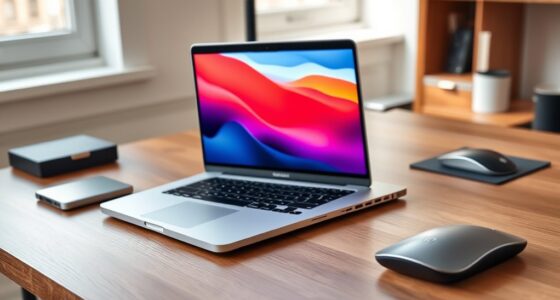
Portable external monitors for students have become one of the cheapest ways to turn a cramped laptop into a genuine study workstation, and after comparing 15 of the most popular models, the ViewSonic VA1653 stands out as the best overall pick for its color accuracy, build quality, and reliable driver support. If budget is the deciding factor, the KYY 15.6-inch and MNN FHD deliver the core 1080p USB-C experience for noticeably less money, while the InnoView Dual and CIDETTY 14-inch extender take a different approach entirely by attaching two extra screens directly to your laptop lid. The main tradeoff students face in this category is price versus versatility: a basic single panel handles essays and reading, but dual-screen setups cost more, weigh more, and demand more from your laptop’s ports and GPU. Screen quality also varies widely at the low end, with cheaper IPS panels suffering from dim backlighting and washed-out colors. Keep reading for the full breakdown of which monitor fits which kind of student and budget.

Get the latest gadgets delivered free with Prime
- Fast, free delivery on millions of items
- Prime Video, Amazon Music and more included
- Member-only deals all year
Complete the kit



Key Takeaways
- The ViewSonic VA1653 earned the top spot because it is the only model in this lineup backed by a major display brand, which translates to better color calibration out of the box and actual warranty support if something fails mid-semester.
- Under $120, the KYY and MNN monitors are nearly interchangeable on specs, so the real differentiators became included accessories, smart cover quality, and speaker performance rather than the panel itself.
- Dual-screen extenders like the InnoView Dual and CIDETTY are the worst value per dollar for casual users but the best investment for students who code, edit video, or run statistical software, because they add two screens instead of one.
- Every 15.6-inch model in this roundup weighs between 1.7 and 2.2 pounds, which means the practical difference for backpack carry comes down to cover design and thickness, not the listed weight on the spec sheet.
- HDR claims on budget models like the UFYQL are marketing labels rather than true HDR performance; students should prioritize brightness ratings of 300 nits or higher over HDR badges when comparing panels.


| portable external monitors for student | Resolution | Display Size | Weight | Connectivity |
|---|---|---|---|---|
| KYY Portable Monitor 15.6” 10 | 1920×1080 (FHD 1080p) | 15.6 inches | 1.6 lbs | — |
| InnoView Portable Monitor | 1920×1080 (FHD) | 15.6 inches | — | — |
| KYY 15.6-inch Portable Monitor | 1920×1080 | — | 1.7 lbs | — |
| VILVA 15.6" FHD IPS USB-C HDMI | 1920 x 1080 (FHD) | — | — | USB-C, HDMI |
| UFYQL 15.6-inch FHD Portable M | 1920 x 1080 (FHD) | 15.6 inches | 1.4 lbs | HDMI, USB Type-C, Mini HDMI |
| KOORUI 15.6 inch Portable Moni | 1920×1080 (FHD) | 15.6 inches | 1.37 lbs | HDMI, USB Type-C |
| Anyuse 15.6" FHD IPS USB-C HDM | 1920×1080 (FHD) | 15.6 inches | 1.37 lbs | — |
| Cocopar Portable Monitor 15.6 | 1920 x 1080 (FHD) | 15.6 inches | 2.4 lbs | USB-C, HDMI, 3.5mm Audio |
| CIDETTY Laptop Screen Extender | FHD 1080P | — | — | — |
| Ingnok Portable Monitor for La | 1920×1080 (FHD 1080p) | 15.6 inches | 1.5 lbs | USB 3.1 Type-C, mini HDMI |
| InnoView Dual Portable Monitor | 1920×1080 per panel | — | — | USB-C, HDMI |
| 14-inch FHD IPS Portable Lapto | 1920×1080 FHD | 14 inches | 1.57 kg | HDMI, USB Type-C |
| ForHelp 15.6-inch Portable Mon | 1920 x 1080 FHD | 15.6 inches | 1.52 lbs | HDMI, USB-C |
| ViewSonic VA1653 15.6 Inch 108 | 1920 x 1080 Full HD | — | 1.5 lbs | USB-C, Mini-HDMI |
| MNN 15.6-Inch FHD Portable Mon | 1920×1080 FHD | 15.6 inches | — | — |
More Details on Our Top Picks
KYY Portable Monitor 15.6” 1080P Laptop Monitor with Smart Cover
Among a crowded field of nearly identical 15.6-inch 1080p panels, this KYY model stands out for its balance of brightness and portability. At 300 nits, it outshines the UFYQL monitor’s 250-nit panel, which makes a real difference when studying near a dorm window or in a bright library. The 1.6 lb weight and 0.37-inch profile slip into a backpack next to a textbook without adding meaningful bulk, and the smart cover folds into both landscape and portrait orientations — handy for reading long PDFs in vertical mode.
The tradeoffs are real, though: no built-in speakers means packing headphones, and the 60Hz refresh rate puts competitive gaming out of reach. Compared with the InnoView, which includes speakers, this option asks you to trade audio for brightness — a swap that makes sense for students who mostly read and write rather than stream.
Pros:- 300-nit brightness beats most budget rivals for well-lit rooms
- 1.6 lb weight and 0.37-inch thickness make it genuinely backpack-friendly
- Smart cover supports both landscape and portrait orientations
- Both USB-C and HDMI connectivity covers older and newer laptops
Cons:- No built-in speakers, so audio requires headphones or external output
- 60Hz refresh rate limits fast-paced gaming appeal
- Single-cable use requires a laptop with full USB-C video output
Best for: Students who study in bright spaces like libraries and coffee shops and want a dependable, sharp second screen for notes and research
Not ideal for: Dorm-based gamers or anyone who wants a single-cable audio-and-video setup — the missing speakers and 60Hz cap will frustrate both
- Display Size:15.6 inches
- Resolution:1920×1080 (FHD 1080p)
- Panel:IPS LCD with HDR
- Brightness:300 cd/m²
- Ports:1 HDMI, 2 USB-C
- Weight:1.6 lbs
- Refresh Rate:60 Hz
Our verdict“The safest all-around pick for students who want a bright, light, plug-and-play second screen without paying for features they won’t use.”
InnoView Portable Monitor, 15.6 Inch FHD 1080P HDMI USB-C External Display for Laptop and Gaming
For students counting every dollar of a semester budget, the InnoView delivers the core experience at a lower asking price than the KYY B0BKKLV9HY while adding features that model skips — namely built-in speakers and low-blue-light eye comfort settings. For late-night essay sessions, those flicker-free and blue-light modes matter more than the extra brightness KYY offers. The PU leather cover doubles as both stand and scratch protection, so there’s no need to buy a separate sleeve.
Where the savings show up is in the fine print: HDMI connections need external power that isn’t included in the box, and laptops with older USB ports may not deliver enough power, causing occasional flickering. Compared with the VILVA, which bundles its cables, the InnoView assumes you already own the right adapters. Budget buyers with a modern USB-C laptop will be perfectly happy; anyone with an older machine should factor in a powered USB hub.
Pros:- Built-in speakers eliminate the need for headphones during group work
- Low blue light and flicker-free modes reduce eye strain over long sessions
- PU leather cover protects the screen in transit and doubles as a stand
- Plug-and-play setup with both USB-C and HDMI
Cons:- No external power cable included for HDMI connections
- Can flicker when the host device’s USB power output is inconsistent
- Brightness and contrast trail brighter picks like the KYY
Best for: Budget-conscious students with modern USB-C or Thunderbolt laptops who want eye-comfort features for long study nights
Not ideal for: Owners of older HDMI-only laptops — the missing power adapter and potential flickering make it a hassle rather than a bargain
- Display Size:15.6 inches
- Resolution:1920×1080 (FHD)
- Panel:IPS, 178° viewing angle
- Ports:2 USB-C, 1 HDMI
- Built-in Speakers:Yes
- Extras:PU leather protective cover, low blue light and flicker-free modes
Our verdict“The smart money pick for USB-C laptop owners who want a complete study setup — speakers, eye care, and cover — without the premium price.”
KYY 15.6-inch Portable Monitor with 1080P Display and Cover
This earlier KYY release earns its place for a simple reason: two full USB-C ports plus built-in stereo speakers mean one cable carries video, audio, and power from a Thunderbolt laptop. That’s a cleaner desk (or airplane tray table) than the InnoView, whose HDMI path demands separate power, and it matches the VILVA while undercutting it on clutter. At 0.3 inches thick, it’s the slimmest pick in this batch, and the gray PU cover keeps it presentable in a seminar room.
The compromises are generational: it uses a Mini-HDMI port rather than full-size HDMI, so adapter-carrying students should double-check their bag, and there’s no HDR mode like its newer KYY sibling offers. It’s also slightly heavier at 1.7 lbs. This model makes the most sense for students whose laptops support Thunderbolt 3 or later; anyone with an older machine will find themselves juggling adapters the single-cable promise was meant to eliminate.
Pros:- Dual USB-C ports enable true single-cable video, audio, and power
- Built-in stereo speakers included at a mid-tier price
- 0.3-inch profile is the thinnest in this lineup
- Landscape and portrait orientation support with a durable smart cover
Cons:- Mini-HDMI port requires an adapter for most modern cables
- Heavier (1.7 lbs) than the newer KYY and UFYQL options
- No HDR support, unlike its updated KYY sibling
Best for: Students with Thunderbolt 3/4 laptops who want one cable to handle display, sound, and power between classes
Not ideal for: Students with HDMI-only or older USB-C laptops — the Mini-HDMI port and single-cable dependency quickly turn into an adapter collection
- Screen Size:15.6 inches
- Resolution:1920×1080
- Viewing Angle:178°
- Ports:2 USB-C, 1 Mini-HDMI
- Speakers:Built-in stereo
- Weight:1.7 lbs
- Thickness:0.3 inches
Our verdict“A tidy one-cable workstation for Thunderbolt laptop owners who value a clean setup over the latest display features.”
VILVA 15.6″ FHD IPS USB-C HDMI Portable Monitor
Most monitors in this price bracket feel like fragile glass sandwiches; the VILVA’s metal construction changes that equation. For a student tossing a monitor into a backpack five days a week, rigidity is a feature that shows up months later as a screen without pressure marks. The magnetic leather smart cover attaches confidently, and unlike the UFYQL, which relies on a kickstand, VILVA’s cover-based design keeps the whole package flat when stowed.
The catch is that there’s no adjustable stand or tilt mechanism, so ergonomics depend entirely on the cover’s fixed folding angles — a genuine problem for anyone working at uneven desks or café tables. Speaker quality is serviceable but forgettable, similar to the InnoView. On the plus side, cables come in the box, sparing first-time buyers the surprise extra purchase that plagues the InnoView. This pick suits students prioritizing durability over flexible positioning.
Pros:- Metal chassis resists the flex and damage common to plastic rivals
- Magnetic leather smart cover stays securely attached in transit
- All necessary cables included in the box
- Broad compatibility from laptops to consoles and phones
Cons:- No adjustable stand or tilt, limiting ergonomic positioning
- Built-in speakers sound thin for media consumption
- No internal battery means it always depends on a powered device or outlet
Best for: Commuter students and frequent travelers who need a monitor that survives daily backpack abuse
Not ideal for: Students with back or neck sensitivity who need adjustable viewing angles — the fixed cover angles offer no tilt flexibility
- Screen Size:15.6 inches
- Resolution:1920 x 1080 (FHD)
- Panel:IPS
- Connectivity:USB-C, HDMI
- Built-in Speakers:Yes
- Build:Metal body with magnetic leather smart cover
Our verdict“Buy it if your monitor lives in a backpack rather than on a desk; skip it if adjustable ergonomics rank high on your list.”
UFYQL 15.6-inch FHD Portable Monitor with HDR, IPS Display, Speakers, and Plug & Play Compatibility
At 1.4 lbs — the lightest in this batch — the UFYQL is the one I’d point commuters and walking-campus students toward first. It edges out the KYY B0BKKLV9HY (1.6 lbs) and clearly undercuts the older KYY (1.7 lbs), and unlike most rivals it pairs that low weight with an adjustable kickstand plus a 3.5mm audio jack — so you can drive decent external speakers or headphones directly, sidestepping the weak built-in audio that plagues both the VILVA and InnoView.
The savings had to come from somewhere: 250-nit brightness is the dimmest here, making it a poor companion next to a sunny window, and the 0.52-inch thickness means it’s light but not slim. HDR support exists on paper but can’t fully shine at this brightness level. Compared with the KYY flagship, you’re trading visibility for weight and stand flexibility — the right trade for someone carrying a monitor daily, the wrong one for someone parked at a fixed desk.
Pros:- Lightest monitor in this lineup at 1.4 lbs
- Adjustable kickstand allows more viewing angles than cover-only rivals
- 3.5mm audio jack supports proper headphones or speakers
- Driver-free plug-and-play with laptops, consoles, and phones
Cons:- 250-nit brightness struggles in bright environments
- 0.52-inch thickness makes it light but bulky compared to slimmer rivals
- 60Hz refresh rate and basic speakers limit gaming and media appeal
Best for: Students who walk or commute with their monitor daily and want the lightest possible load with flexible viewing angles
Not ideal for: Anyone working in bright, sunlit spaces — the 250-nit panel washes out where brighter options like the KYY hold up
- Display Size:15.6 inches
- Resolution:1920 x 1080 (FHD)
- Brightness:250 nits
- Refresh Rate:60 Hz
- Connectivity:HDMI, USB Type-C, Mini HDMI
- Audio:Built-in speakers, 3.5mm audio input
- Weight:1.4 lbs
- Extras:HDR support, adjustable kickstand
Our verdict“The pick for weight-conscious commuters who’ll take adjustable ergonomics and a headphone jack over raw brightness.”
KOORUI 15.6 inch Portable Monitor, FHD 1080P IPS External Display
KOORUI’s 15.6-inch panel keeps things simple where it counts: a clean FHD IPS display, 178-degree viewing angles, and a 1.37-pound frame that slides into a backpack without argument. Compared with the Cocopar, it’s nearly a full pound lighter, which matters when a student is hauling textbooks all day. Connectivity covers both USB-C and HDMI, so it pairs with older laptops that lack modern ports. The flicker-free and low blue light modes are genuinely useful during long library sessions. What holds it back is the 60Hz ceiling and mediocre built-in speakers — fine for lecture videos, weak for gaming or music. Some setups also demand external power rather than drawing everything through one cable. This option makes the most sense for budget-conscious students who want dependable image quality without paying for extras they won’t use.
Pros:- Sharp FHD IPS panel with wide 178° viewing angles
- Very light at 1.37 lbs for daily commuting
- Both USB-C and HDMI inputs for older and newer laptops
- Flicker-free and low blue light modes for long study sessions
Cons:- 60Hz refresh rate is limiting for gaming
- Some setups require an external power source
- Built-in speakers sound thin
Best for: Students on a tight budget who want a reliable second screen for note-taking, research, and streaming
Not ideal for: Students who want a single-cable setup everywhere — some configurations need a separate power source
- Display Size:15.6 inches
- Resolution:1920×1080 (FHD)
- Panel:IPS LCD
- Refresh Rate:60Hz
- Connectivity:HDMI, USB Type-C
- Weight:1.37 lbs
- Viewing Angle:178°
Our verdict“A straightforward, affordable second screen for coursework that skips frills students rarely need.”
Anyuse 15.6″ FHD IPS USB-C HDMI Portable Monitor
The Anyuse earns its spot by adding HDR support at a price point where most rivals — including the KOORUI — stick to standard SDR. That translates into richer contrast when watching recorded lectures or films in a dorm room. The port selection is generous for this tier: two USB-C ports plus mini HDMI, making it easy to jump between a laptop, a console, and a phone without reshuffling cables. Mirror and extend modes work plug-and-play on supported hardware. The catch is port standards — full functionality requires Thunderbolt 3/4 or USB 3.1 DP Alt-Mode, so students with budget laptops or older machines may need adapters or be out of luck entirely. There’s no battery either, so it’s always tethered. Compared with the Ingnok, this model stands out for HDR and dual Type-C, while giving up that unit’s adjustable kickstand.
Pros:- HDR support for richer contrast at a budget price
- Two USB-C ports plus mini HDMI for multi-device flexibility
- Very slim and light at 1.37 lbs
- Plug-and-play with mirror and extend modes
Cons:- Requires Thunderbolt 3/4 or USB 3.1 DP Alt-Mode for full functionality
- No built-in battery, always needs external power
- Adapters may be needed for older devices
Best for: Students with modern USB-C laptops who want better contrast for video at a low price
Not ideal for: Owners of older or budget laptops without full-featured USB-C ports — expect adapter costs
- Display Size:15.6 inches
- Resolution:1920×1080 (FHD)
- Panel:IPS
- HDR:Yes
- Ports:2 x Type-C, 1 x Mini HDMI
- Weight:1.37 lbs
- Built-in Speakers:Yes
Our verdict“The cheapest way to get HDR and dual USB-C, provided your laptop’s ports are up to spec.”
Cocopar Portable Monitor 15.6 Inch 1080P FHD Travel Monitor with Speakers and VESA Mount
VESA mounting is what separates the Cocopar from every other panel in this batch. While the KOORUI and Anyuse lean on kickstands or folio cases, the Cocopar can bolt onto an arm or dorm-desk mount, freeing up precious surface area next to textbooks and coffee. Image quality holds its own too, with 85% color gamut coverage, 280 nits of brightness, and HDR support — a step up in vibrancy over basic budget panels. A single USB-C cable handles power and video where the laptop supports it. The tradeoff is weight: at 2.4 pounds, it’s the heaviest here by a wide margin, and like the Anyuse it demands Thunderbolt 3/4 or USB 3.1 DP Alt-Mode for single-cable use. This model is better suited to a mostly-stationary desk arrangement than daily commuting.
Pros:- VESA mountable for monitor arms and flexible desk setups
- 85% color gamut and 280 nits for vivid, bright output
- Single USB-C cable for power and display
- Includes 3.5mm audio jack alongside USB-C and HDMI
Cons:- Heaviest in the lineup at 2.4 lbs
- Requires Thunderbolt 3/4 or USB 3.1 DP Alt-Mode support
- 60Hz refresh rate limits gaming appeal
Best for: Students building a semi-permanent dorm workstation who want a monitor arm and desk real estate back
Not ideal for: Commuters and travelers — at 2.4 lbs it’s nearly double the weight of slimmer rivals
- Display Size:15.6 inches
- Resolution:1920 x 1080 (FHD)
- Refresh Rate:60Hz
- Color Gamut:85%
- Brightness:280 cd/m²
- Connectivity:USB-C, HDMI, 3.5mm Audio
- VESA Mountable:Yes
- Weight:2.4 lbs
Our verdict“The pick if your monitor lives on a dorm desk rather than in a backpack — mountable where others can’t be.”
CIDETTY Laptop Screen Extender, 14” FHD 1080P IPS Portable Dual/Triple Monitor with HDMI/USB-C
The CIDETTY takes a different approach from everything else here: instead of one extra screen, it enables dual or triple-monitor configurations, turning a single laptop into a full productivity cockpit for research papers, spreadsheets, and reference material. The smaller 14-inch panel with anti-glare coating and blue light filtering is kinder to eyes during marathon writing sessions than the glossier 15.6-inch options. Compared with the Cocopar, it trades desk flexibility for genuine on-the-go multitasking — no mounting, but far more screen real estate in transit. The big limitation is compatibility: it does not work with M1, M2, or M3 MacBooks, and Windows laptops need full-featured Type-C and HDMI ports. Students in the Apple ecosystem should skip it entirely and look at the KOORUI or Anyuse instead.
Pros:- Supports dual and triple screen setups for serious multitasking
- Anti-glare and blue light filtering for long study sessions
- Slim 0.24-inch profile with included protective case
- Works across multiple operating systems and devices
Cons:- Incompatible with M1/M2/M3 MacBooks
- Requires full-featured Type-C and HDMI ports
- Smaller 14-inch screen than rival 15.6-inch models
Best for: Windows-laptop students in demanding programs who need multiple screens for research and coding
Not ideal for: MacBook users on M1/M2/M3 chips — this simply won’t connect
- Screen Size:14 inches
- Resolution:FHD 1080P
- Panel:IPS
- Thickness:0.24 inches
- Ports:2 USB Type-C, 1 HDMI to USB-C
- Built-in Speakers:Yes
Our verdict“A portable triple-screen workstation for Windows students — worthless for recent MacBook owners.”
Ingnok Portable Monitor for Laptop, 15.6 Inch USB-C Screen Extender
At 300 nits, the Ingnok out-brightens both the Cocopar (280 nits) and typical budget panels in this roundup — a real advantage for students working near a sunny window or in a bright common room. The 1200:1 contrast ratio gives text a crispness that cheaper LCDs sometimes smear, which pays off during long reading sessions. Its adjustable stand is another differentiator: unlike the fold-out cases on the KOORUI and Anyuse, it lets you dial in a comfortable viewing angle instead of accepting two fixed positions. On the downside, the 10ms response time and 60Hz cap rule out competitive gaming, and the speakers are merely serviceable. This pick makes the most sense for students whose workspace lighting varies and who value ergonomics over raw port count.
Pros:- 300 nits brightness, brighter than similarly priced rivals
- Adjustable stand for flexible viewing angles
- 1200:1 contrast ratio for crisp text
- Quick single-cable connection via USB-C or mini HDMI
Cons:- 10ms response time is slow for fast-paced gaming
- Built-in speakers offer average sound
- Capped at 60Hz refresh rate
Best for: Students who study in bright or sunlit spaces and want an adjustable, comfortable viewing angle
Not ideal for: Gamers — the 10ms response time and 60Hz refresh rate will feel sluggish
- Display Size:15.6 inches
- Resolution:1920×1080 (FHD 1080p)
- Panel:LCD IPS
- Brightness:300 cd/m²
- Contrast Ratio:1200:1
- Connectivity:USB 3.1 Type-C, mini HDMI
- Weight:1.5 lbs
- Response Time:10 ms
Our verdict“The brightest budget option here, best for glare-prone study spots rather than gaming sessions.”
InnoView Dual Portable Monitor 15.6″ 1920×1080 Dual Stacked Foldable Screen with Adjustable Angle
Most portable monitors give you one extra screen — this one gives you two stacked 15.6-inch panels in a single foldable unit, which changes the math for students who live in spreadsheets, research papers, or code. Compared with the CIDETTY 14-inch dual/triple extender, the stacked layout trades laptop-lid mounting for freestanding flexibility, so it works even with a fixed laptop screen. The 315° screen adjustment and 180° stand mean you can angle each panel independently, something the MNN 15.6-inch simply can’t offer with its single-panel smart cover. The tradeoffs are real, though: the 30W power requirement means it’s not a true single-cable solution, and Mac users will need to install drivers for extension mode — a friction point Windows users never hit.
Pros:- Two screens in one foldable unit for serious multitasking
- Independent 315° screen adjustment and 180° stand angles
- Multiple display modes for flexible workflows
- Plug-and-play on Windows without driver installation
Cons:- Requires a 30W or higher adapter rather than powering from the laptop alone
- Mac users must install drivers for extension mode
- Heavier and less pocketable than single-panel options like the MNN
Best for: Students running research, note-taking, and video calls simultaneously who genuinely need two additional screens
Not ideal for: Anyone with a minimalist backpack setup — the dual-panel chassis is bulkier and demands a dedicated power adapter
- Screen Size:15.6 inches (dual stacked)
- Resolution:1920×1080 per panel
- Display Type:IPS panels
- Screen Adjustment:315° rotation, 180° adjustable stand
- Connectivity:USB-C, HDMI
- Power Requirement:30W or higher adapter
Our verdict“Buy this only if one extra screen genuinely isn’t enough — it’s the roundup’s most productive but least casual option.”
14-inch FHD IPS Portable Laptop Screen Extender with HDMI/USB-C
Dropping from 15.6 to 14 inches sounds minor, but in a backpack next to textbooks it’s the difference between fitting and fighting. This extender pairs a sharp 1080p IPS panel with genuinely broad compatibility — Windows, Mac, Chrome, and consoles — which is wider device support than the InnoView dual unit, and its plug-and-play setup matches the simplicity of the KYY 15.6-inch. The 300-nit brightness and 178° viewing angles hold up for lecture-hall note-taking or dorm-room streaming. Where it falls short: the 1.57 kg weight is oddly heavy for its size (the larger ViewSonic VA1653 is lighter at 1.5 lbs), Surface Pro owners report compatibility gaps, and the 60Hz panel rules out competitive gaming.
Pros:- Compact 14-inch footprint that travels easily
- Works with Windows, Mac, Chrome, and gaming consoles
- True plug-and-play with both HDMI and USB-C
- 300-nit brightness with wide 178° viewing angles
Cons:- At 1.57 kg it’s heavier than some larger 15.6-inch rivals
- Some devices, including Surface Pro models, may not be supported
- Requires a full-featured Type-C port or HDMI — basic USB-C won’t work
Best for: Students with smaller laptops or crowded bags who want a screen that disappears into a backpack
Not ideal for: Surface Pro users and ultralight purists — the 1.57 kg weight undercuts the size advantage
- Display Size:14 inches
- Resolution:1920×1080 FHD
- Display Technology:IPS LCD, 72% color gamut
- Brightness:300 nits
- Refresh Rate:60Hz
- Connectivity:HDMI, USB Type-C
- Weight:1.57 kg
Our verdict“A sensible pick if bag space matters more than screen real estate, but check your laptop’s port support first.”
ForHelp 15.6-inch Portable Monitor with 1080P Resolution, USB-C & HDMI, IPS Display, Ultra-Thin Design, Smart Cover
This is the pick I’d hand a student who wants the standard 15.6-inch 1080p portable monitor experience without overthinking it. The matte IPS panel is its quiet advantage over the MNN 15.6-inch: in a sunlit library or café, matte finishes cut reflections that glossy screens amplify, and at 1.52 lbs it’s lighter than the 14-inch extender despite being bigger. The included PU leather smart cover doubles as a stand, mirroring what KYY and InnoView offer at similar prices, so you’re not buying accessories separately. Tradeoffs are the usual budget-portable fare: you need a Thunderbolt 3/4 or USB 3.1 DP Alt-Mode port, 300 nits can struggle outdoors, and the 60Hz refresh rate makes it a poor gaming companion.
Pros:- Matte anti-glare IPS screen that handles bright study spaces better than glossy rivals
- Ultra-slim aluminum body at just 1.52 lbs
- Smart cover included, doubling as a stand
- Both USB-C and HDMI connectivity out of the box
Cons:- Requires Thunderbolt 3/4 or USB 3.1 DP Alt-Mode support
- 300-nit brightness can wash out in direct sunlight
- 60Hz refresh rate limits gaming appeal
Best for: Budget-conscious students who want dependable 1080p screen real estate with glare-friendly matte finish
Not ideal for: Gaming students or anyone with an older laptop lacking DP Alt-Mode USB-C ports
- Display Size:15.6 inches
- Resolution:1920 x 1080 FHD
- Display Technology:IPS LCD, matte finish
- Brightness:300 nits
- Response Time:1 ms
- Connectivity:HDMI, USB-C
- Weight:1.52 lbs
- Included:Smart PU leather cover
Our verdict“The safest default choice in this roundup — cheap, light, matte, and it just works for study workflows.”
ViewSonic VA1653 15.6 Inch 1080p Portable Monitor, FHD IPS External Screen
Almost everything here matches the ForHelp on paper — 15.6 inches, 1080p IPS, 1.5 lbs — so what justifies choosing it? Two things: a three-year warranty from an established display brand, and a bundled protective sleeve plus foldable stand that supports portrait and landscape modes, which most budget rivals like the MNN and KYY handle less elegantly with floppy smart covers. The anti-glare coating and single-cable USB-C setup make it a clean desk-to-dorm companion. The honest tradeoff is price: name-brand support costs more than functionally similar generic panels, and there’s no built-in battery, so you’re still tethered to your laptop’s power delivery or an outlet. Compared with the InnoView dual unit, you get one screen instead of two — but far less to carry and no 30W adapter to babysit.
Pros:- Three-year warranty from an established monitor brand
- Protective sleeve and versatile stand supporting portrait and landscape use
- Anti-glare IPS panel with clean single-cable USB-C connection
- Light 1.5 lb build at just 0.7 inches thick
Cons:- Priced above functionally similar generic alternatives
- No built-in battery — dependent on external power delivery
- Mini-HDMI port requires an adapter for some setups
Best for: Students (or parents buying for them) who value warranty coverage and brand support over lowest price
Not ideal for: Deal hunters — generic 15.6-inch panels deliver similar image quality for noticeably less money
- Size:15.6 inches
- Resolution:1920 x 1080 Full HD
- Display Technology:IPS, anti-glare coating
- Weight:1.5 lbs
- Thickness:0.7 inches
- Connectivity:USB-C, Mini-HDMI
- Warranty:3 years
Our verdict“The low-risk choice — pay a small premium for warranty peace of mind and the best-included accessories here.”
MNN 15.6-Inch FHD Portable Monitor with USB-C & HDMI
When the goal is simply cheap extra screen space, this MNN panel is the easiest yes in the batch. It covers the fundamentals — 1080p IPS, dual USB-C plus HDMI, HDR support, and a PU leather smart cover — at a price that undercuts the ViewSonic VA1653 while matching its core image quality for study tasks. The glossy finish delivers punchier colors than the matte ForHelp for dorm-room streaming, but that same gloss becomes a mirror in bright lecture halls, which is the real differentiator between these two. Connectivity is generous for the price with two USB-C ports, though HDR support depends heavily on your source device, and like nearly everything at this price it’s a 60Hz panel. Compared with the InnoView dual, it’s a single screen — but a fraction of the weight and setup fuss.
Pros:- Very aggressive price for a full 1080p IPS panel
- Two USB-C ports plus HDMI for flexible connection options
- HDR support for richer streaming and media playback
- Lightweight with an included smart cover and stand
Cons:- Glossy screen is highly reflective in bright environments
- Requires Thunderbolt 3.0 or USB 3.1 DP Alt-Mode support
- HDR and gaming appeal limited by the 60Hz refresh rate
Best for: Students who want the cheapest reliable second screen for notes, reading, and casual streaming
Not ideal for: Anyone studying in bright or window-filled spaces — the glossy panel reflects everything
- Display Size:15.6 inches
- Resolution:1920×1080 FHD
- Screen Type:IPS, glossy finish
- Refresh Rate:60Hz
- HDR:Supported (device-dependent)
- Ports:2x USB-C, HDMI
- Stand/Protection:PU leather smart cover
Our verdict“The spend-least option that still gets the job done — ideal as a first portable monitor on a student budget.”

How We Picked
My ranking logic for these portable external monitors for students came down to five criteria, weighted by how students actually use a second screen. Real-world portability came first: I favored models with sturdy smart covers that double as stands, because a floppy cover means the monitor wobbles on a library desk or lecture hall fold-out tray. Connectivity simplicity ranked second, since students should not need to troubleshoot drivers between classes — single-cable USB-C power-plus-video operation scored higher than models requiring separate HDMI and USB power connections.
From there I weighed panel quality for study tasks (text sharpness, brightness, and viewing angles matter more than refresh rate for reading and writing), value relative to campus-student budgets, and versatility across devices, meaning support for laptops, phones, consoles, and mini PCs. Brand support and warranty length acted as a tiebreaker, which is why the ViewSonic outranks cheaper models with similar specs. Dual-screen extenders were judged on a separate curve since they solve a different problem, so they appear in this list as specialist picks rather than direct competitors to the single-panel options.
Factors to Consider When Choosing Portable External Monitors For Students
Before clicking buy on the cheapest listing you find, it helps to understand what actually separates a useful study monitor from one that collects dust in a dorm drawer. These are the factors that shaped my rankings and the mistakes I see students make most often.Check Your Laptop’s Ports Before Anything Else
The single most common mistake students make is buying a portable monitor without confirming their laptop has a full-function USB-C port with DisplayPort Alt Mode. Many budget laptops and older MacBooks only offer USB-C for charging, which means the monitor will need a two-cable HDMI-plus-USB connection that drains an extra port and tethers you to a wall outlet. Check your laptop manufacturer’s spec page and look for the words “DisplayPort Alt Mode” or a small monitor icon next to the port. If your laptop only has HDMI output, every monitor in this roundup will still work, but you will sacrifice the clean single-cable setup that makes portable monitors appealing in the first place. Chromebook users should be extra careful, as some models output video over USB-C but lack the bandwidth for full 1080p at smooth frame rates.
Weight Adds Up Faster Than You Expect
A 1.9-pound monitor sounds trivial until you add it to a laptop, charger, textbooks, and a water bottle on a day that involves walking across campus three times. Students who commute or move between classes constantly should think of the monitor plus its cover and cables as a three-pound commitment minimum. This is why thin models with integrated smart covers, like the ForHelp and ViewSonic, earn higher portability scores than thicker VESA-equipped options like the Cocopar. The honest question to ask yourself is how often you will actually carry it: if the answer is “only to the library during finals,” weight matters less and you can prioritize screen quality. If the answer is “every day,” weight and packed thickness should be near the top of your list.
Brightness Matters More Than HDR Badges
Most budget portable monitors advertise HDR support, but almost none of them have the backlight brightness to deliver it. What actually determines whether you can work next to a dorm window is the nit rating, and anything below 250 nits becomes genuinely hard to read in bright daylight. Panels in the 300-nit range, like the ViewSonic, hold up far better in variable lighting than the 200-nit panels common on the cheapest models. Contrast and color accuracy matter less for writing essays but become relevant for design, photography, or media students who need consistent colors. My advice: ignore the HDR label entirely, compare nit ratings and IPS panel quality, and read reviews that mention real-world outdoor visibility.
Single Screen vs. Dual Extender: Know Your Workflow
Attached dual-screen extenders like the CIDETTY and InnoView Dual look like the dream setup, but they introduce tradeoffs that surprise first-time buyers. They add roughly three to four pounds to your laptop’s lid, strain hinges on lighter laptops, and can pull battery down fast since your machine is now driving three displays at once. They also only work in laptop mode, unlike a standalone monitor you can connect to a console, phone, or desktop. The right choice depends on your major: computer science, engineering, and data students who juggle documentation, code, and output windows genuinely benefit from dual extenders. Humanities students who mostly need a reading pane next to a Word document will get 90% of the benefit from a single $120 panel.
Speakers, Covers, and the Hidden Cost of Accessories
The listed price rarely tells the whole story. A monitor that ships without a smart cover means buying a stand separately, and cheap covers that fold into flimsy stands are a common complaint on budget listings. Built-in speakers vary enormously, from genuinely usable on the Cocopar and UFYQL to tinny afterthoughts on others, which matters if you watch lecture recordings without headphones. Some models include both USB-C and USB-A cables while others include nothing, adding $15 to $20 to your real cost. Before comparing prices, make a mental checklist of what is in the box, and treat two listings with a $20 gap as equal if the cheaper one omits the cover and cables.
When It Is Worth Paying More
Spending beyond the $120 to $160 range only makes sense for specific reasons. Pay more for a brand-name panel with warranty support, like the ViewSonic, if a dead monitor mid-semester would genuinely disrupt your coursework and you cannot wait two weeks for a replacement. Pay more for a dual extender only if your coursework involves multi-window professional software. But do not pay more for marginal spec bumps like a slightly higher contrast ratio on an otherwise identical budget panel, because the difference is invisible in study use. A freshman with a Chromebook and a $600 budget laptop is almost always better served by the cheapest reliable 1080p panel and spending the savings on a good laptop stand or ergonomic keyboard, which will affect daily comfort more than 50 extra nits ever will.
Frequently Asked Questions
Will a portable monitor drain my laptop’s battery quickly?
Yes, a USB-C powered monitor draws power directly from your laptop, and you should expect roughly 20 to 35% shorter battery life with a second screen attached, depending on brightness settings. You can reduce the hit by lowering the monitor’s brightness, using dark-mode themes, and turning the monitor off when it is not actively needed. Some models, like certain KYY and InnoView configurations, support external power delivery, meaning you can plug your laptop charger into the monitor and pass power through, which effectively eliminates the battery penalty at a desk. Students with class schedules longer than four hours should plan around an outlet regardless, because carrying a second screen without a charger turns your laptop into a two-hour device. Battery impact is one more reason dual extenders suit desk-heavy majors more than lecture-hall-heavy ones.
Can I use one of these monitors with a phone or tablet?
Any monitor in this roundup with full USB-C connectivity will work with Samsung Galaxy phones, and most newer Android phones support display output, turning the monitor into a desktop-like environment for reading PDFs or editing documents. iPhones with USB-C ports also support external displays, though iOS limits what appears on the screen unless you have a compatible model. This is genuinely useful for students who want to read course PDFs on a larger screen without pulling out the laptop. Keep in mind that phones cannot power the monitor for long sessions without their own charger attached, so treat phone use as a convenience feature rather than a primary workflow. If phone compatibility matters to you, confirm the specific monitor lists phone support, because a few budget models only reliably detect laptops.
Is a 15.6-inch or 14-inch screen better for students?
The difference sounds small, but it shapes the whole experience. A 15.6-inch panel matches most laptop screens, which creates a seamless two-screen setup with equal text sizing, and 1080p at that size remains sharp for reading. A 14-inch monitor shaves weight and thickness, which matters for daily commuters, and the slightly higher pixel density makes text marginally crisper. Dual extenders typically use 14-inch panels precisely because two 15.6-inch screens would make a laptop lid unreasonably heavy. My general guidance: commuters and frequent flyers should lean 14-inch, while students who mostly set up at one desk should take the 15.6-inch for the extra workspace. Neither size is a mistake; the wrong choice is buying a size that fights how you actually move through your week.
Do these monitors work with gaming consoles or streaming sticks?
Most of them do, as long as the monitor has an HDMI input, which every model in this roundup includes. This turns a dorm-room portable monitor into a legitimate TV replacement for a Switch, PlayStation, or Fire Stick, since the built-in speakers on models like the UFYQL and Cocopar handle casual audio fine. You will need a separate power source for the monitor when using HDMI, because consoles cannot power it over the cable, so plan for an outlet and the included power adapter. Latency is acceptable for single-player games but competitive shooters may feel slightly less responsive than a dedicated gaming monitor. For students combining dorm gaming and study use, this versatility is one of the strongest arguments for a portable monitor over a cheap static second display.
Are the cheap sub-$120 monitors actually good, or will I regret not spending more?
For pure study use, the budget models are genuinely good, and the panel inside a $110 KYY or MNN is closer to the $170 ViewSonic than the price gap suggests. Where the cheap models cut corners is quality control, cover sturdiness, and after-sales support, meaning a slightly uneven backlight or a dead pixel is more likely, and getting a replacement from a lesser-known brand can take weeks. Students on tight budgets should buy from listings with strong return policies and test the monitor thoroughly within the return window, checking for dead pixels, backlight bleed, and wobbling covers. Spending more buys peace of mind and better calibration, not a dramatically better picture. If your coursework depends on color accuracy, pay for the premium panel; if it depends on having a second window for references, the budget models will serve you well.
Conclusion
Mapping these fifteen portable external monitors for students to specific buyers is straightforward once the priorities are clear. The ViewSonic VA1653 is my best overall pick for any student who wants a dependable, accurate screen that will survive four years of coursework. For best value, the MNN or KYY 15.6-inch covers 90% of student needs at the lowest price, and I would point budget-conscious freshmen there first. Students who want the premium multi-screen experience should choose the InnoView Dual, which effectively triples your workspace for coding or research-heavy majors, while the CIDETTY 14-inch extender is the better premium choice for laptop-toting students who want that setup without a separate bag. For beginners who have never used a second screen and want a safe first purchase, the InnoView single-panel with plug-and-play simplicity is the easiest onboarding. Finally, for specific needs: the Cocopar for students who want VESA mounting, the UFYQL for built-in audio, and the ForHelp for maximum thinness in a crowded backpack. Whatever you choose, confirm your laptop’s USB-C video support before buying, and you will get years of productive use from whichever pick fits your budget and workflow.
Halloween Picks
halloween
As an affiliate, we earn on qualifying purchases.