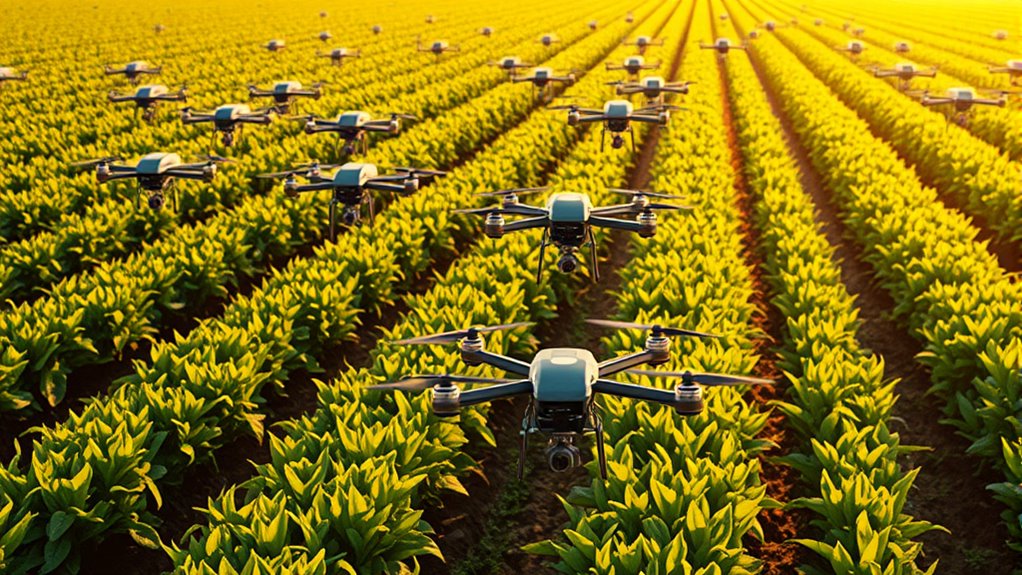

Swarm robotics in agriculture involves deploying small, intelligent robots that work together to plant, monitor, and harvest crops efficiently. Field trials show these robots coordinate seamlessly using advanced algorithms, sharing real-time data from sensor networks embedded in soil and plants. This approach speeds up large-area coverage, improves accuracy, and reduces the need for human intervention. To understand how these trials demonstrate reliability and scalability, keep exploring how this technology is shaping the future of farming.
Key Takeaways
- Field trials test robot coordination, sensor integration, and task efficiency in real agricultural environments.
- They evaluate the swarm’s ability to adapt to weather, pests, and soil variability.
- Trials demonstrate faster area coverage and precise resource application compared to traditional methods.
- Sensor networks in field trials provide real-time data for dynamic decision-making and task optimization.
- Results highlight the potential for scalable, sustainable farming with minimal human intervention.

Have you ever wondered how technology can revolutionize farming? It’s happening right now through the exciting advancements in swarm robotics, especially during recent field trials. Imagine a group of small, intelligent robots working together seamlessly across large fields, performing tasks like planting, monitoring, and harvesting. This isn’t science fiction; it’s the future of agriculture. Central to this progress is robot coordination, which ensures that each robot acts in harmony with the others, avoiding overlaps and gaps in coverage. By employing sophisticated algorithms, these robots communicate constantly, sharing real-time data and adjusting their actions accordingly. This coordination is critical because it prevents chaos on the field and maximizes efficiency.
Swarm robotics and sensor networks are transforming agriculture through seamless teamwork and real-time data sharing.
Sensor networks play a crucial role in enabling this level of teamwork. These networks consist of interconnected sensors integrated into the robots or embedded in the soil and plants. They gather a wealth of data—soil moisture, nutrient levels, crop health, and environmental conditions—and transmit it instantly to the robots. With access to this continuous stream of information, the swarm can adapt its behavior dynamically. For example, if sensors detect drought stress in a particular area, the robots can prioritize watering or applying nutrients precisely where needed. This targeted approach reduces waste, conserves resources, and boosts crop yields.
During field trials, researchers have tested various swarm configurations to see how well these robotic teams perform under real-world conditions. They evaluate how effectively the robots coordinate their movements, respond to sensor data, and complete complex tasks collectively. These trials reveal that robust robot coordination, supported by reliable sensor networks, is essential for handling unpredictable variables like weather fluctuations or pest outbreaks. By working together, the robots can cover larger areas faster than traditional methods, while maintaining high accuracy and resilience.
The integration of sensor networks also allows the robots to operate with minimal human intervention, making farming more sustainable and less labor-intensive. Farmers can oversee entire fields remotely, receiving updates and insights from the networked data. This level of automation and real-time decision-making enables more precise management, reducing chemical use and environmental impact. As these field trials continue, the technology is becoming increasingly reliable, paving the way for widespread adoption.
In essence, the success of swarm robotics in agriculture hinges on effective robot coordination and sophisticated sensor networks. These components enable the robotic swarm to perform complex tasks collaboratively, adapt to changing conditions, and optimize resource use. The ongoing field trials demonstrate that this approach isn’t just a theoretical concept but a practical solution poised to transform farming into a more efficient, sustainable enterprise. Additionally, advancements in power banks for camping and portable energy solutions are helping support these high-tech systems in the field, ensuring continuous operation even in remote areas.
Frequently Asked Questions
What Are the Cost Implications of Deploying Swarm Robots in Agriculture?
When you consider deploying swarm robots in agriculture, you need to do a thorough cost analysis to understand the investment required. These robots can reduce labor costs and increase efficiency, but initial expenses for equipment and maintenance can be high. Effective budget planning helps you balance upfront costs with long-term benefits. While the technology may seem costly initially, the potential for improved productivity and reduced manual labor makes it a promising investment.
How Do Swarm Robots Adapt to Varying Weather Conditions?
Imagine weather resilience so advanced it seems like magic—swarm robots use adaptive algorithms to handle whatever Mother Nature throws at them. You’ll find they swiftly adjust to varying conditions, from heavy rain to scorching heat, ensuring continuous operation. These adaptive algorithms enable the robots to modify their behavior, optimize resource use, and maintain productivity, making them indispensable tools for resilient, efficient farming even in the most unpredictable weather scenarios.
What Safety Measures Are in Place for Human-Robot Interactions?
You’re concerned about safety during human-robot interactions. To guarantee this, sensors are regularly calibrated to detect human presence accurately, preventing accidental collisions. Emergency protocols are in place, allowing you to quickly shut down or pause robots if needed. These measures help maintain a safe environment, giving you confidence that the robots operate responsibly and respond appropriately to unexpected situations, protecting both humans and the equipment.
How Is Data Security Managed in Swarm Robotics Systems?
You should understand that data security in swarm robotics systems is managed through strict cybersecurity protocols and robust encryption standards. These measures protect sensitive information from unauthorized access and cyber threats. By implementing regular updates and secure communication channels, you guarantee the integrity and confidentiality of data exchanged between robots. This proactive approach helps maintain system reliability and safeguards against potential security breaches, keeping your operations safe and efficient.
What Is the Scalability Potential for Large-Scale Farms?
You might be surprised to learn that large-scale farms can deploy hundreds to thousands of robots efficiently. The scalability potential depends heavily on farm size considerations and robot density optimization. As your farm expands, you can increase robot numbers without sacrificing coordination or efficiency, provided you optimize robot density. This ensures thorough coverage, reduces overlap, and maximizes productivity, making swarm robotics a promising solution for large-scale agricultural operations.
Conclusion
Imagine yourself as a gardener tending a vast, lively garden where tiny, diligent bees work in harmony. Just like these bees, swarm robotics in agriculture can transform fields into bustling, efficient ecosystems. By working together seamlessly, these robotic swarms can nurture crops and boost yields effortlessly. As you watch this modern hive in action, you realize that the future of farming is a thriving, collaborative hive—an allegory of innovation buzzing toward a fertile tomorrow.