
Rig flex is a sneaky enemy that can sabotage your consistency in sim racing. When your setup wobbles or shifts, it causes discomfort and unpredictable input responses, making it harder to focus and react quickly. Over time, this instability can impact your performance and confidence. Investing in a stable, adjustable rig made from durable materials can keep everything steady, helping you race more smoothly. Stick around to uncover strategies that can help you minimize flex and boost your performance.
Key Takeaways
- Rig flex can cause inconsistent pedal and wheel positioning, disrupting precise control during races.
- Unstable rigs lead to vibrations and movements that distract drivers and impair reaction times.
- Flexibility issues prevent ergonomic adjustments, causing discomfort and reducing focus over long sessions.
- Excessive rig movement impacts input accuracy, negatively affecting lap times and race performance.
- Investing in a durable, stable rig minimizes flex, ensuring reliable consistency and improved racing outcomes.
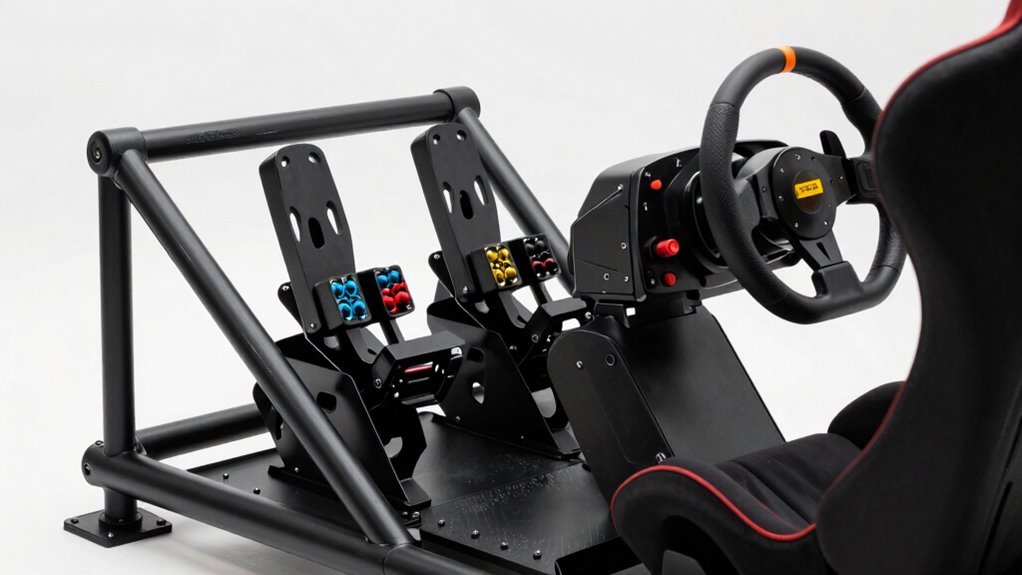
Are you struggling to find a racing rig that adapts to your space and needs? If so, you’re not alone. Many sim racers face the challenge of balancing comfort, stability, and flexibility in their setups. One of the biggest pitfalls is neglecting the importance of a rig that offers ergonomic adjustments. When your seat, pedals, and steering wheel aren’t properly aligned, it becomes difficult to maintain consistency during races. Small discomforts, like a poorly positioned wheel or an awkward seat angle, can distract you and throw off your focus. That’s why prioritizing ergonomic adjustments is essential; it allows you to fine-tune your setup so it fits your body and driving style perfectly. When your rig can be customized for comfort and optimal reach, your concentration stays sharp, and your reactions improve.
Prioritize ergonomic adjustments for comfort, focus, and consistent performance in your racing setup.
However, flexibility isn’t just about comfort—it’s also about the rig’s material durability. A rig made from subpar materials may seem convenient at first, but over time, it can lead to wobbling, creaking, or even breakage. This inconsistency affects your ability to produce precise inputs, which is critical for competitive sim racing. Material durability ensures your rig remains stable under intense driving conditions, so you don’t have to worry about sudden shifts or unwanted movement that can ruin your lap times. When choosing a rig, look for sturdy frames made from high-quality metals or reinforced composites. These materials can withstand the force exerted during aggressive turns and long sessions, maintaining their integrity over time. Additionally, a durable rig helps prevent rig flex, which can compromise your control and precision. Incorporating rig stability into your decision is crucial for a consistent racing experience.
Flexibility in a racing rig isn’t just about physical adjustments; it’s also about how it fits into your space. A rig that’s overly rigid or poorly designed might not accommodate your room’s dimensions, forcing you into awkward positions or cluttering your area. An adaptable rig allows you to make quick ergonomic adjustments and reconfigure components easily, saving you time and frustration. This flexibility enables you to set up your racing environment efficiently, so you can focus solely on your performance. Furthermore, selecting a rig with modular design options can greatly enhance your ability to customize and expand your setup as your skills develop.
Ultimately, the hidden enemy of consistency in sim racing is a rig that lacks flexibility in both ergonomic adjustments and material durability. When your setup is customizable and built with quality materials, it becomes a true extension of your skills. You’ll find it easier to stay comfortable, maintain focus, and execute precise inputs race after race. Investing in a rig that adapts to your needs not only enhances your comfort but also sharpens your competitive edge. Remember, a stable, adjustable, and durable setup is key to unlocking your full potential behind the wheel.

Mouse Pad for Sim Rig (Flat)
- Hand Compatibility: Supports both left and right-handed use
- Made in USA: Constructed from durable PETG composite
- Optional Side Rails: Add for enhanced control at checkout
As an affiliate, we earn on qualifying purchases.
As an affiliate, we earn on qualifying purchases.
Frequently Asked Questions
How Can I Detect if My Rig Is Flexing During Gameplay?
To detect if your rig is flexing during gameplay, pay attention to any unusual movement or instability in your setup. Rig flex causes inconsistent handling, so if you notice your wheel or pedals shifting unexpectedly, that’s a sign. You can also observe if the frame creaks or wobbles under pressure. Regularly check tightness of bolts and mounts, and use a level or ruler to detect flexing, ensuring your rig stays solid and stable.
Does Rig Flex Affect Lap Times Significantly?
Rig flexibility can substantially impact your lap times. When your rig flexes, it causes inconsistent steering input, which reduces precision and speed. This subtle movement may seem minor, but over multiple laps, it accumulates, leading to slower times. To improve your lap time impact, make certain your rig is sturdy and free of flex. A stable setup helps maintain control, giving you the consistency needed for faster, more reliable lap times.
What Materials Are Best to Prevent Rig Flex?
You’ll want to prioritize materials with high durability to guarantee rig stability and minimize flex. Steel and aluminum are excellent choices because they offer exceptional strength and rigidity, reducing movement during intense racing sessions. Carbon fiber, although pricier, provides superior stiffness and lightness, enhancing overall stability. Using these materials helps you maintain consistent lap times by ensuring your rig stays steady, even during aggressive maneuvers.
Can Rig Flex Cause Long-Term Equipment Damage?
Rig flex can indeed cause long-term equipment damage if ignored. Over time, continuous flexing stresses the mounts, pedals, and other components, leading to loosening or breakage. To prevent this, you should prioritize rig flex maintenance and guarantee your setup is as rigid as possible. An ideal rig setup minimizes flex, protects your gear, and maintains consistent performance, ultimately extending the lifespan of your equipment and enhancing your racing experience.
Are There Specific Brands Known for Rigid Sim Racing Rigs?
Yes, some brands are known for their rigid sim racing rigs, thanks to their strong brand reputation and focus on material durability. Brands like Fanatec, Sim-Lab, and Next Level Racing stand out for producing sturdy, well-built rigs that minimize flex. Choosing these brands guarantees you get a reliable setup that maintains consistency during intense races, ultimately boosting your performance and protecting your equipment over time.
Conclusion
As you grip the wheel tightly, feeling the subtle sway of your rig’s flex beneath your fingertips, it’s clear that this hidden enemy threatens your consistency. Like a whispering ghost, it erodes your confidence with every turn, turning precision into chaos. To stay sharp on the track, you must tame this unseen force, solidify your setup, and anchor yourself firmly. Only then can you race with the unwavering focus that turns good laps into great ones.