
📊 Full opportunity report: On-Camera Speech Practice For Business Owners Who Want More Confidence on IdeaNavigator AI — validation score, market gap, and execution plan.

Get the latest gadgets delivered free with Prime
- Fast, free delivery on millions of items
- Prime Video, Amazon Music and more included
- Member-only deals all year
TL;DR
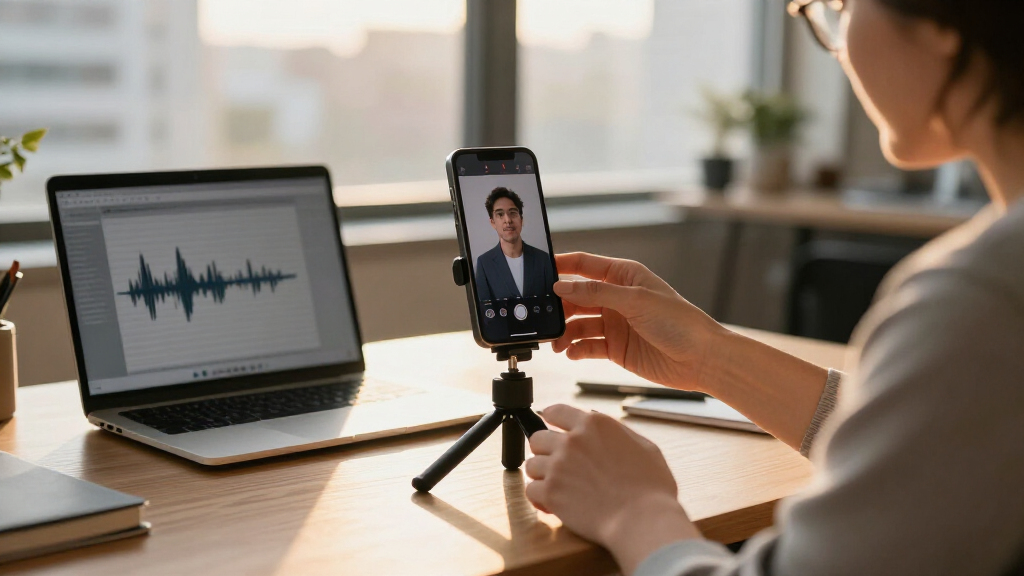
IdeaNavigator AI has outlined a proposed practice app for business owners who freeze when recording video. The concept includes short daily exercises and delivery feedback, but no product launch or test results are reported; a 30-day cohort is proposed as a way to assess whether participants publish a video.
IdeaNavigator AI has outlined a proposed on-camera speech practice app for business owners who know video can support their marketing but freeze when recording. The concept pairs short daily exercises with feedback on delivery, but it remains a proposal: no product launch, participant results or evidence of improved publishing rates is reported.
According to the IdeaNavigator AI concept page, the proposed app is aimed at one specific group: business owners who avoid recording because of camera anxiety. The idea describes a cycle of stumbling over words, criticizing each take and making repeated attempts that can keep owners from posting at all. It argues that general public-speaking instruction may not address the particular experience of speaking alone to a camera.
The concept page says the suggested first version would offer two-minute daily prompts, progressing from reading prepared text to speaking more freely. It would assess pace, filler words, eye line and energy, then show users their progress over time. The proposed exercises are intended to be private and judgment-free; the concept does not describe a released app or specify how any AI assessments would be technically validated.
IdeaNavigator AI also proposes eventually moving users from practice into recording real business content, with progress streaks as a motivational feature. Its suggested business models are a consumer subscription and a team tier for agencies that coach clients. These are possible models, not reported pricing, sales or confirmed partnerships.
Product concept · Practice before publishing
On-Camera Speech Practice for Business Owners Who Want More Confidence
IdeaNavigator AI proposes a private, daily practice app for business owners who freeze when recording. Short prompts and delivery feedback are the concept; whether they help owners publish remains untested.
01 / The proposed experience
From private practice to camera-ready
The idea focuses on solo recording: a specific moment that general public-speaking advice may not address.
Low-pressure prompts
Begin by reading prepared text, then gradually move toward speaking more freely in short daily sessions.
Notice delivery patterns
Proposed cues cover pace, filler words, eye line and energy. Technical validation is not described.
Make a real recording
The concept eventually bridges practice to business content, with progress streaks as a possible motivator.
Read
Start with prepared words.
Practice
Use brief daily prompts.
Speak freely
Build toward spontaneous delivery.
Publish
Try a real business video.
02 / Validation plan
A test is proposed, not underway
The concept suggests a waitlist comparison. Recruitment, control-group size and study dates are not provided.
→ day 45
Invite 100 business owners to practice, compare with a waitlist group, and track the share who publish a first real video by day 45.
Primary behavior to track
Whether each participant publishes a first real video. This is more directly tied to the stated barrier than app usage alone.
What that measure cannot show by itself
Publishing does not establish video quality, audience response, business impact, increased confidence, or that the app caused a change.
Categories shown as concept features; bar lengths are decorative and do not represent measured scores.
03 / Evidence to establish
Key details remain open
No app launch, completed study, participant outcomes, pricing or confirmed partnerships are reported.
Has the app launched?
No launch or release date is reported. The page describes a product concept and possible validation plan.
Is AI feedback validated?
No. The concept does not explain accuracy, calibration, speaking-style differences or how eye line and energy would be assessed.
How would video data be handled?
Privacy, storage and deletion practices for potentially sensitive video and audio are unspecified.
What would a useful report include?
Recruitment, completion, waitlist results, publishing verification, feedback accuracy and data privacy details.
From Practice to Published Video
The proposal addresses a practical gap between advice to use video and the work of actually recording it. For owners who are uncomfortable on camera, a low-pressure practice routine could offer a more manageable starting point than immediately producing public-facing marketing. That is the product rationale described by IdeaNavigator AI, not a demonstrated result.
If tested successfully, the idea could matter to small businesses that lack dedicated video staff or access to regular coaching. The concept page suggests feedback on delivery might help a user notice patterns such as rushing or frequent filler words, while a gradual move from scripted reading to free speaking could make practice feel closer to the task they need to do. However, the available description provides no evidence that these features reduce anxiety or lead to more effective marketing.
IdeaNavigator AI’s proposed measurement focuses on a concrete behavior: whether participants publish a real video. That is more directly relevant to the stated problem than app usage alone, although publishing does not by itself establish video quality, audience response or business impact.
Products Worth Considering

Bose QuietComfort Headphones (2nd Gen), Wireless Over-Ear Noise-Cancelling Headphones, Hazelnut Taupe

Bose QuietComfort Wireless Noise-Cancelling Over-Ear Headphones, Black

Logitech MX Mechanical Wireless Illuminated Keyboard, Tactile Quiet, Graphite
As an affiliate, we earn on qualifying purchases.
A Proposed Test, Not a Launch
On its concept page, IdeaNavigator AI frames the idea as a narrow first product for a single buyer rather than a broad communication-training platform. The page’s stated premise is that video-first marketing pressure reaches businesses of every size, while camera anxiety can prevent some owners from taking part. It does not provide market-size figures or independent evidence for those claims.
IdeaNavigator AI proposes a 30-day cohort of 100 business owners, with a waitlist control group for comparison. The suggested measure is the share of participants who publish their first real video by day 45. This is a proposed validation method; the page does not say that recruitment has begun, identify a control-group size or report any findings.
The concept places the idea within communication-skills training and suggests that multimodal AI could assess aspects of delivery, including pace, filler words, eye contact and energy. The page does not name a product, developer or research partner. It also does not explain what data would be collected, how feedback would be calibrated or whether the proposed measures would reliably reflect speaking confidence.
Evidence and Product Details Missing
IdeaNavigator AI reports no app launch, completed study or user outcome on its concept page. It is unclear whether the idea is being developed, when a test might start, or whether the proposed 100-person cohort will be run. The waitlist control is part of the suggested design, not a confirmed study.
Important implementation details are also absent from the description. It does not describe the AI system, its accuracy, how it would evaluate eye line or energy, or how it would handle different speaking styles, cameras and recording conditions. The page gives no information about privacy, storage or deletion of potentially sensitive video and audio. Subscription prices, team-tier terms and agency interest are likewise unspecified.
Even if participants publish more often, the proposed day-45 measure would not establish whether the app caused the change without a clearly reported comparison. Nor would it show whether users became more confident over time or whether their videos reached customers. Those questions would require reported results and additional measures.
Whether the Cohort Goes Ahead
IdeaNavigator AI’s stated next step is to validate the concept with a 30-day cohort and a waitlist comparison, tracking whether owners publish their first real video by day 45. The concept page provides no dates or recruitment details, so it is not known when or whether this test will take place.
If the test proceeds, useful reporting would include how participants were recruited, how many completed the exercises, the waitlist group’s results and how publishing was verified. Further details on feedback accuracy and video-data privacy would also help assess whether the proposed product is practical for business owners. For now, the idea remains a product concept with a suggested test, not a proven intervention.
Source: IdeaNavigator AI
Key Questions
Has the on-camera practice app launched?
No launch is reported. IdeaNavigator AI describes a proposed app concept and a possible way to test it, but provides no release date or evidence that the product is available.
Who is the proposed app for?
According to IdeaNavigator AI’s concept, it is designed for business owners who want to use video but feel anxious or freeze when recording. The concept focuses on solo recording rather than public speaking in front of an audience.
What would users practice?
The suggested first version described by IdeaNavigator AI includes two-minute daily prompts that move from reading prepared text toward more spontaneous speaking. Proposed feedback covers pace, filler words, eye line and energy.
How would the idea be tested?
IdeaNavigator AI’s proposal calls for a 30-day cohort of 100 owners and a waitlist control, with the share who publish a first real video by day 45 as the main measure. No results or confirmation that the test is underway have been provided.
Does the concept show that AI feedback improves confidence?
No evidence of that outcome is reported. AI-based delivery feedback is part of the proposed feature set, but IdeaNavigator AI’s description does not provide accuracy data or study results showing that it reduces anxiety or increases publishing.
Source: IdeaNavigator AI