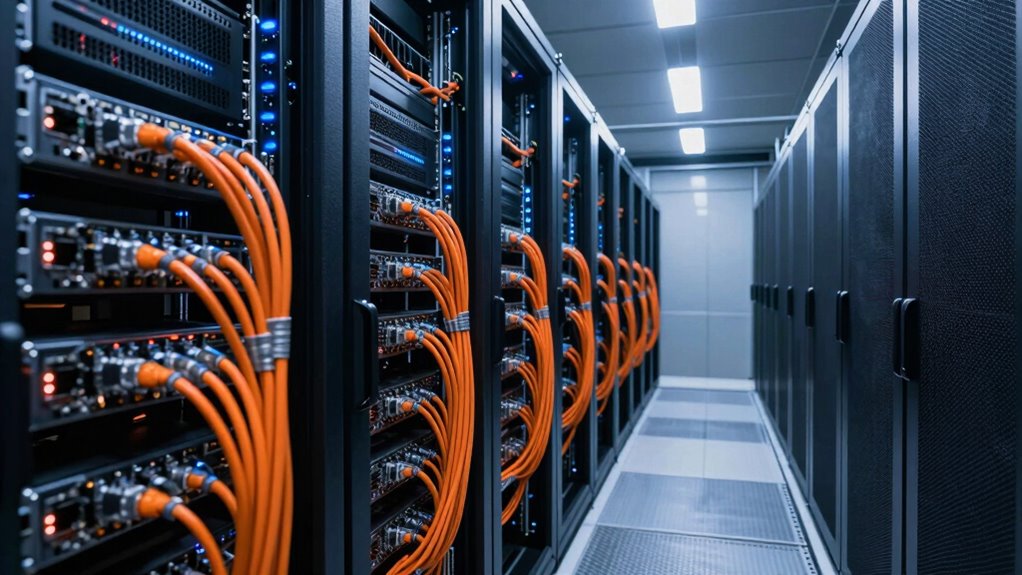

To get the most out of multi-gig networking, all three links—fiber, hardware, and firmware—must match perfectly. This means choosing compatible fiber cables and connectors, ensuring your switches support multi-gig speeds, and keeping firmware updated. When these elements align, you prevent bottlenecks, boost performance, and secure your network. If you keep going, you’ll discover how matching these links can release your network’s full potential.

Get the latest gadgets delivered free with Prime
- Fast, free delivery on millions of items
- Prime Video, Amazon Music and more included
- Member-only deals all year
Key Takeaways
- All links must operate at the same multi-gig capacity to prevent throughput bottlenecks.
- Compatible hardware and fiber types ensure seamless, high-speed data transmission across links.
- Uniform security protocols and firmware versions across links reduce vulnerabilities and misconfigurations.
- Proper hardware matching and regular updates maintain optimal speed and security levels.
- Consistent link performance supports high-demand applications and prevents costly network downtime.
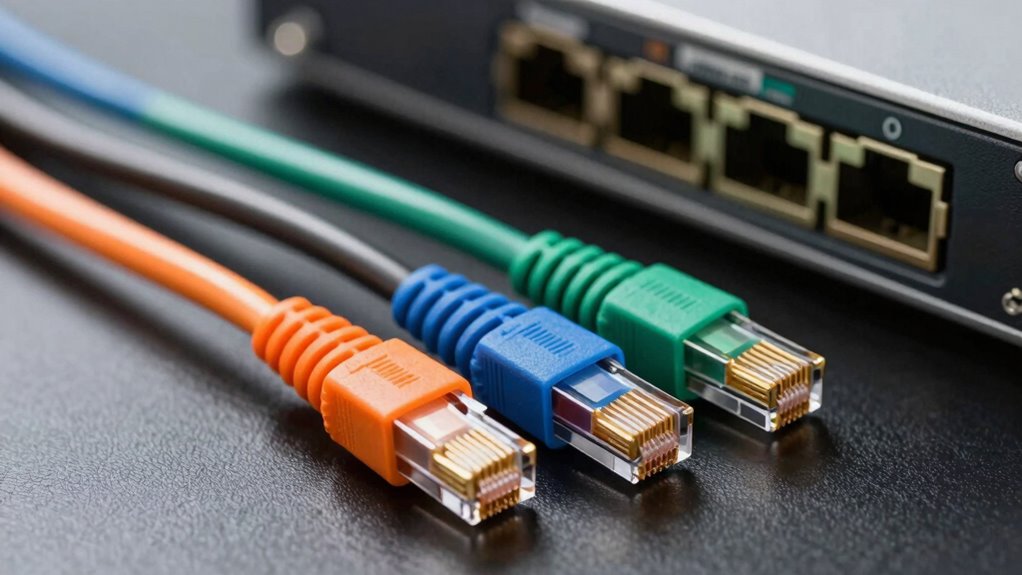
As network demands grow, matching three links in multi-gig networking setups becomes essential for achieving peak performance. When you’re working with high-speed data transfer, every link must operate at the same capacity; otherwise, the entire system bottlenecks, reducing the benefits of multi-gig speeds. If one link lags behind or isn’t properly aligned, your network won’t reach its full potential. That’s why careful planning around fiber deployment is critical. You need to ensure your fiber optic cables support multi-gig speeds end-to-end, with compatible hardware capable of handling the throughput. Proper fiber deployment isn’t just about laying cables; it involves selecting the right type of fiber, connectors, and switches that match your desired speeds. When all three links are aligned in capacity, your network can handle increased traffic without bottlenecks, which is vital for applications like video streaming, data centers, or cloud services. Additionally, paying attention to fiber optic standards can help ensure future compatibility and scalability as technology evolves. Ensuring your network components adhere to these standards helps future-proof your infrastructure and supports seamless upgrades. Regularly verifying that your fiber links meet industry standards can prevent costly mismatches down the line.
Matching these links also plays a vital role in maintaining network security. When your multi-gig setup is optimized, you reduce vulnerabilities that come with misconfigured or mismatched links. For example, if one link is slower or less secure, it can become a weak point an attacker might exploit. Properly matching your links ensures consistent security policies and encryption protocols across the entire network. This consistency minimizes the risk of data interception or unauthorized access, especially crucial as cyber threats become more sophisticated. Additionally, when your links are uniform, network security measures—such as firewalls, intrusion detection systems, and secure access points—can be more effectively implemented and monitored, giving you better control over your data’s safety. Achieving hardware compatibility and keeping firmware up-to-date are also crucial to prevent discrepancies that could compromise both speed and security.
You also need to consider hardware compatibility and the importance of regular updates. Mismatched hardware or outdated firmware can cause discrepancies that impact both speed and security. Investing in quality, compatible components ensures your three links work seamlessly together, maintaining both performance and protection. When your network infrastructure aligns properly, with fiber deployment optimized and security measures consistently enforced, you unlock the true potential of multi-gig speeds. Ultimately, it’s about creating a balanced, secure, and reliable system where all three links match perfectly, so your network can deliver the high performance and security your business demands. Anything less risks underperformance, vulnerabilities, and potential downtime, which you simply cannot afford in today’s fast-paced digital environment. Regularly reviewing and updating your network setup is essential to adapt to evolving technological standards and emerging threats.
multi-gig fiber optic network switch
As an affiliate, we earn on qualifying purchases.
As an affiliate, we earn on qualifying purchases.
Frequently Asked Questions
What Are the Main Benefits of Multi-Gig Networking?
The main benefits of multi-gig networking include faster data transfer, improved network performance, and better support for high-bandwidth applications. With fiber upgrades, you can handle increasing data demands efficiently. It also offers enhanced network scalability, allowing your infrastructure to grow without major disruptions. This means you stay ahead of technology needs, ensuring seamless connectivity for your business or home network.
How Do I Determine if My Current Infrastructure Supports Multi-Gig Links?
To determine if your infrastructure supports multi-gig links, check your fiber compatibility and port speeds. Look at your existing switches and network equipment specifications to see if they list multi-gig capabilities, such as 2.5G, 5G, or 10G speeds. If your hardware’s ports support these speeds and your fiber cabling is compatible with multi-gig standards, then you’re likely ready for multi-gig networking.
Are There Compatibility Issues With Existing Network Hardware?
Think of your network as a symphony—harmony depends on each instrument. Compatibility issues may arise if your hardware isn’t singing in tune, especially with older gear. Check hardware compatibility to guarantee your devices support multi-gig speeds, and don’t forget firmware updates—they’re like tuning your instruments for perfect pitch. Upgrading firmware can resolve conflicts, making sure your existing hardware works smoothly with new multi-gig capabilities.
What Is the Typical Cost Difference Between Standard and Multi-Gig Links?
You’ll find that the typical cost difference between standard and multi-gig links mainly stems from fiber optics and cable quality. Multi-gig setups usually cost more because high-quality fiber optics and premium cables are essential for achieving faster speeds, often doubling or tripling the price of standard Ethernet cables. While the upfront investment is higher, the improved performance and future-proofing can make it worthwhile if your network demands high bandwidth.
How Long Does It Take to Upgrade to a Multi-Gig Network?
Upgrading to a multi-gig network can take just a few hours or a full day, depending on your setup. You’ll want to prioritize cable quality and minimize network latency during the upgrade. If your cables are high-quality and your network setup is straightforward, you could be up and running in a matter of hours. Otherwise, it might take longer to confirm everything is optimized for multi-gig speeds.
Conclusion
So, while it seems like a no-brainer to upgrade all three links for multi-gig networking, don’t fall into the trap of thinking faster is always better. Ironically, if even one link doesn’t match the others, you might end up wasting your money and still facing bottlenecks. It’s a reminder that in networking, harmony matters more than speed—sometimes, less truly is more, if everything’s in sync.
Columbus Day / Indigenous Peoples' Day Picks
long weekend sales
As an affiliate, we earn on qualifying purchases.