
📊 Full opportunity report: Loan covenant calendar for bootstrapped companies on IdeaNavigator AI — validation score, market gap, and execution plan.

Get the latest gadgets delivered free with Prime
- Fast, free delivery on millions of items
- Prime Video, Amazon Music and more included
- Member-only deals all year
TL;DR
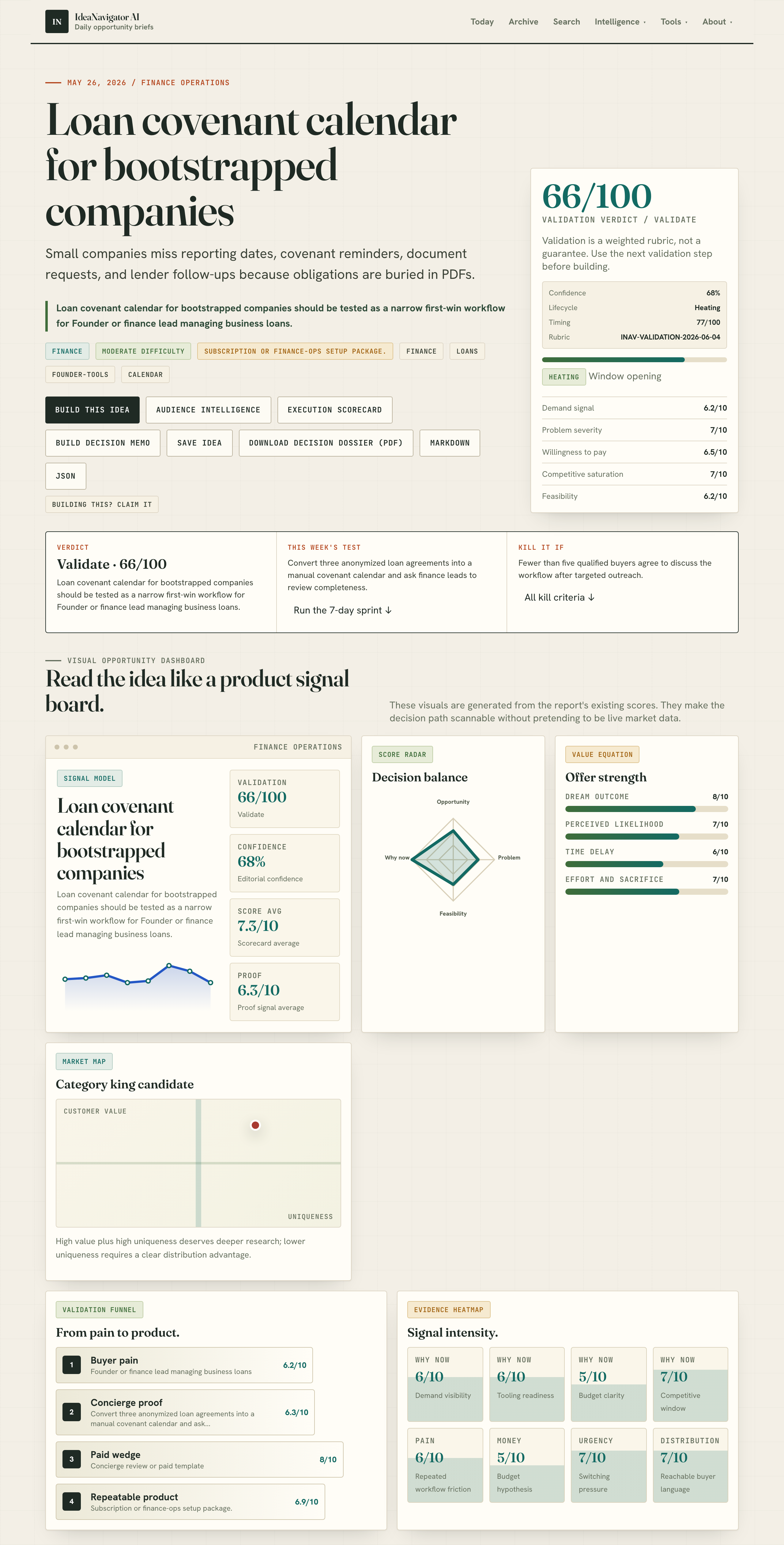
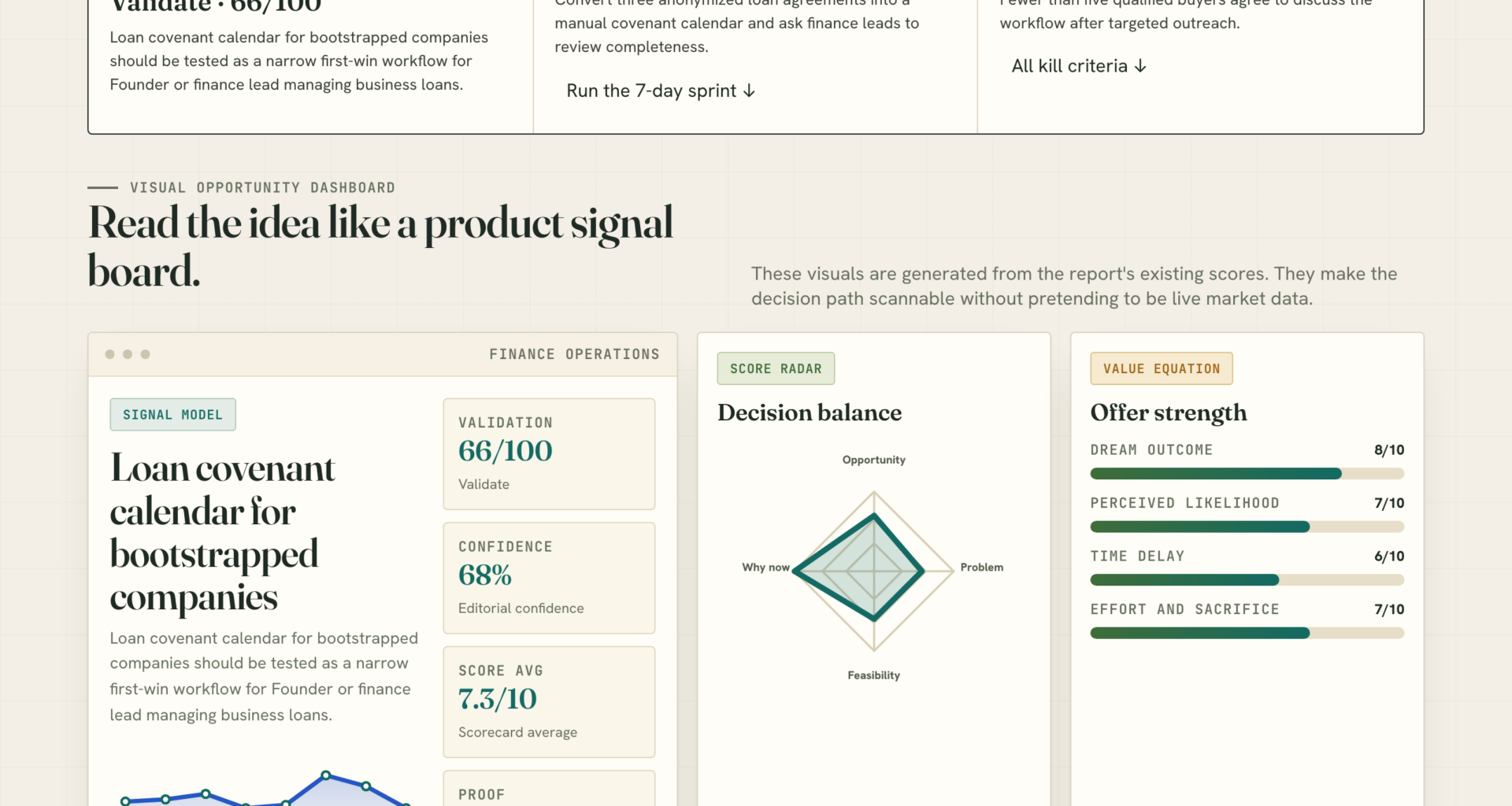
A prototype loan covenant calendar for small, bootstrapped companies is in testing, aiming to help founders and finance leads manage loan obligations more effectively. Its success could streamline operational follow-up and reduce missed reporting deadlines.
A prototype loan covenant calendar designed for bootstrapped companies is currently in the testing stage, aiming to streamline the management of loan obligations for founders and finance leads. The tool seeks to address common operational challenges faced by small businesses in tracking covenant requirements and lender communications, especially as financing scrutiny increases.
The proposed covenant calendar extracts key loan obligations, including due dates, responsible owners, required evidence files, and communication history with lenders. This approach aims to reduce missed reporting deadlines and document requests, which are common when obligations are buried in PDFs or scattered across emails. The initial validation involves converting three anonymized loan agreements into a manual covenant calendar and asking finance leads to review its completeness and usability.
This development is driven by the rising importance of operational follow-through for small companies facing higher scrutiny from lenders and investors. The calendar is intended as a minimal viable product (MVP) that can be integrated into existing finance operations, with revenue models based on subscriptions or setup packages for finance teams.
Why a Covenant Calendar Matters for Small Businesses
This initiative could significantly improve compliance management for bootstrapped companies, reducing the risk of covenant breaches that can lead to penalties or loan defaults. As lenders increase their focus on operational adherence, having an automated or semi-automated system to track obligations may become a competitive advantage for small firms. Additionally, it addresses a common pain point—manual tracking of covenant requirements buried in PDFs—potentially saving time and reducing errors.
As an affiliate, we earn on qualifying purchases.
Operational Challenges in Managing Loan Covenants for Small Firms
Small, bootstrapped companies often struggle with loan covenant compliance due to limited resources and manual processes. Traditionally, obligations are documented in PDFs or scattered across emails, making timely reporting and document gathering difficult. With increased regulatory scrutiny and tighter lending conditions, operational follow-up has become more critical. The idea of a covenant calendar emerges as a targeted solution to automate extraction and tracking of key obligations, helping founders and finance leads stay on top of their commitments.
“The covenant calendar prototype aims to simplify compliance tracking for small companies, reducing missed deadlines and improving lender relations.”
— an anonymous researcher
Uncertainties About Scalability and Adoption
It remains unclear how well the manual conversion process will scale for different types of loan agreements or whether the tool can be fully automated in future iterations. The effectiveness of the calendar in reducing missed obligations and its integration into existing finance workflows are still under evaluation. Further testing will reveal whether this approach can become a standard practice among small companies.
Next Steps for Validation and Development
The next phase involves testing the covenant calendar with additional anonymized loan agreements and gathering feedback from finance leads. Based on these insights, developers may refine the extraction process, improve usability, and explore automation options. If successful, a pilot rollout could be planned, followed by marketing efforts targeting small, bootstrapped companies seeking better operational compliance tools.
Key Questions
What is a loan covenant calendar?
A loan covenant calendar is a tool that tracks borrower obligations, including due dates, required documents, and communication history, to ensure compliance with loan agreements.
Why is this tool being developed for small companies?
Small companies often lack dedicated compliance teams and manage obligations manually, leading to missed deadlines. This tool aims to simplify and automate that process.
How will the calendar be tested?
It will be tested by converting anonymized loan agreements into the calendar format and reviewing its completeness and usability with finance leads.
Can this tool be automated in the future?
Automation is a future goal, but current testing focuses on manual extraction and validation. Automation prospects depend on initial testing success.
What are the potential benefits for small businesses?
Benefits include reduced risk of covenant breaches, time savings, improved lender relations, and better operational oversight of loan commitments.
Source: IdeaNavigator AI
Halloween Picks
halloween
As an affiliate, we earn on qualifying purchases.