Set up your wireless gaming headset so you can hear game audio and use its microphone on a PC, PlayStation, Xbox, Nintendo Switch, or phone. This beginner guide covers compatibility checks, pairing, audio settings, fit, and basic troubleshooting. Allow 15–30 minutes, depending on your device and connection method.

Get the latest gadgets delivered free with Prime
- Fast, free delivery on millions of items
- Prime Video, Amazon Music and more included
- Member-only deals all year

Turtle Beach Stealth 600 Wireless Gaming Headset
- ✔ Connectivity: 2.4GHz wireless and Bluetooth
- ✔ Bluetooth: Version listed inconsistently as 5.2 and 5.4 in supplied information
- ✔ Drivers: 50mm Nanoclear

Logitech G733 LIGHTSPEED Wireless Gaming Headset, Black
- ✔ Connectivity: 2.4 GHz LIGHTSPEED wireless
- ✔ Wireless range: Up to 20 meters
- ✔ Battery life: Up to 29 hours
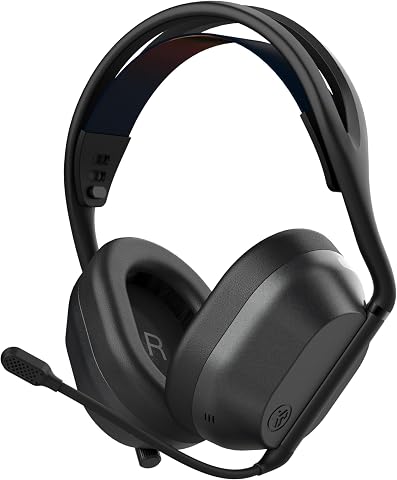
JLab Daybreak Wireless Gaming Headset with Dual Drivers
- ✔ Connectivity: LabSpeed 2.4 GHz USB-C dongle, Bluetooth 5.3, or 3.5 mm wired
- ✔ Drivers: 50 mm and 20 mm dynamic drivers
- ✔ Audio: DTS Headphone:X spatial audio
Difficulty: Beginner | Time: 15–30 minutes
What You’ll Need
Tools & Materials:
- Wireless gaming headset and its USB receiver, charging cable, or audio cable, as supplied
- PC, console, or phone that supports the headset’s connection method
- Access to the device’s sound or audio settings
Knowledge:
- Basic ability to navigate device settings
- Know which device you want to use for game audio and chat
Check the headset manual or manufacturer’s compatibility page before setup. A headset that works over USB on a PC may not work the same way on every console. Xbox compatibility can differ from PlayStation and Switch compatibility. Charge the headset before starting, and keep its receiver nearby.
Turtle Beach Stealth 600 Wireless Gaming Headset
The Stealth 600 earns the top spot because it handles two common listening situations without making us choose one connection permanently. Its low-latency 2.4GHz wireless suits gaming, while Bluetooth and a dedicated QuickSwitch button make it easier to move between play and a compatible phone or other Bluetooth device. The G733 is a simpler choice for players who want a lightweight headset built around LIGHTSPEED, and the Daybreak adds wired listening; Turtle Beach offers the clearest balance of gaming wireless and everyday device switching.Its stated up to 80-hour battery life is a strong fit for extended sessions, and memory foam cushions with glasses relief technology address a practical comfort concern. A flip-to-mute microphone is easy to understand and operate mid-game, while AI noise reduction and app-based EQ provide room to tune the sound. Some customization requires the companion app, however, so players who want all adjustments directly on the headset may prefer a simpler setup. The supplied information also gives conflicting Bluetooth version details, listing 5.2 in one place and 5.4 in another; we would verify the version for the exact model before buying if that specification matters.For a headset that can cover console or PC gaming and Bluetooth listening, the Stealth 600 is the most versatile first pick here. It is less compelling if we need a 3.5 mm wired fallback like JLab provides, or if minimizing weight is the main priority: the Logitech G733 has the clearest stated advantage on that front.
Pros:
- Combines low-latency 2.4GHz wireless and Bluetooth with a QuickSwitch button.
- Lists up to 80 hours of battery life with quick charge.
- Memory foam cushions include glasses relief technology.
- Flip-to-mute microphone and app-based audio adjustments support flexible daily use.
Cons:
- Some audio and microphone customization requires the companion app.
- Supplied information conflicts on the Bluetooth version, listing 5.2 and 5.4.
- Does not list a 3.5 mm wired connection.
Best for: Players who want 2.4GHz gaming audio and Bluetooth listening with a quick way to switch between supported devices.
Not ideal for: Buyers who need a 3.5 mm wired connection, want the lightest listed headset, or prefer to make every audio adjustment without an app.
Bottom line: Choose the Stealth 600 for the strongest mix of gaming wireless, Bluetooth switching, and long stated battery life.
“Choose the Stealth 600 for the strongest mix of gaming wireless, Bluetooth switching, and long stated battery life.”
Logitech G733 LIGHTSPEED Wireless Gaming Headset, Black
At a listed 278 g, the G733 is the lightest of these three headsets, making it the natural choice for players who want an over-ear gaming fit that does not feel as substantial as the 316 g JLab Daybreak. Its reversible suspension headband and memory foam earcups reinforce that comfort-focused role. The difference is about fit and wearability: Turtle Beach includes glasses relief technology, while Logitech emphasizes low weight and a suspended headband.For gaming, the 2.4GHz LIGHTSPEED connection is designed around wireless play, and Logitech lists up to 20 meters of range and up to 29 hours of battery life. Dual-zone RGB lighting gives the headset a distinctive look, while Blue VO!CE microphone filters offer voice customization. Those features depend in part on G HUB software, so the G733 suits players willing to use Logitech’s desktop tools better than anyone who wants a fully app-free setup. The Turtle Beach offers Bluetooth as a second wireless mode, and JLab provides a 3.5 mm cable; neither option is listed for the G733.The compatibility list covers PC, PS5, PS4, and Nintendo Switch, but does not claim the broad device range listed for Turtle Beach. That makes this headset a focused pick for supported gaming platforms rather than a universal wireless companion. Choose it for lightweight comfort and LIGHTSPEED; skip it if Bluetooth switching, a wired fallback, or a broader stated compatibility list matters more.
Pros:
- Lightest listed option at 278 g.
- LIGHTSPEED 2.4GHz wireless lists up to 20 meters of range.
- Reversible suspension headband and memory foam earcups support a comfort-focused fit.
- Blue VO!CE filters and dual-zone RGB allow voice and appearance customization.
Cons:
- Listed battery life of up to 29 hours is shorter than the claims for the other two headsets.
- RGB and customization features rely on G HUB software.
- Compatibility list is limited to PC, PS5, PS4, and Nintendo Switch.
Best for: PC and supported console players who prioritize a lightweight over-ear fit, a suspension headband, and customizable appearance or microphone filters.
Not ideal for: Players who need Bluetooth, a 3.5 mm wired fallback, broader listed device support, or who want to avoid G HUB software.
Bottom line: Pick the G733 when low weight and a suspension-headband fit matter more than Bluetooth or multi-mode connectivity.
“Pick the G733 when low weight and a suspension-headband fit matter more than Bluetooth or multi-mode connectivity.”
JLab Daybreak Wireless Gaming Headset with Dual Drivers
The Daybreak is the most adaptable choice when we want more than wireless gaming: it can connect through a low-latency 2.4GHz USB-C dongle, Bluetooth 5.3, or a 3.5 mm cable. That wired option gives it a fallback the Stealth 600 and G733 do not list, while Bluetooth can serve mobile listening. Its stated compatibility covers PC, PlayStation, and Nintendo Switch, so we should still check that the intended connection method works with each specific device.JLab pairs that flexibility with 50 mm and 20 mm dynamic drivers, DTS Headphone:X spatial audio, and a detachable noise-reducing boom microphone. The boom’s quick mute and hear-yourself mode are useful for voice chat, and detaching it helps when we want a cleaner setup away from gaming. That removable design is also a small inconvenience: the mic can be separated or misplaced, unlike Turtle Beach’s flip-to-mute microphone. The headset lists 70+ hours via USB-A dongle and 100+ hours via Bluetooth, plus a rapid-charge claim, but the different connection modes mean those battery figures should be read in context rather than compared as identical use cases.The compromise is weight: at 316 g, Daybreak is heavier than the Logitech and Turtle Beach options. Its connection choices make it a good fit for buyers with mixed devices or a preference for wired backup, but anyone who values the lightest feel should consider the G733, and anyone who prioritizes a one-button switch between 2.4GHz and Bluetooth may find Turtle Beach more convenient. The supplied pros also note that a USB-A dongle connection requires a dongle, so buyers should confirm which adapter their setup needs.
Pros:
- Offers 2.4GHz USB-C dongle, Bluetooth 5.3, and 3.5 mm wired connections.
- Lists 70+ hours via USB-A dongle and 100+ hours via Bluetooth, with rapid charging.
- Detachable noise-reducing boom mic includes quick mute and hear-yourself mode.
- Includes DTS Headphone:X spatial audio and adjustable suspension headband.
Cons:
- Heaviest listed option at 316 g.
- The detachable boom microphone may need to be removed for other uses and can be misplaced.
- Dongle use requires the relevant adapter, including USB-A for the connection described in the supplied pros.
Best for: Players who want a choice of low-latency dongle, Bluetooth, and 3.5 mm wired audio, plus a detachable boom microphone.
Not ideal for: Buyers who prioritize the lightest headset, dislike managing a dongle, or want a permanently attached microphone that is harder to misplace.
Bottom line: Choose Daybreak when connection choice and a detachable mic outweigh its higher listed weight and dongle management.
“Choose Daybreak when connection choice and a detachable mic outweigh its higher listed weight and dongle management.”
As an Amazon Associate we earn from qualifying purchases.
Before You Start
Check compatibility first. Identify whether the headset connects with a USB wireless receiver, Bluetooth, or both. Many gaming headsets use a dedicated USB receiver for low-latency audio; Bluetooth support alone does not mean a console supports the headset. Some consoles also require a licensed headset or a specific connection method.
Turn down the headset and device volume before connecting. This prevents an unexpected loud sound during setup. If you plan to use voice chat, check that the game or chat service allows microphone access.
Step-by-Step Instructions
Step 1: Charge the headset
Connect the headset to its supplied charging cable or charging dock. Wait until its indicator shows a full charge, or charge it for the period listed in the manual. Leave it connected while you find the headset’s power and pairing controls.
Tip:If the headset has a removable battery, use only the battery and charging method specified by its manufacturer.
Check: The charging indicator shows a full charge, or the headset powers on without displaying a low-battery warning.
Step 2: Choose the supported connection method
Read the headset manual and find the connection instructions for your device. For a USB wireless receiver, confirm that your PC or console supports that receiver. For Bluetooth, confirm that your device supports Bluetooth audio headsets and microphone input. Use a wired connection only if both devices support the headset’s cable.
Tip:Do not assume that a USB port guarantees headset compatibility. Some consoles accept only specific audio devices or adapters.
Check: You have identified a connection method listed as compatible with your device.
Step 3: Connect the receiver or pair over Bluetooth
Plug the USB receiver directly into an available USB port on the PC or console, and set its mode switch to the correct platform if it has one. To connect over Bluetooth, open your device’s Bluetooth settings, put the headset into pairing mode using the manual’s instructions, then select the headset when it appears. If prompted, confirm the pairing request.
Tip:Keep a USB receiver away from crowded USB hubs or other wireless devices if the connection is unstable. Pairing mode and normal power-on mode can use different button actions.
Check: The device shows the headset or receiver as connected, or the headset gives its connected signal.
Step 4: Select the headset for audio output
Open the device’s sound or audio settings and set the wireless headset as the output device for game or system sound. If your platform provides separate chat and game audio controls, select the headset for both as needed. Start with a low volume and play a short sound to confirm that audio comes through the headset.
Tip:On a PC, select the headset in both the operating system’s sound settings and the game’s audio menu if the game has its own device selection.
Check: You hear the device’s test sound or game audio in both earcups, and the volume controls change its level.
Step 5: Set the microphone input
Open the device’s sound settings and select the headset microphone as the input device. Raise the input level only enough for your voice to register clearly. Open a voice recorder or the platform’s microphone test, speak at a normal volume, and check the playback or input meter. Unmute the headset and grant microphone access to the game or chat app if it requests access.
Tip:If the headset has a flip-down or detachable microphone, place it near the corner of your mouth without touching your lips. Check its mute switch before testing.
Check: Your voice registers in the test, and the recording or chat playback sounds clear without clipping or persistent hiss.
Step 6: Adjust the fit and sound controls
Put on the headset and adjust the headband so the earcups sit evenly over your ears. Position the microphone as recommended by its manual. Use the headset’s game, chat, and master volume controls to set comfortable levels. If the headset has an equalizer or surround-sound modes, begin with the default profile and change one setting at a time.
Tip:A loose earcup can reduce bass and make outside noise more noticeable. Reposition the headset before raising the volume to compensate.
Check: The headset stays in place, feels comfortable, and game audio and voice chat are easy to distinguish at a comfortable volume.
Step 7: Test the connection during play
Launch a game or voice chat and listen for dropouts, delay, or distortion. Ask a teammate to confirm that your microphone is audible if possible. Move to your usual playing position and check the connection there. If the headset has separate game and chat balance controls, adjust them while both audio sources are active.
Tip:Wireless range and interference vary by room and device placement. Keep the receiver within the manufacturer’s recommended range and with a clear path to the headset.
Check: Game sound stays steady, chat audio is audible, and other players can hear you at your normal speaking volume.
Common Mistakes to Avoid
- Assuming a headset will work with every console because it connects to a PC. — Check the manufacturer’s compatibility list for the exact console model and connection method before setup.
- Leaving the headset muted or selecting the wrong microphone input. — Check the physical mute control, then select the headset microphone in both device and game or chat settings.
- Turning the volume up to fix muffled or unbalanced sound. — First reseat the earcups, check left and right orientation, and confirm the correct output device is selected.
- Pairing Bluetooth when the headset is intended to use its USB receiver for gaming. — Follow the connection method specified for your platform; use the receiver when the manual recommends it for game audio.
Troubleshooting
Problem: The headset does not appear in the device’s Bluetooth list.
Solution: Confirm that the headset is in pairing mode, not just powered on. Move it close to the device, remove an old pairing from the device’s Bluetooth list if present, and try pairing again. Check the manual for any pairing reset procedure.
Problem: The headset is connected, but game audio still comes from the speakers or TV.
Solution: Open the device’s audio settings and select the headset as the output. Check the game’s own audio menu as well, then reconnect the receiver or restart the game if it does not update.
Problem: Other players cannot hear you.
Solution: Unmute the headset, select its microphone as the input, and allow microphone access for the game or chat app. Run a microphone test and raise the input level slightly if the meter barely responds.
Problem: Audio cuts out, crackles, or has noticeable delay.
Solution: Move closer to the USB receiver or Bluetooth device, connect the receiver directly to the device, and move other wireless equipment away. Charge the headset and use its recommended gaming connection method.
What Success Looks Like
The headset connects reliably to the intended PC, console, or phone. Game or system audio plays through both earcups, the microphone registers your voice in a test or chat, and the fit and volume remain comfortable during play. No repeated dropouts occur from your usual seating position.
Next Steps
Save any sound or microphone settings you changed, then charge the headset after use according to its manual. Store the receiver with the headset so it is ready for the next session. If you later use another device, repeat the compatibility check and select that device’s audio output and microphone settings before playing.
Frequently Asked Questions
Can I use a wireless gaming headset with any console?
No. Support depends on the console, headset model, and connection method. Check the headset’s compatibility information for your exact platform before buying or pairing it.
Should I use Bluetooth or the USB receiver for gaming?
Use the method the headset manufacturer recommends for your platform. A dedicated receiver is often intended for gaming audio, while Bluetooth support and microphone behavior can vary by device.
Why can I hear game audio but my microphone does not work?
Output and microphone input are often selected separately. Choose the headset microphone in the device and game or chat settings, check the mute switch, and allow microphone access.
How do I reduce wireless audio dropouts?
Keep the receiver close, connect it directly to the PC or console, and reduce obstructions and nearby wireless interference. Check the battery and follow the headset’s recommended connection method.