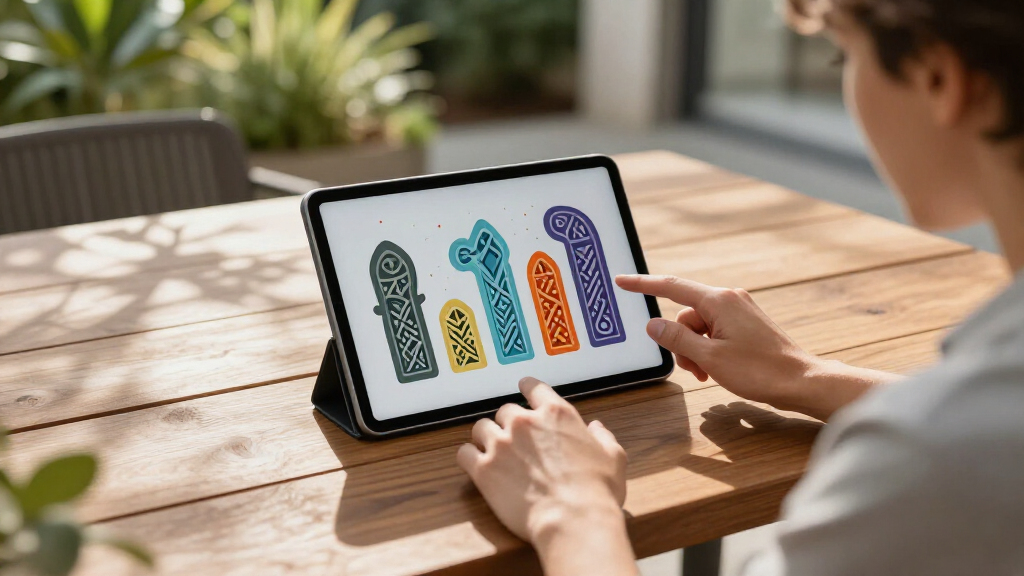

🔍 Read the full analysis: How AI Enables Complex SVG Carving Animations: 'The Runestone Field' Case Study on ThorstenMeyerAI.com
TL;DR
AI technology enables intricate SVG carving animations in ‘The Runestone Field’ project, creating dynamic visual storytelling. The case study highlights innovative techniques and ongoing challenges in digital craftsmanship.
AI technology has been used to create complex SVG carving animations in the project ‘The Runestone Field,’ transforming static runic visuals into dynamic, immersive narratives. This development demonstrates how automation and digital craftsmanship can elevate storytelling, making ancient carvings appear to come alive. The project, led by an anonymous researcher, marks a significant step in blending traditional art forms with advanced animation techniques, highlighting the potential for digital artistry to reinterpret historical motifs.
The ‘Runestone Field’ project leverages artificial intelligence to automate the creation of detailed SVG carving animations, resulting in fluid, realistic visual effects that simulate stone carving processes. The process involves using AI algorithms to generate precise paths and contours that mimic traditional runic inscriptions, then animating these paths to produce a carving effect. According to the project team, this approach allows for highly customizable and scalable animations, reducing manual effort while maintaining artistic fidelity.
Thorsten Meyer, the project’s lead, explained that integrating AI with SVG techniques enabled the team to craft animations that are both intricate and expressive. The animations are designed to evoke the tactile feel of stone carving, with subtle variations and fluid motion that enhance realism. The project also incorporates user-interactive elements, allowing viewers to explore different layers of the carvings or trigger animations based on their interaction, further immersing audiences in the storytelling experience.
While the project showcases promising results, it also faced technical challenges, such as ensuring the AI-generated paths align precisely with traditional runic designs and maintaining performance across various devices. The team emphasizes that ongoing refinements are necessary to optimize animation quality and interactivity, with future developments focused on increasing automation and artistic control.
How AI Enables Complex SVG Carving Animations: ‘The Runestone Field’
AI technology has transformed static runic visuals into dynamic, immersive narratives — automating detailed SVG carving paths that simulate stone carving with fluid, realistic motion. Led by Thorsten Meyer, the project blends traditional Scandinavian artistry with advanced animation techniques.
“AI serves as a digital chisel — shaping new forms of artistic expression rooted in tradition but driven by innovation.”
Thorsten Meyer · Project LeadAI-Driven SVG Carving in Digital Storytelling
Bringing Ancient Narratives Alive
Viewers experience more immersive storytelling, with subtle variations and fluid motion evoking the tactile feel of stone carving — historical motifs reinterpreted for the digital age.
Customizable Workflows
AI automates complex visual effects that traditionally require intensive manual effort, letting artists and designers produce high-quality content with less time and resource investment.
Cross-Industry Potential
Gaming, education, and cultural preservation stand to benefit — any domain where animated storytelling enhances engagement and understanding of cultural artifacts.
From Runic Design to Animated Carving
Runic Source Inspiration
Ancient Scandinavian carvings serve as cultural symbols and design references for authentic runic motifs.
AI Path Generation
Algorithms generate precise paths and contours that mimic traditional runic inscriptions.
SVG Carving Animation
Paths are animated to simulate the carving process with fluid, realistic visual effects.
Interactive Exploration
Viewers explore carving layers and trigger animations, deepening immersion in the story.
Status of Key Hurdles & Improvements
| Challenge | Status | Next Step | Impact |
|---|---|---|---|
| AI-path alignment with historical runic designs | ✗ Ongoing | Refine algorithms for accuracy & efficiency | Artistic fidelity |
| Performance across devices & platforms | ~ Partial | Broad device & scenario testing | Accessibility |
| Interactive layer exploration | ✓ Implemented | Expand options, real-time user input | Immersion |
| Fully automated workflow adoption | ~ In Progress | Minimize manual intervention | Scalability |
| Detailed, fluid carving realism | ✓ Achieved | Continuous rendering refinements | Visual quality |
Maturity of Core Capabilities
Future milestones: fully automated workflows, real-time user input integration, and applications in educational tools and digital preservation — preparing for broader deployment.
Frequently Asked
How does AI improve SVG carving animations?
AI automates the generation of detailed carving paths and contours, enabling more realistic and complex animations with less manual effort, enhancing visual fidelity and interactivity.
What makes ‘The Runestone Field’ unique?
It combines traditional runic symbolism with cutting-edge AI-driven SVG animation, creating a dynamic storytelling experience that bridges history and digital innovation.
What technical challenges remain?
Ensuring precise alignment of AI-generated paths with historical designs and maintaining performance across various devices remain key challenges under active development.
Can it be used in other cultural projects?
Yes — the approach is scalable and adaptable, with potential applications in digital preservation, educational content, and interactive exhibits for various cultural artifacts.
Why AI-Driven SVG Carving Matters in Digital Storytelling
This project illustrates how artificial intelligence can revolutionize digital artistry by automating complex visual effects that traditionally require intensive manual effort. The ability to generate detailed SVG carving animations opens new avenues for storytelling, especially in historical and cultural contexts, where authenticity and visual richness are paramount. For viewers, this means more immersive and engaging experiences that bring ancient narratives into the digital age.
Moreover, the ‘Runestone Field’ case demonstrates the potential for scalable, customizable animation workflows, making it feasible for artists and designers to produce high-quality visual content with less time and resource investment. This could influence industries such as gaming, education, and cultural preservation, where animated storytelling enhances engagement and understanding. Ultimately, the project exemplifies how AI can serve as a digital chisel, shaping new forms of artistic expression rooted in tradition but driven by innovation.
As an affiliate, we earn on qualifying purchases.
Historical Inspiration and Technological Innovation in SVG Carving
The ‘Runestone Field’ project draws inspiration from ancient Scandinavian runic carvings, which have long served as cultural symbols and storytelling devices. Traditionally, these carvings are static, etched into stone with painstaking craftsmanship. The advent of digital art and animation has opened possibilities for reinterpreting these symbols dynamically, but achieving realistic effects has been challenging.
Recent advances in AI and SVG technology have made it possible to automate parts of this process, allowing artists to focus on creative direction rather than technical execution. The project builds on prior work in procedural animation and machine learning, integrating these techniques to produce detailed, fluid carvings that mimic the tactile qualities of stone. This development aligns with broader trends in digital preservation and interactive storytelling, where technology enables new ways to engage with cultural artifacts.
Since its inception, the project has undergone multiple iterations, with early prototypes demonstrating basic carving animations. The current version achieves a higher level of detail and interactivity, thanks to improvements in AI path generation and rendering performance. While still in development, the project signals a shift toward more automated, artist-friendly workflows in digital heritage projects.
Technical Challenges and Future Improvements in SVG Carving
While the project demonstrates promising results, it is not yet clear how well the AI-generated animations will perform across all platforms or how easily the workflow can be adopted by other artists. Ensuring precise alignment with traditional runic designs and maintaining high performance during interactive exploration are ongoing technical hurdles. Further testing and refinement are needed to establish robustness and scalability.
Next Steps for AI-Enhanced Carving Animations
The project team plans to continue refining the AI algorithms to improve accuracy and efficiency, aiming for fully automated workflows that require minimal manual intervention. Future developments may include expanding interactivity options, integrating real-time user input, and exploring applications in educational tools and digital preservation. Additional testing across diverse devices and user scenarios will help optimize the experience and prepare for broader deployment.
Key Questions
How does AI improve SVG carving animations?
AI automates the generation of detailed carving paths and contours, enabling more realistic and complex animations with less manual effort, thus enhancing visual fidelity and interactivity.
What makes ‘The Runestone Field’ project unique?
It combines traditional runic symbolism with cutting-edge AI-driven SVG animation, creating a dynamic storytelling experience that bridges history and digital innovation.
What technical challenges does the project face?
Ensuring precise alignment of AI-generated paths with historical designs and maintaining performance across various devices remain key challenges under active development.
Can this technique be used in other cultural projects?
Yes, the approach is scalable and adaptable, with potential applications in digital preservation, educational content, and interactive exhibits for various cultural artifacts.
What are the next milestones for this project?
Refining automation workflows, expanding interactivity, and testing across platforms are the immediate next steps, aiming for broader accessibility and application.
Source: ThorstenMeyerAI.com