
To avoid weak volume, match your headphone impedance with your device’s output and consider sensitivity. Low-impedance headphones (under 50Ω) work well with smartphones, delivering more volume with less power, especially if they have high sensitivity (above 90dB). High-impedance models need an amplifier for ideal sound. Balancing impedance and sensitivity ensures clear, loud audio without distortion. Keep these points in mind, and you’ll gain better clarity on how to enhance your audio setup.

Get the latest gadgets delivered free — and shop member deals
- Fast, free delivery on millions of items
- Access to Prime Big Deal Days deals on October 6–7
- Prime Video, Amazon Music and more included
Key Takeaways
- Match low-impedance headphones (<50Ω) with portable devices for sufficient volume without extra amplification.
- Use high-impedance headphones (>100Ω) with dedicated amplifiers to prevent weak sound and ensure clarity.
- Prioritize high sensitivity (dB) for portable use to achieve louder volume with less power.
- Understand that combining high impedance with low sensitivity may cause weak volume; pair appropriately.
- Ensure device and headphone specs align to avoid muddled sound, distortion, or insufficient loudness.

Understanding headphone impedance and sensitivity is essential because these specifications directly affect how your headphones perform with different audio sources. If you’re aiming for ideal sound quality and want to avoid weak volume, it’s vital to understand how impedance and sensitivity interact, especially when considering amplifier compatibility. Impedance, measured in ohms, indicates how much electrical resistance your headphones present to the audio device. Headphones with low impedance (generally under 50 ohms) are easier to drive, meaning they require less power from your device or amplifier to reach decent volume levels. Conversely, high-impedance headphones (above 100 ohms) demand more power, often needing a dedicated amplifier for the best sound quality and volume.
Understanding headphone impedance helps optimize sound quality and amplifier compatibility.
When your headphones aren’t compatible with your amplifier or audio source, you might face weak sound output, muddled audio, or inconsistent volume levels. If you’re using a device with a lower power output, like a smartphone, low-impedance headphones are usually your best bet—they’ll produce louder sound without the need for an external amplifier. But if you prefer high-impedance headphones for their detailed sound and durability, you’ll need an amplifier that can supply enough voltage and current. Without proper amplifier compatibility, you risk the sound being underwhelming, lacking clarity, and not reaching the volume you desire.
Sensitivity, measured in decibels (dB), indicates how loud your headphones will be given a certain amount of power. Headphones with higher sensitivity ratings produce more sound at lower power levels, making them ideal for portable devices. If you have high-sensitivity headphones but connect them to a weak audio source, you might still experience insufficient volume or compromised sound quality. Conversely, low-sensitivity headphones require more power and are better suited for use with amplifiers or audio interfaces that can deliver higher wattage, ensuring you get the full audio experience. Additionally, understanding the relationship between impedance and sensitivity can help in selecting the right headphones for your setup.
Balancing impedance and sensitivity helps you select headphones that match your audio setup, ensuring you get clear, loud sound without distortion or the need for excessive volume adjustments. When choosing headphones, consider your typical listening device—if it’s a smartphone, go for low-impedance, high-sensitivity models. If you’re into professional audio or high-fidelity listening, opt for high-impedance, low-sensitivity headphones paired with a suitable amplifier. This way, you’ll avoid weak volume issues and enjoy top-tier sound quality without unnecessary frustration. In the end, understanding these specs helps you make smarter choices, ensuring your headphones perform at their best with your gear.
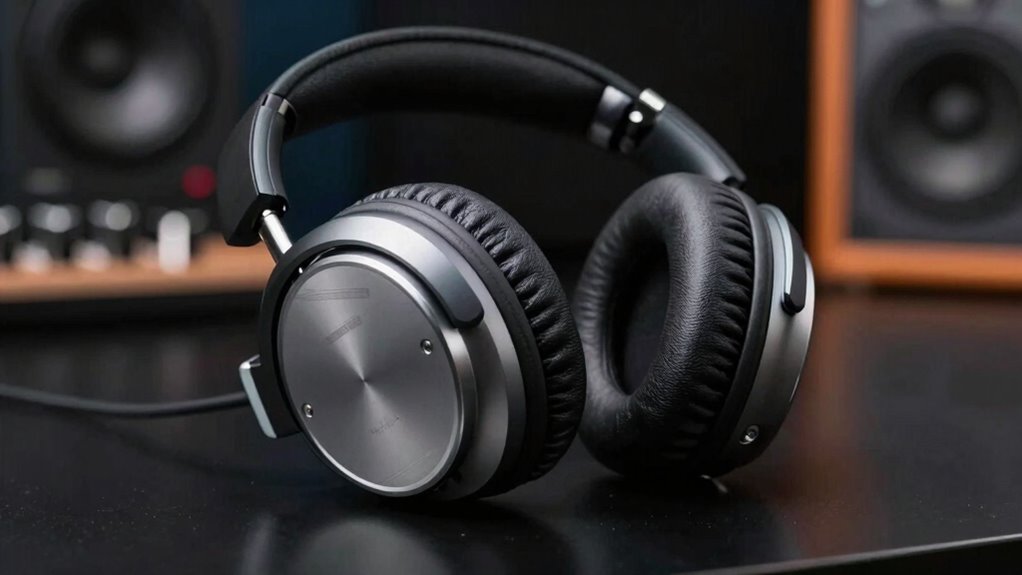
low impedance headphones for smartphones
As an affiliate, we earn on qualifying purchases.
As an affiliate, we earn on qualifying purchases.
Frequently Asked Questions
How Does Headphone Impedance Affect Compatibility With Amplifiers?
You need to take into account amplifier compatibility when choosing headphones, especially regarding impedance matching. Higher impedance headphones often require more powerful amplifiers to deliver ideal sound, while lower impedance ones work well with portable devices. If impedance isn’t matched, your headphones might sound weak or lack volume. To guarantee the best experience, select an amplifier that matches your headphone’s impedance, avoiding distortion or insufficient volume caused by poor impedance compatibility.
Can High Sensitivity Headphones Still Be Loud at Low Volumes?
You might find high sensitivity headphones still loud at low volumes, creating a surprising contrast. While they’re capable of delivering strong sound without much power, excessive volume levels can jeopardize your listening comfort. So, even with high sensitivity, always start at low volume settings and gradually increase. This ensures you enjoy clear, balanced sound without risking ear fatigue or damage, making your listening experience safe and enjoyable.
What’s the Ideal Impedance for Portable Devices?
For portable devices, an impedance between 16 to 32 ohms works best. This range allows for impedance matching, ensuring your headphones get ideal power without distortion or weak volume. It also helps with volume optimization, so you won’t need to turn your device up excessively. Stick to this impedance range for a balanced sound that’s loud enough and clear, without putting too much strain on your portable device’s output.
How Do I Match Headphones With My Smartphone?
To match headphones with your smartphone, verify they’re wireless compatible for easy connectivity. If you prefer noise cancellation, choose headphones with active noise-canceling features that suit your listening environment. Check the headphone’s impedance and sensitivity to match your device’s output; lower impedance is often better for smartphones. This way, you’ll enjoy clear, powerful sound without weak volume, and your wireless experience will be seamless and satisfying.
Does Higher Sensitivity Mean Better Sound Quality?
Higher sensitivity doesn’t automatically mean better sound quality. Many sound quality myths revolve around sensitivity vs impedance, but it’s more about how the headphones match your device. Higher sensitivity can make louder sound with less power, but it doesn’t guarantee clearer or richer audio. Focus on overall sound profile and your listening preferences. Properly matching impedance and sensitivity ensures ideal performance without distortion or weak volume, regardless of sensitivity level.
Conclusion
By mastering minimal measurements of headphone impedance and sensitivity, you’ll effortlessly avoid weak volume woes. Remember, matching your gear means more than just numbers—it’s about creating engaging, crisp sound. Don’t delay—dive into the details, determine the data, and design your perfect listening experience. With the right ratios, you’ll enjoy immersive, inspiring soundscapes without frustration. Feel confident, forge your flawless fit, and finally get the full force of your favorite tunes.
Fall Picks
fall essentials
As an affiliate, we earn on qualifying purchases.