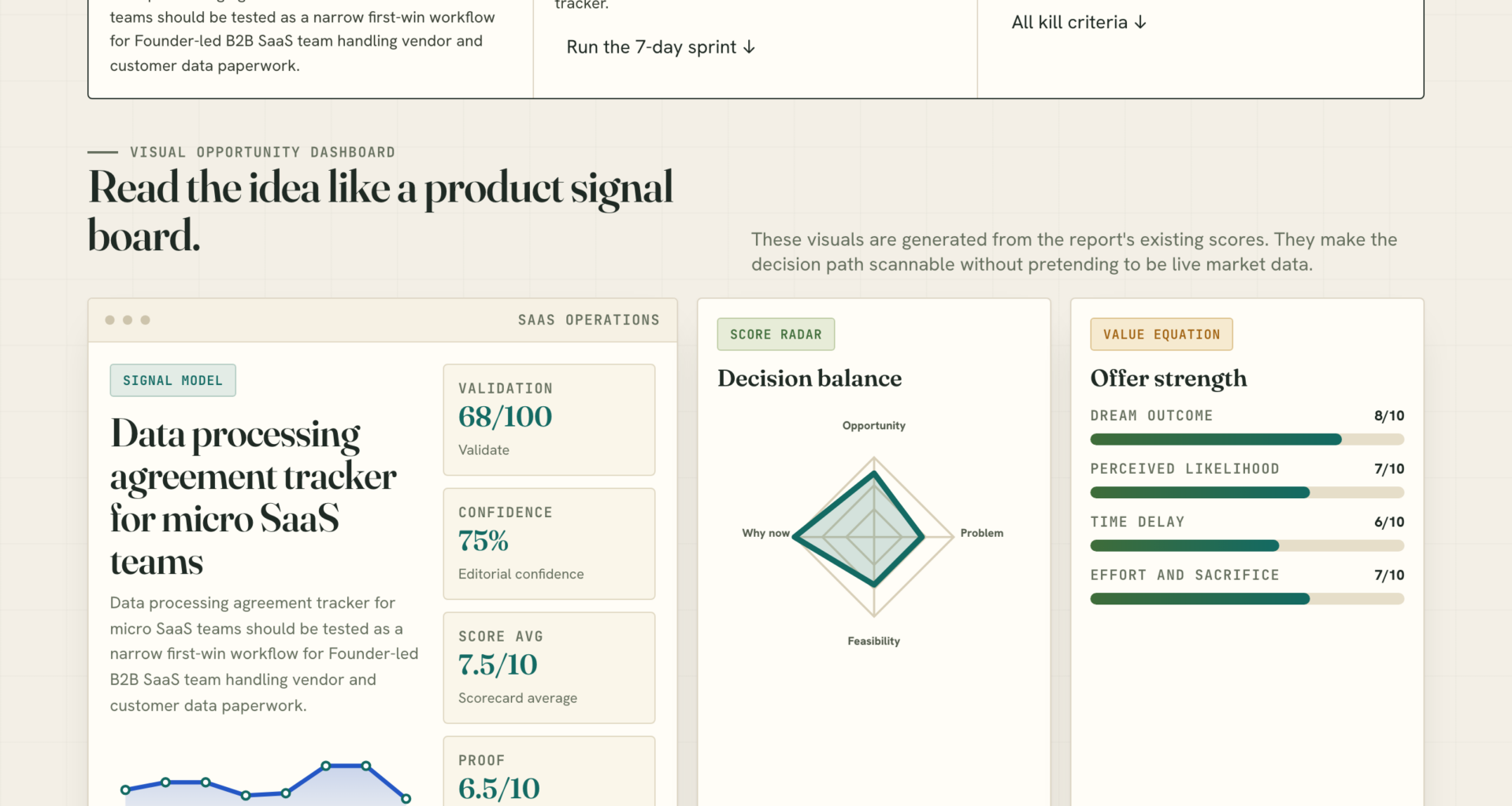
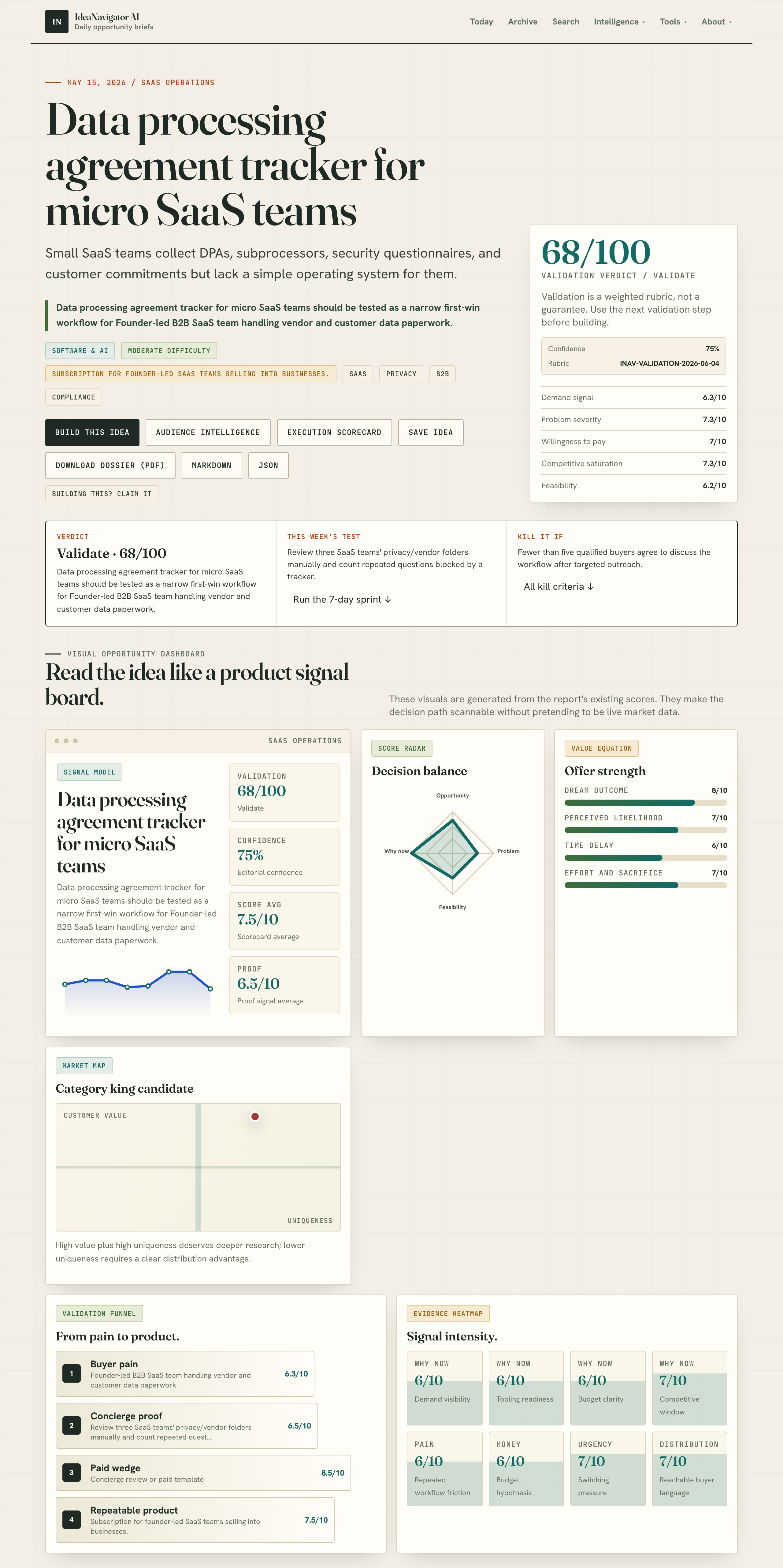
📊 Full opportunity report: Data processing agreement tracker for micro SaaS teams on IdeaNavigator AI — validation score, market gap, and execution plan.

Get the latest gadgets delivered free — and shop member deals
- Fast, free delivery on millions of items
- Access to Prime Big Deal Days deals on October 6–7
- Prime Video, Amazon Music and more included
TL;DR
A proposed data processing agreement (DPA) tracker for small SaaS teams is entering testing to help manage privacy and vendor documentation efficiently. This addresses a gap in small teams’ compliance workflows and could become a vital tool for founder-led SaaS companies.
A new data processing agreement (DPA) tracker tailored for founder-led micro SaaS teams is being tested as a potential solution to streamline the management of vendor and customer data documentation, addressing a significant gap in small team compliance workflows.
The proposed DPA tracker is designed specifically for small SaaS teams handling multiple privacy and vendor-related documents, including DPAs, subprocessors, security questionnaires, and customer commitments. It aims to serve as a simple operating system for tracking document statuses, renewal dates, clause compliance, and source links.
This initiative comes in response to increasing privacy and vendor-review expectations that are reaching smaller SaaS companies earlier in their sales processes. The tool’s MVP focuses on core functionalities such as tracking customer and vendor documents, subprocessor information, clause statuses, and renewal dates, with the goal of reducing repetitive questions and manual review efforts.
According to an anonymous researcher involved in the testing, the tracker is currently being validated by reviewing three SaaS teams’ privacy and vendor folders manually, with initial results indicating that it could significantly reduce duplicated questions and streamline compliance workflows. The tracker will be offered via a subscription model targeting founder-led SaaS teams selling into business clients.
Why Small SaaS Teams Need a DPA Management Tool
This development matters because small SaaS teams often lack dedicated legal or compliance departments, making manual management of privacy and vendor documentation time-consuming and error-prone. An effective DPA tracker can help these teams meet increasing regulatory expectations without adding significant overhead, thereby reducing legal risks and improving sales efficiency.
As privacy regulations tighten globally, even small SaaS providers face pressure to demonstrate compliance early in customer negotiations. The tracker could become a vital operational tool, enabling founder-led teams to maintain organized, accessible records and respond swiftly to compliance inquiries, ultimately supporting growth and trustworthiness in competitive markets.
Data Processing Agreement management software
As an affiliate, we earn on qualifying purchases.
As an affiliate, we earn on qualifying purchases.
Growing Privacy Demands on Small SaaS Companies
Over recent years, privacy laws such as GDPR and CCPA have expanded the scope of compliance requirements, affecting companies of all sizes. While larger organizations typically have dedicated legal teams, smaller SaaS startups often handle compliance manually or with ad hoc tools. As privacy and vendor review processes become more rigorous, small teams are increasingly required to manage multiple DPAs, security questionnaires, and vendor commitments.
Current workflows often involve manual searches through shared folders, repeated questions from vendors, and inconsistent documentation, which can lead to delays and compliance gaps. The proposed DPA tracker aims to address these issues by providing a centralized, easy-to-update system tailored for the needs of micro SaaS teams, which are typically founder-led and resource-constrained.
“The tracker could significantly reduce repetitive questions and manual review efforts for small SaaS teams.”
— an anonymous researcher
Uncertainties Around Tracker Adoption and Effectiveness
It is not yet clear how widely the tracker will be adopted by small SaaS teams or how effectively it will integrate into existing workflows. The testing phase is ongoing, and data on actual time savings and compliance improvements remains limited at this stage.
Additionally, questions remain about how the tracker will be maintained, whether it will scale with increasing document complexity, and how it compares to existing manual or semi-automated processes used by small teams.
Next Steps for Validation and Market Rollout
The next steps involve expanding testing to more SaaS teams to gather broader feedback on usability and impact. Developers plan to refine the MVP based on initial results, with the goal of launching a subscription-based version accessible to founder-led SaaS teams within the next few months.
Further validation will include measuring reductions in repetitive questions, time spent on compliance tasks, and overall team satisfaction. If successful, the tool could become a standard operational asset for small SaaS providers facing growing privacy demands.
Key Questions
How does the DPA tracker improve compliance workflows for small SaaS teams?
The tracker centralizes and automates the management of privacy and vendor documents, reducing manual searches and repeated questions, thereby streamlining compliance processes.
Is the tracker intended to replace legal review processes?
No, it is designed as a tool to assist with tracking and organization, not to replace legal review. It aims to make legal review more efficient by providing organized, accessible documentation.
When will the tracker be available for broader use?
The developers plan to refine the MVP based on ongoing testing and aim for a market rollout within the next few months, pending further validation.
Will the tracker support integration with existing SaaS tools?
Details on integrations are still being developed, but the initial MVP focuses on core tracking functionalities that can be used alongside existing operational tools.
What are the main benefits for founder-led SaaS teams?
The main benefits include simplified compliance management, reduced repetitive questions, faster response times during vendor and customer reviews, and better organization of critical privacy documents.
Source: IdeaNavigator AI
Halloween Picks
halloween
As an affiliate, we earn on qualifying purchases.