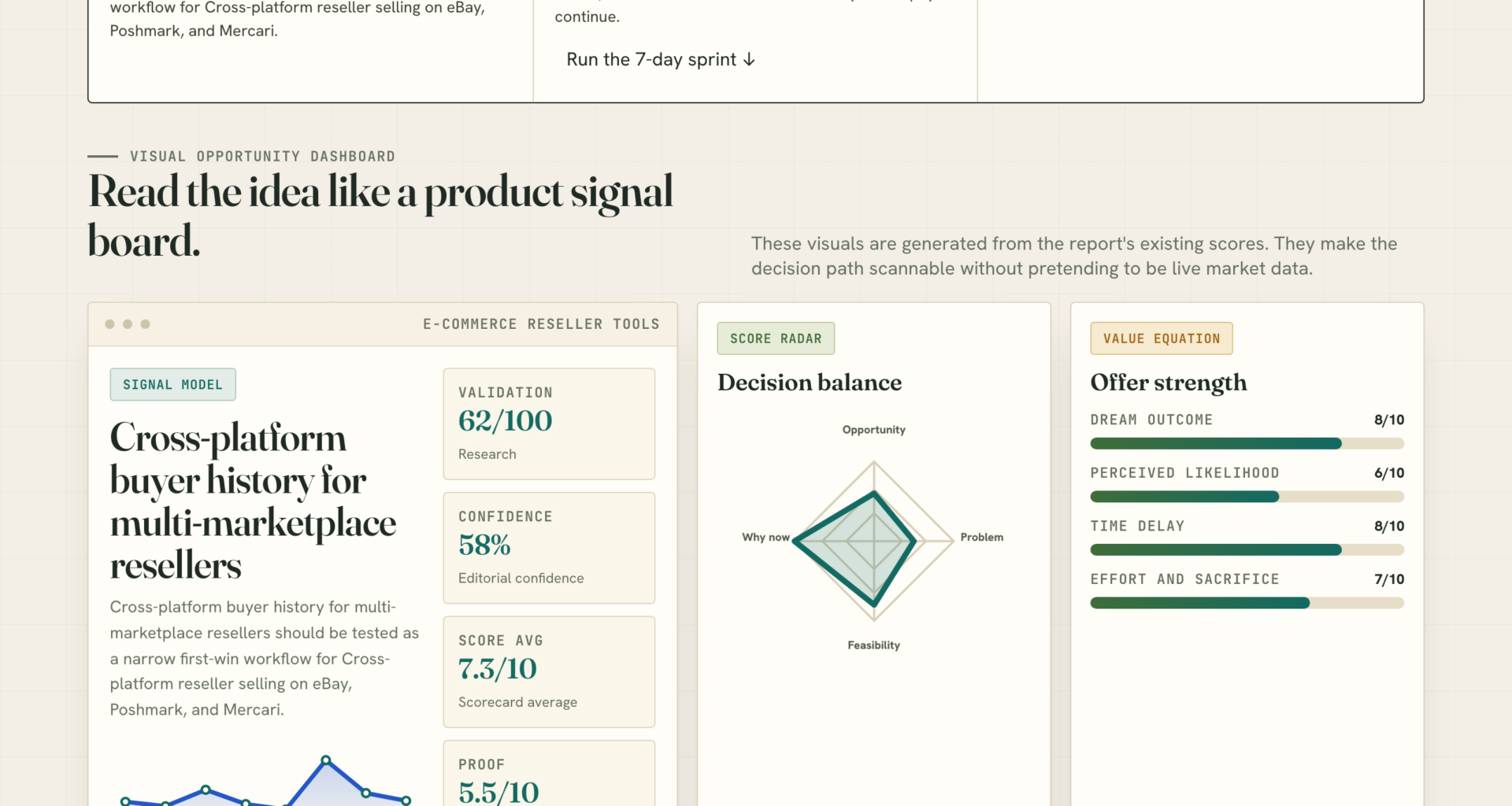

📊 Full opportunity report: Cross-platform buyer history for multi-marketplace resellers on IdeaNavigator AI — validation score, market gap, and execution plan.
TL;DR
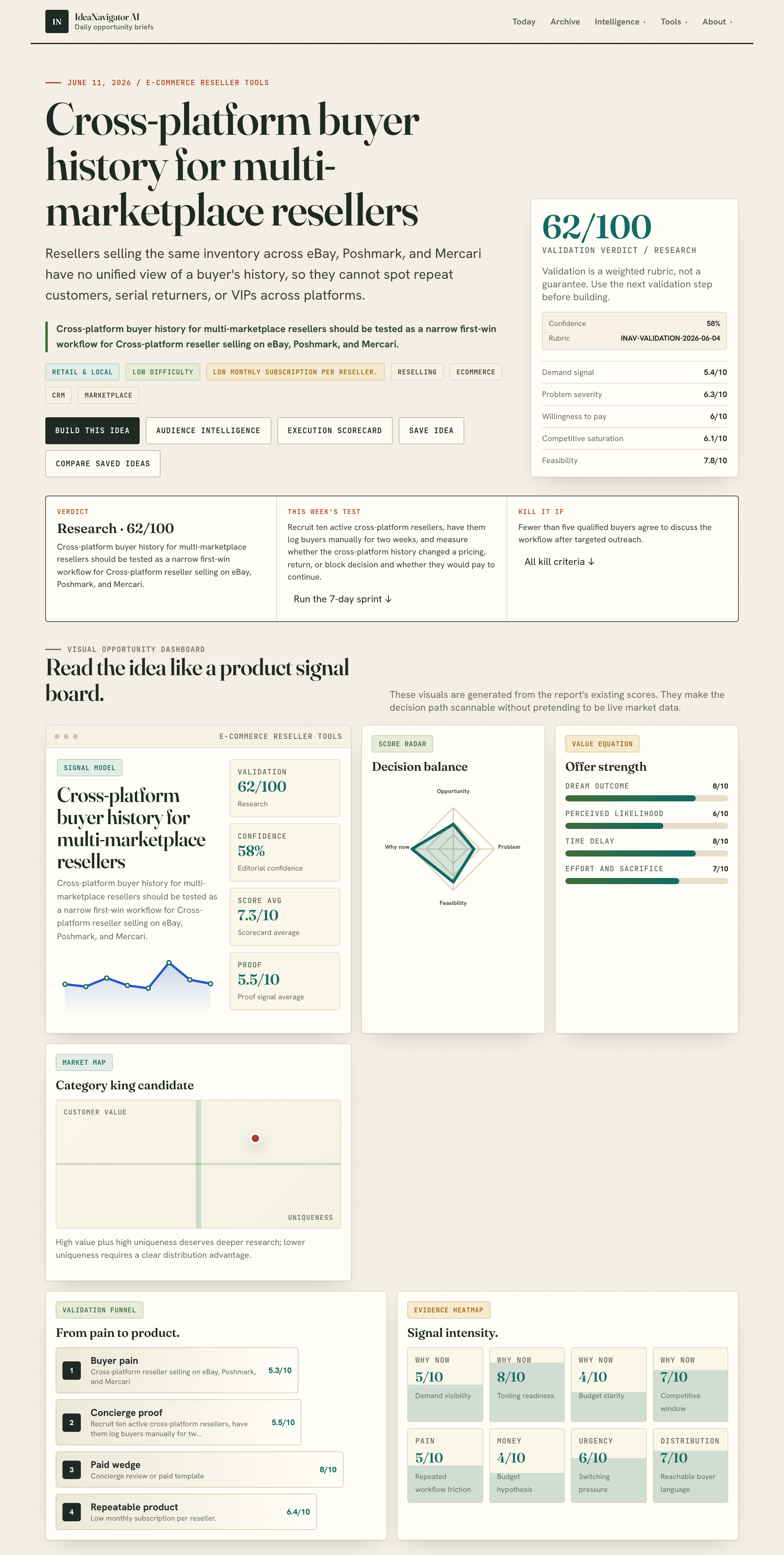
A new initiative proposes a manual buyer ledger for resellers operating on multiple marketplaces. This tool aims to unify buyer data across eBay, Poshmark, and Mercari, helping resellers identify repeat customers and improve sales strategies. Validation is underway with early testing among active resellers.
A proposed manual buyer ledger system is being tested among active multi-marketplace resellers to create a unified view of customer activity across eBay, Poshmark, and Mercari. This development aims to address a key data silo problem that limits resellers’ ability to identify repeat buyers, VIPs, or serial returners across platforms, potentially influencing sales strategies and customer management.
The initiative involves resellers manually logging buyer information—such as handle, platform, and notes—into a shared ledger. This simple workflow aims to provide a cross-platform buyer history, which is currently unavailable due to platform silos. The goal is to test whether access to this data influences reseller decisions around pricing, returns, or blocking problematic buyers.
According to an anonymous researcher involved in the project, ten active resellers have been recruited to log buyer data over a two-week period. The resellers will then analyze whether this new information affects their operational decisions and if they would be willing to pay for such a service long-term. This approach is seen as a low-cost, incremental step toward a more integrated buyer management system.
Potential Impact on Reseller Customer Management
If successful, this manual buyer ledger could significantly improve how resellers manage their customer relationships across multiple platforms. By identifying repeat buyers and serial returners, resellers could adjust pricing, tailor marketing efforts, or block problematic accounts more effectively. This development could lead to increased sales, reduced fraud, and better customer segmentation, offering a competitive edge in the growing multi-marketplace reselling industry.
multi-platform buyer tracking spreadsheet
As an affiliate, we earn on qualifying purchases.
As an affiliate, we earn on qualifying purchases.
Current Data Silos Limit Cross-Platform Buyer Insights
Many individual resellers now list inventory simultaneously on eBay, Poshmark, and Mercari, but each platform maintains its own customer data, with no unified system for tracking buyer activity across sites. This fragmentation hampers efforts to recognize repeat customers or VIPs, which are critical for targeted marketing and fraud prevention. The lack of cross-platform memory layers has been a longstanding challenge in the reseller community, with solutions largely limited to manual record-keeping.
Recently, industry observers have highlighted the opportunity for a simple, manual approach to test the value of cross-platform buyer data. This initiative aligns with broader trends toward more integrated e-commerce tools, although no comprehensive automated solution currently exists for individual resellers.
“The manual ledger is a low-cost way to test whether cross-platform buyer history influences reseller decisions.”
— an anonymous researcher
Unclear Long-Term Viability and Automation Potential
It remains uncertain whether a manual system can scale effectively or provide enough value to justify automation. The project is still in early testing, and it is unclear if resellers will find the manual approach sustainable or if a more automated, integrated system will eventually be necessary. Additionally, questions about data privacy and platform policies are yet to be addressed.
Next Steps: Validation and Potential Automation Development
Resellers involved in the current testing will review their experiences over the next two weeks, focusing on decision impacts and willingness to pay. If results are positive, developers may explore automating the ledger or integrating it with existing reseller tools. Further research and broader testing will be needed before any commercial rollout or platform integration can be considered.
Key Questions
How does the manual buyer ledger work?
Resellers log each buyer’s handle, platform, and notes into a shared spreadsheet or database. They then search this record to view the buyer’s cross-platform activity before making decisions on offers or returns.
Will this system be automated in the future?
Automation is a potential next step if the manual approach proves valuable. Developers are considering building automated tools that can sync buyer data across platforms, but such solutions are not yet available.
Is this approach compliant with platform policies?
As of now, the manual logging process does not violate platform rules, but developers and resellers will need to ensure compliance as they explore automation or more integrated solutions.
What are the main benefits for resellers?
The primary benefits include better recognition of repeat buyers, improved decision-making on pricing and returns, and the potential to identify VIP customers across multiple marketplaces.
When will this system be widely available?
There are no current plans for a broad rollout. The initiative is in early testing, and wider adoption depends on validation results and development of automated solutions.
Source: IdeaNavigator AI