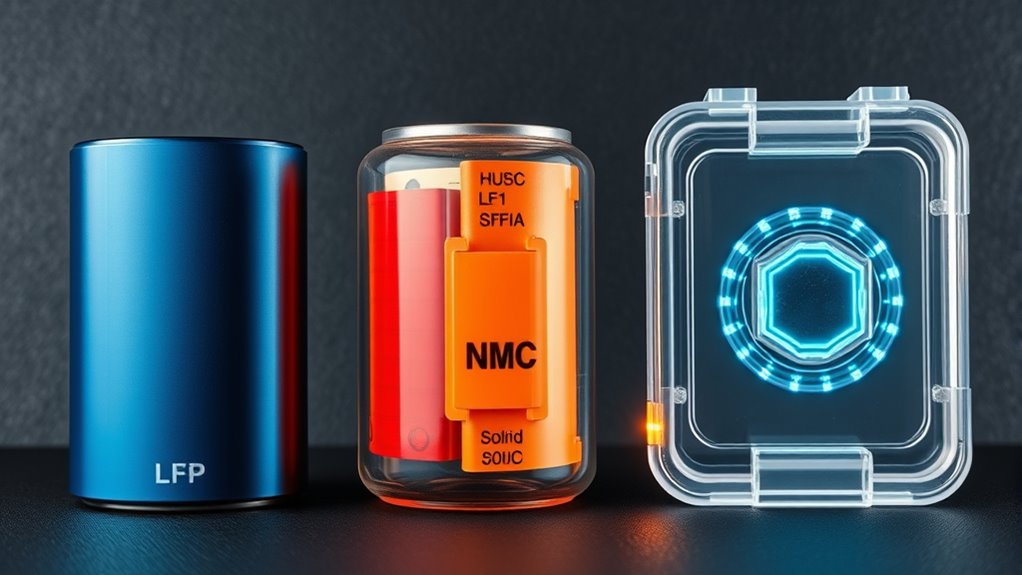

If you’re choosing between LFP, NMC, and solid-state batteries, consider your safety, energy needs, and cost. LFP batteries are safer, last longer, and use inexpensive materials, but have lower energy density. NMC offers higher energy density, ideal for compact devices and EVs, but poses safety risks and higher costs. Solid-state batteries promise safer, higher-performance options but are still developing. Keep exploring to discover which chemistry best fits your application.
Key Takeaways
- LFP batteries prioritize safety and longevity with lower energy density, suitable for large-scale and safety-critical applications.
- NMC batteries offer higher energy density, making them ideal for electric vehicles and portable electronics, but with increased safety risks.
- Solid-state batteries promise high energy density and safety by replacing liquid electrolytes, though they are still in development and expensive.
- Manufacturing costs vary: LFP is cheaper due to simpler materials, NMC is more complex, and solid-state is currently expensive but promising future scalability.
- Application choices depend on safety, energy needs, and cost; LFP for safety and longevity, NMC for high performance, and solid-state for advanced high-stakes uses.

Battery chemistries are the foundation of modern energy storage, powering everything from smartphones to electric vehicles. When choosing between different types, understanding their safety concerns and manufacturing costs is essential. Each chemistry offers unique advantages and challenges that can impact your decision, especially if you’re considering large-scale applications like EVs or grid storage.
Lithium Iron Phosphate (LFP) batteries are known for their safety and thermal stability. They are less prone to overheating or catching fire compared to other chemistries, making them a safer choice in many applications. This safety aspect is vital if you’re concerned about the risks associated with battery failure. Additionally, LFP batteries tend to have a longer cycle life, which reduces replacement costs over time. However, their manufacturing costs are generally lower due to the abundant and inexpensive materials used in their production. This makes them more cost-effective, especially for large-volume manufacturing, where reducing costs can substantially impact the overall price of the final product.
LFP batteries are safer, long-lasting, and cost-effective for large-scale manufacturing.
On the other hand, Nickel Manganese Cobalt (NMC) batteries offer a higher energy density, meaning they can store more energy in a smaller space. This property makes them appealing for electric vehicles and portable electronics where space and weight matter. But, safety concerns with NMC chemistries are more prominent. They are more susceptible to thermal runaway if not managed properly, which can lead to fires or explosions. As a result, NMC batteries often require sophisticated thermal management systems, adding to manufacturing costs. These systems increase complexity and expense, potentially impacting the overall affordability of NMC-based products.
Solid-state batteries are an emerging technology promising notable safety improvements and higher energy densities. They eliminate liquid electrolytes, which are a common source of leaks and fires in traditional lithium-ion batteries. This makes solid-state batteries inherently safer. However, their manufacturing process is more complex and still in development, leading to higher initial manufacturing costs. As research advances and production scales up, these costs are expected to decrease, but for now, solid-state batteries remain a more expensive option. Despite the higher costs, their safety advantages and potential performance benefits could justify their adoption in high-stakes applications like autonomous vehicles or aerospace.
Frequently Asked Questions
How Do Battery Chemistries Impact Overall Vehicle Range?
Battery chemistries directly affect your vehicle’s range through energy density and weight considerations. Higher energy density batteries store more power in less space, boosting your range. Lighter batteries reduce overall vehicle weight, improving efficiency. For instance, NMC batteries offer higher energy density, extending your driving distance, while LFP batteries are safer and more cost-effective but slightly less dense. Your choice impacts how far you can go on a single charge.
What Are the Safety Differences Between LFP, NMC, and Solid-State Batteries?
You’ll find that LFP batteries offer better thermal stability, making them less prone to thermal runaway and safer during abuse. NMC batteries, while more energy-dense, pose a higher risk of thermal instability, increasing safety concerns. Solid‑state batteries excel here with even greater safety margins due to their solid electrolytes, which markedly reduce the risk of thermal runaway, providing a safer overall option for vehicle applications.
Which Battery Chemistry Offers the Best Cost Efficiency?
Imagine slashing costs in half—that’s what choosing LFP batteries can do. You’ll find their cost comparison favors LFP because of lower manufacturing costs, making them the most budget-friendly option. NMC batteries, while offering higher performance, come with steeper expenses. Solid-state batteries, still emerging, promise potential savings long-term but currently aren’t as cost-efficient. For immediate affordability, LFP is your best bet.
How Do Charging Times Vary Among These Battery Types?
Charging times vary among these battery types, impacting your charging speed and power delivery. LFP batteries generally offer slower charging speeds but excel in safety and longevity. NMC batteries provide faster charging, supporting better power delivery for quick top-ups. Solid-state batteries promise even faster charging and enhanced safety, though they’re still emerging. Your choice depends on balancing charging speed with safety and performance needs, affecting how quickly you can recharge your device or vehicle.
What Is the Typical Lifespan of Each Battery Chemistry?
You can expect about 8-15 years of lifespan from LFP batteries, around 8-12 years for NMC, and potentially 15-20 years for solid-state batteries. Keep in mind, battery degradation and recycling challenges can shorten these timelines. As the saying goes, every coin has two sides—while solid-state promises longer life, managing end-of-life recycling remains a hurdle. So, plan accordingly for your needs.
Conclusion
Choosing between LFP, NMC, and solid-state batteries is like steering through a labyrinth—each has its own strengths and challenges. LFP offers safety, NMC provides energy density, and solid-state promises future innovation. Ultimately, understanding these differences helps you make smarter decisions for your energy needs. Remember, the right chemistry isn’t just a choice; it’s a key to opening a sustainable future, where every battery becomes a beacon illuminating your path forward.