

📊 Full opportunity report: 2026 And The Future Of AI: 10 Key Developments on ThorstenMeyerAI.com — validation score, market gap, and execution plan.

Get the latest gadgets delivered free — and shop member deals
- Fast, free delivery on millions of items
- Access to Prime Big Deal Days deals on October 6–7
- Prime Video, Amazon Music and more included
TL;DR
In 2026, several major AI developments are confirmed, including breakthroughs in generative models, ethical frameworks, and industry applications. This article outlines these key changes and their significance, while noting ongoing uncertainties.
Several key AI advancements are confirmed to occur in 2026, including breakthroughs in generative AI, ethical standards, and industry integration, marking a significant year for artificial intelligence’s evolution.
Industry analysts and AI researchers project that 2026 will see major progress in generative models, with systems becoming more sophisticated and accessible. Notably, the adoption of AI ethics frameworks is expected to become widespread, influencing development and deployment standards. Additionally, AI’s integration into sectors such as healthcare, finance, and autonomous vehicles is predicted to accelerate, driven by improved algorithms and regulatory clarity. However, many of these projections are based on current trajectories, and some technological or regulatory hurdles could alter the landscape.
Confirmed developments include ongoing improvements in large language models, increased adoption of AI ethics guidelines by major corporations, and the expansion of AI-powered automation in various industries. Experts like Thorsten Meyer emphasize that these trends are grounded in current industry reports and technological advancements, though specific breakthroughs and regulatory changes remain uncertain. For more insights, see AI solutions for 2026.
The 10 picks
- 1
 Sonos Arc Ultra Soundbar with Dolby Atmos – BlackView on Amazon →
 - 2
 Sonos Beam Gen 2 – Black – Soundbar with Dolby AtmosView on Amazon →
 - 3
 Bose TV Speaker – Compact Soundbar with Bluetooth and HDMI-ARC, Remote Includ…View on Amazon →
 - 4
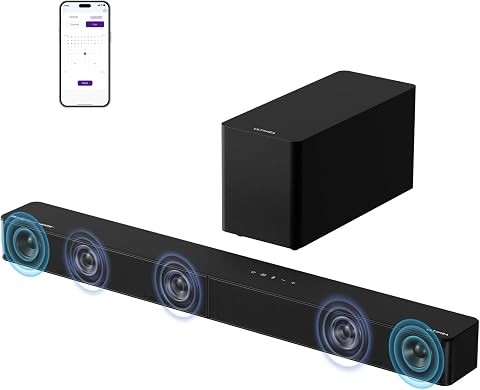 Ultimea 5.1CH Surround Sound Bar System with Dolby Atmos, Poseidon M60View on Amazon →
 - 5
 Fire TV Soundbar Plus (Newest Model) with Built-in Subwoofer, 3.1 Channel, Do…View on Amazon →
 - 6
 Sony S100F 2.0ch Soundbar with Bass Reflex Speaker, Bluetooth, and HDMI ARCView on Amazon →
 - 7
 Amazon Fire TV Soundbar, 2.0 Speaker with DTS Virtual:X and Dolby AudioView on Amazon →
 - 8
 Samsung B-Series Soundbar HW B400F 2.0 Ch with Built-in Subwoofer (2025 Model)View on Amazon →
 - 9
 ULTIMEA Sound Bar with Wireless Subwoofer, App Control, 2.1 ChannelView on Amazon →
 - 10
 Sound Bar for Smart TV with Bluetooth, ARC, Optical, AUX, Detachable Design, 80WView on Amazon →
Impacts of 2026 AI Advancements on Society and Industry
The confirmed AI developments in 2026 are set to transform multiple sectors, improving efficiency, decision-making, and user experiences. Enhanced generative models could revolutionize content creation, while widespread ethical standards aim to address concerns over bias and misuse. Industry adoption of AI tools will likely boost productivity but also raise questions about job displacement and regulation. Overall, these advancements will shape societal norms and economic structures, making understanding their trajectory essential for policymakers, businesses, and consumers.
2026 AI Trends Rooted in Past and Present Innovations
The projected AI developments for 2026 build upon recent progress in deep learning, natural language processing, and ethical AI frameworks introduced over the past few years. The rise of large language models like GPT-4 and subsequent iterations has demonstrated AI’s expanding capabilities, prompting calls for stronger ethical guidelines and industry standards. Governments and organizations are increasingly investing in AI research, signaling a shift toward more responsible and integrated AI applications. These trends suggest that 2026 will be a pivotal year, with confirmed advancements aligning with ongoing research and industry momentum.
“AI ethics frameworks are becoming a standard component of corporate AI strategies, influencing development and deployment practices.”
— Industry report, TechFuture Insights
Unconfirmed Factors and Potential Disruptions in 2026
While many developments are projected with confidence, uncertainties remain regarding regulatory changes, technological breakthroughs, and societal acceptance. It is not yet clear how governments worldwide will implement AI regulations or how quickly industries will adapt to new ethical standards. Additionally, unforeseen technical challenges could slow or redirect the pace of AI progress. These factors make the full impact of 2026’s developments still uncertain.
Next Steps for AI Development and Policy in 2026
In the coming months, industry leaders and policymakers will likely focus on finalizing and implementing AI regulations, promoting ethical standards, and investing in research to overcome technical hurdles. Monitoring these efforts will be crucial to understanding how the confirmed developments will unfold and influence broader societal and economic changes. Additionally, advancements in AI technology may lead to new applications and challenges, requiring ongoing oversight and adaptation.
Key Questions
What are the most confirmed AI advancements expected in 2026?
Major confirmed developments include improvements in generative AI models, widespread adoption of ethical frameworks, and increased integration of AI into various industries such as healthcare, finance, and transportation.
How will AI ethics influence development in 2026?
AI ethics are expected to become a standard part of development processes, guiding responsible AI deployment, reducing bias, and addressing societal concerns about misuse and privacy.
What uncertainties could affect the projected AI progress in 2026?
Uncertainties include regulatory responses, technical challenges, societal acceptance, and unforeseen breakthroughs or setbacks that could accelerate or slow down progress.
How might AI advancements impact jobs and society?
AI progress could boost productivity and create new opportunities, but also pose risks related to job displacement and ethical dilemmas, making regulation and adaptation crucial.
Will there be new regulations for AI in 2026?
It is likely that governments will propose or implement new AI regulations to address safety, ethics, and privacy concerns, though the scope and effectiveness remain uncertain.
Source: ThorstenMeyerAI.com
Fall Picks
fall essentials
As an affiliate, we earn on qualifying purchases.