
TL;DR

Get the latest gadgets delivered free with Prime
- Fast, free delivery on millions of items
- Prime Video, Amazon Music and more included
- Member-only deals all year
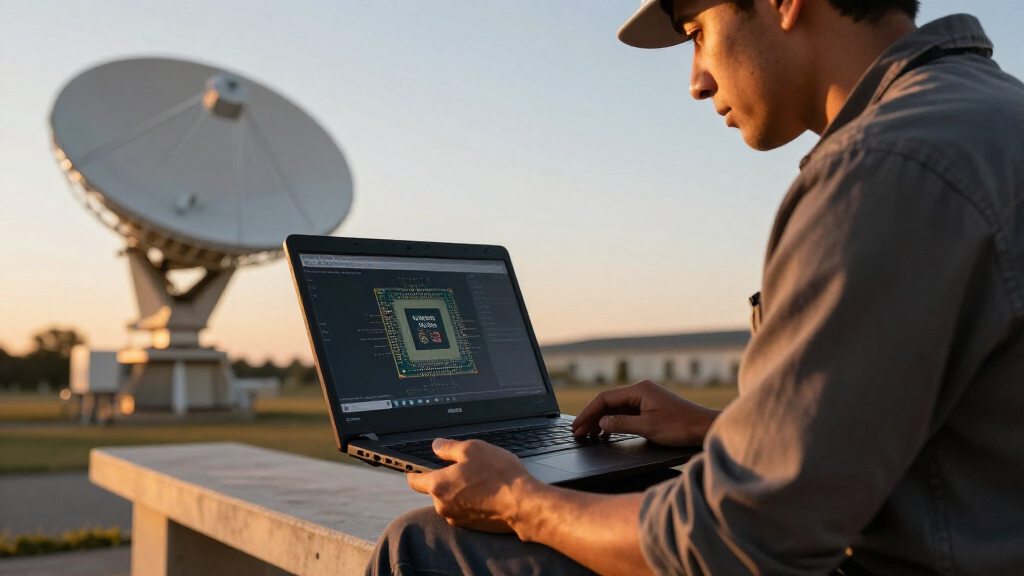
SpaceXAI has announced plans to deploy Nvidia Vera CPUs for AI processing on Earth and in space, including a Vera Rubin NVL72 system aboard a Starmind satellite. Details on deployment timelines and technical specs remain undisclosed.
SpaceXAI has announced plans to deploy standalone Nvidia Vera CPUs for Grok’s agentic AI workloads, and to use an optimized Vera Rubin NVL72 system in space aboard a Starmind satellite. The company has referenced the original analysis for more details. The company has not disclosed specific deployment dates, technical configurations, or performance data, but the move signals a significant step toward integrating advanced AI hardware into space infrastructure.
The company plans to use Nvidia Vera CPUs independently for Grok’s AI tasks, which involve multi-step processing, tool coordination, and data management—functions that demand robust CPU performance. This hardware deployment marks a significant step in AI infrastructure development, as detailed in the original analysis. This marks a departure from the typical reliance on Nvidia accelerators alone, highlighting a shift toward more versatile hardware deployment.
Additionally, SpaceXAI intends to adapt the Vera Rubin NVL72 system for orbital use, targeting a space environment with constraints such as power, cooling, radiation, and communication. While the announcement indicates an intention to operate this hardware aboard a satellite, no specific design modifications, hardware testing results, or deployment schedules have been shared.
These developments are part of a broader strategy to expand AI processing capabilities beyond ground infrastructure, potentially reducing latency, increasing onboard processing autonomy, and testing new hardware configurations in orbit. For an in-depth overview, see the original analysis. However, the company has yet to specify how these systems will perform under space conditions or how they will be integrated into existing or future missions.
Implications for Space-Based AI Infrastructure
This move by SpaceXAI signifies a notable shift in space AI architecture, as it explores deploying high-performance CPUs directly in orbit, rather than relying solely on ground-based data centers. The use of Nvidia Vera CPUs for agentic AI workloads could enable more autonomous spacecraft and satellites, reducing dependence on terrestrial processing and communication delays.
Furthermore, testing the Vera Rubin NVL72 system in space could provide valuable insights into how large-scale AI hardware performs in the harsh environment of orbit, potentially influencing future satellite design and onboard computing strategies. If successful, these deployments may pave the way for more advanced, resilient, and autonomous space systems, impacting satellite operations, deep space exploration, and Earth observation.
Overall, this initiative underscores a broader industry trend toward integrating specialized AI hardware into space infrastructure, which could accelerate the development of intelligent, self-sufficient spacecraft and satellite constellations.
As an affiliate, we earn on qualifying purchases.
Background on Nvidia Vera and SpaceXAI’s Space Initiatives
Nvidia’s Vera CPU architecture is designed to support high-performance, energy-efficient AI and data center workloads, with Vera Rubin being its flagship platform for large-scale AI processing. The Vera Rubin NVL72 system combines multiple processors and accelerators into a rack-scale configuration aimed at demanding AI tasks.
SpaceXAI, a division of SpaceX focused on advancing AI in space applications, has previously explored satellite AI, ground-based data centers, and AI-driven spacecraft. The company’s recent announcement marks an expansion into deploying dedicated hardware in orbit, aligning with its broader goal of creating autonomous, intelligent space systems.
While the company has not disclosed specific timelines or technical details, this move reflects ongoing efforts to test and validate hardware capable of operating reliably in space, with potential benefits for future missions and satellite networks.
“Our plans involve integrating Vera CPUs into Grok workloads and testing the Vera Rubin NVL72 system aboard satellites, though specific timelines are still being finalized.”
— SpaceXAI spokesperson
Unanswered Questions About Hardware Deployment and Performance
It remains unclear when the Vera CPUs and NVL72 systems will be deployed in orbit, what specific configurations they will use, or how they will withstand space conditions such as radiation and thermal extremes. No testing results, technical specifications, or performance benchmarks have been publicly disclosed, making the success of these initiatives uncertain at this stage.
Next Steps in Hardware Testing and Deployment Plans
The next developments will likely include detailed technical specifications, testing milestones, and launch schedules for both ground-based Vera CPU deployments and the space-based NVL72 system. Monitoring announcements from SpaceXAI and its partners will be essential to assess progress, especially regarding hardware validation, in-orbit testing, and operational readiness.
Further, performance data from ground tests or initial space experiments will clarify whether these hardware choices meet the demanding requirements of space environments and AI workloads.
Key Questions
Are the Nvidia Vera CPUs already operational in space?
No, SpaceXAI has only announced plans for deployment; operational status and testing results have not been disclosed.
What advantages do Vera CPUs offer for space AI applications?
Vera CPUs are designed for high-performance, energy-efficient processing, which could support autonomous decision-making and reduce latency in space systems.
Will the Vera Rubin NVL72 system be tested before deployment?
It is not yet clear whether ground testing or in-orbit validation has occurred; details remain undisclosed.
What specific roles will the CPUs play in Grok’s workloads?
SpaceXAI has not specified whether the CPUs will handle inference, orchestration, data processing, or other tasks.
When can we expect to see these hardware systems in operation?
No official timeline has been provided; future updates from SpaceXAI will clarify deployment schedules.
Source: ThorstenMeyerAI.com
Fall Picks
fall essentials
As an affiliate, we earn on qualifying purchases.