
🔍 Read the full analysis: SpaceX’s AI Campus Plans Raise Questions About Power And Water on ThorstenMeyerAI.com

Get the latest gadgets delivered free with Prime
- Fast, free delivery on millions of items
- Prime Video, Amazon Music and more included
- Member-only deals all year
TL;DR
SpaceX says it is advancing AI computing projects in Starbase, Texas, and Cochise County, Arizona, with more than $74 billion in planned investment. Local approvals are pending, and key details—including the Texas facility’s water use and the size of a proposed Texas tax break—remain unknown.
SpaceX said November 12 it is advancing two large AI computing projects—one near the Port of Brownsville in Starbase, Texas, and another in Cochise County, Arizona—with more than $74 billion in planned investment. Both projects require local action, while their power and water plans raise questions about effects on nearby communities, especially because the Texas computing facility’s water use has not been disclosed.
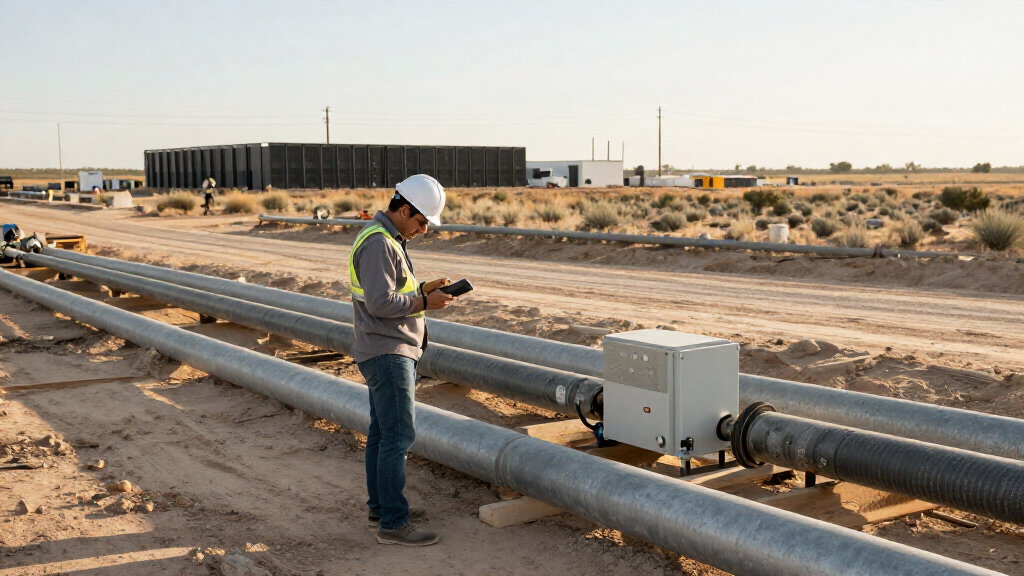
SpaceX describes the Texas project as an investment of more than $24 billion. A Starbase City notice places the approximately 444-acre site between Boca Chica Boulevard and the Port of Brownsville and describes the project as a gas-fired power plant and supercomputing facility. SpaceX says the facility will generate its own electricity rather than draw from the public grid. The city notice does not specify the plant’s generating capacity.
Local outlet The 956 Report, citing an air registration SpaceX filed with the Texas Commission on Environmental Quality on September 8, reported plans for an initial setup of 35 natural-gas turbines totaling about 748 megawatts, followed by eight larger turbines with a combined capacity of about 708 megawatts. The outlet also reported an annual nitrogen oxide emissions cap of 248.86 tons. Those figures come from the outlet’s account of the filing, rather than from the city notice.
For Arizona, SpaceX describes a campus costing about $50 billion on roughly 747 acres near Cochise. The county application, filed by Tombstone Resources L.L.C., proposes up to nine computing buildings and a phased build-out reaching approximately 6 gigawatts of grid power. The application does not name SpaceX, but the company’s project page identifies the site as its project, and Tombstone’s town-hall statement said SpaceX would host a community meeting.
SpaceX’s AI Campus Plans Raise Questions About Power and Water
SpaceX says it plans major AI computing campuses in Texas and Arizona. Local approvals are pending, and important details about water, power and public support remain unresolved.
Local Costs of AI Power
The plans show how the growing demand for AI computing can translate into major local decisions about electricity infrastructure, land use and public support. The Texas proposal would pair computing with on-site gas-fired generation; the Arizona project would rely on a substantial grid connection. Those different approaches may affect how each project interacts with utilities, regulators and nearby residents.
Water is another central question, though the available details differ by site. SpaceX says the Arizona buildings would use dry cooling without cooling towers, and the county application estimates 7 to 10 acre-feet of water per year at full build-out, mostly for staff. SpaceX has also said it will not use industrial groundwater there. In Texas, the company points to investment in regional water infrastructure, but has not stated how much water the computing facility itself would consume. That distinction matters: infrastructure funding does not by itself establish the facility’s own demand.
The projects also carry potential local benefits and costs. SpaceX says the Texas development has supported more than 3,000 construction jobs so far and would have over 500 permanent jobs once operating. Arizona’s application estimates peak construction employment of roughly 5,500 workers, with about 250 staff when the first buildings open and around 1,000 at full build-out. These are company or application estimates, not independently verified job counts.
Products Worth Considering

Logitech MX Master 4 for Mac

Jackery HomePower 3600 Plus Portable Power Station, 3584Wh, 3600W

Anker SOLIX S2000 Portable Power Station, 2,010Wh, 1,500W
As an affiliate, we earn on qualifying purchases.
From Orbital AI to Local Sites
Earlier in 2026, after announcing its acquisition of xAI on February 2, SpaceX argued that demand for AI electricity could not be met by terrestrial infrastructure without imposing hardship on communities and the environment, and pointed to data centers in orbit as a possible answer. The November announcement puts two very large computing projects on the ground in rural Arizona and near the company’s South Texas launch site. SpaceX says the Texas facility will also help develop and test technologies for future space-based computing.
The company’s announcement describes the combined investment as more than $74 billion. The local records add detail but do not resolve every issue. Starbase’s notice identifies a gas-fired plant but omits its capacity, while Cochise County’s application gives a phased campus design and power estimates under the name Tombstone Resources. The differing levels of detail make local review and public discussion important parts of what happens next.
SpaceX has also outlined community commitments in Texas: it says it has committed $220 million to expand water and wastewater infrastructure for Brownsville and Cameron County, including $40 million already provided. The company says the projects would add about 20 million gallons per day from sources independent of the Rio Grande. It says it is not acquiring water rights, prepaying utility rates or receiving preferential access to regional water supplies.
“Together, they represent more than $74 billion in planned American investment.”
— SpaceX
Key Details Still Pending
Several important questions remain unanswered. SpaceX has not disclosed the Texas computing facility’s water use, and the Starbase notice does not provide the power plant’s capacity. The size and terms of a proposed property-tax abatement in Starbase are also not specified in the source material. The reported turbine arrangements come from The 956 Report’s review of an air registration, and their final configuration and operating details have not been confirmed in the city notice.
Arizona’s planned power supply also depends on arrangements that still require scrutiny. The application describes electricity delivered through Sulphur Springs Valley Electric Cooperative and Arizona Electric Power Cooperative to a utility-owned substation at the site. It is not yet clear whether the relevant utility and regulatory approvals will be granted, or whether the project’s expected power costs and promised reductions in local cooperative members’ bills will be approved as described.
Neither project has received all the local decisions identified in the source material. The project estimates for investment, employment, water use and construction remain plans or forecasts, not evidence that the facilities are built or operating.
December Decisions Ahead
Both projects face local proceedings on December 9, 2026. Cochise County’s Planning and Zoning Commission is scheduled to hold a hearing on the Arizona application. In Starbase, the City Commission is set to consider a property-tax abatement connected to the Texas project. Those proceedings may clarify conditions, community concerns and what additional information officials require.
Further details will also depend on utility and regulatory decisions in Arizona and on permitting and project filings in Texas. The next public record milestones should help establish whether the proposed schedules and infrastructure plans change, and whether officials attach conditions to local approvals. Until then, the announced investment totals and operating figures should be treated as company plans and application estimates, not completed projects.
Key Questions
Where does SpaceX plan to build the AI campuses?
SpaceX announced one project near the Port of Brownsville in Starbase, Texas, and another near Cochise in Cochise County, Arizona.
How much are the projects expected to cost?
SpaceX describes the Texas investment as more than $24 billion and the Arizona campus as roughly $50 billion, for more than $74 billion combined in planned investment.
How will the Arizona campus get electricity?
The county application proposes power delivered from the grid through Sulphur Springs Valley Electric Cooperative and Arizona Electric Power Cooperative to a utility-owned substation. The project’s planned full build-out is approximately 6 gigawatts; the required approvals remain unresolved.
How much water will the Texas facility use?
SpaceX has not disclosed the Texas computing facility’s water use. The company says it is funding regional water and wastewater infrastructure, but that commitment does not establish the facility’s own consumption.
When will local officials review the projects?
On December 9, 2026, Cochise County’s Planning and Zoning Commission is scheduled to hold a hearing on the Arizona application, while Starbase’s City Commission is set to consider a property-tax abatement for the Texas project.
Source: ThorstenMeyerAI.com