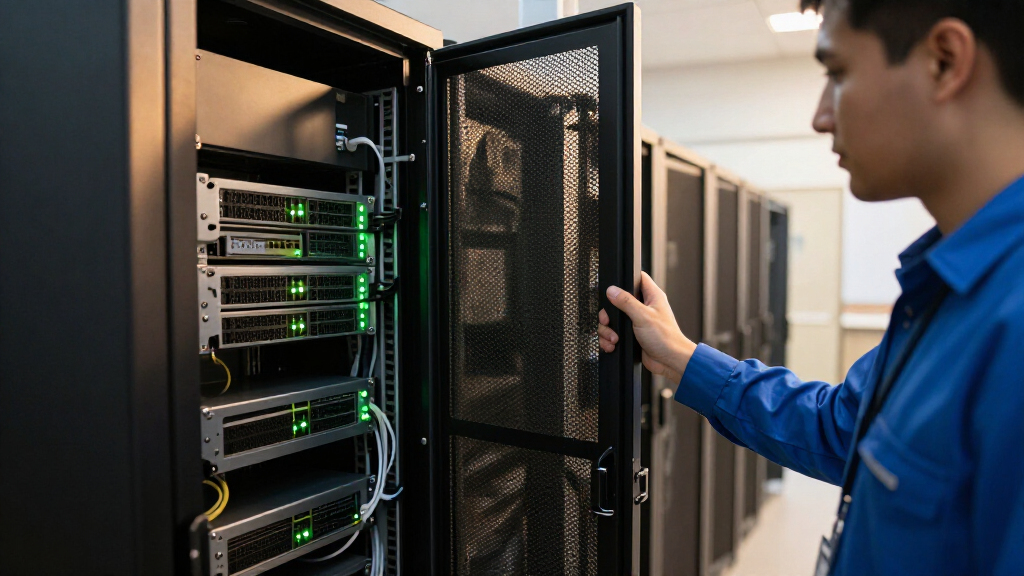

🔍 Read the full analysis: Nvidia H200 Servers: A Records Look At A Chinese University’s Rental on ThorstenMeyerAI.com

Get the latest gadgets delivered free with Prime
- Fast, free delivery on millions of items
- Prime Video, Amazon Music and more included
- Member-only deals all year
TL;DR
Archived procurement notices show that Northwestern Polytechnical University awarded two contracts in January 2026 to rent servers equipped with eight Nvidia H200 GPUs each. The university is on the US Commerce Department’s Entity List, but the notices do not establish where the servers were located, who owned the chips or whether a US export license applied.
Archived procurement notices show that Northwestern Polytechnical University in Xi’an awarded two contracts in January 2026 to rent servers equipped with eight Nvidia H200 GPUs each, for a combined 883,700 yuan. The records matter because the university has been on the US Commerce Department’s Entity List since 2001, but they do not show how the servers or chips reached the university or whether any US license covered them.
The notices, posted by the university’s School of Cyberspace Security on January 28, describe server-rental services for two large-model training projects. Copies preserved by the Internet Archive’s Wayback Machine on March 15 show one contract worth 441,000 yuan, running from February 16 to September 16, and another worth 441,700 yuan, running from February 1 to August 31. Each period is about seven months.
The equipment descriptions specify Nvidia HGX H200 8-GPU SXM systems, with one notice listing 141GB of memory per GPU. One contract concerns reinforcement-learning fine-tuning of a large AI model; the other is for multitask fine-tuning. The first notice says the system could provide 24-hour access and continuous operation. Each notice names a Shenzhen-based supplier; the records establish that the suppliers won the contracts, not where the hardware originated.
The notices are no longer available on the school’s website, according to the source reporting. Reuters reported the two rental contracts on November 11 and also described other H200 purchases by the university. Reuters and AFP reported those purchases from procurement notices that are now inaccessible, but the source reporting says it found no archived copies and could not independently verify them. This article therefore treats the rental notices as documented in archived records and the purchase details as claims attributed to those news organizations.
Export controls · buying vs. renting
Shipping the chips is controlled. Renting time on them is the open question.
How a university on the US Entity List can use Nvidia H200 chips without owning them, step by step.
Schematic
export of chipsunknown or reportedremote access
What the records and rules show
- 1Buying: exporting chips to a listed buyer needs a US license. For this university the policy is a presumption of denial.
- 2Reported, not verified: Reuters and AFP describe H200 purchase notices that were removed. We found no archived copy.
- 3Renting: the chips sit in a supplier’s server. How they got there is not in the records.
- 4Remote access: two notices dated January 28, 2026 award server rentals with eight H200 chips per server, for 441,000 and 441,700 yuan.
- 5The January 2026 H200 rule bars Entity List parties from remote access, but only as a condition on licensed exports.
Sources: eCFR, 15 CFR 744.11 and Part 744 Supplement No. 4 (as of November 10, 2026); Federal Register, 91 FR 1684 (January 15, 2026); NWPU School of Cyberspace Security award notices of January 28, 2026 (Wayback Machine copies); Reuters, November 11, 2026; AFP, November 12, 2026. Schematic, not a map of real locations. Not legal advice.
Graphic: Powered by Thorsten Meyer AI
H200 Access Under Export Controls
The records draw attention to the difference between owning a chip and obtaining computing capacity through a rental. A server rental can provide access to high-performance accelerators without a customer purchasing the hardware outright. That distinction is relevant to export-control oversight, but the notices alone do not establish that any rule was violated.
Northwestern Polytechnical University’s Entity List entry, as presented in the US Export Administration Regulations, requires a license for all items subject to the EAR when a listed entity is a party to a covered transaction; the stated review policy is “Presumption of denial.” The rules address export, reexport and in-country transfer. Determining whether they applied to these particular rentals would require facts the notices do not provide, including the hardware’s location, ownership, origin and any licenses or authorizations.
The documents also offer a specific, limited view of demand: two cybersecurity-school projects sought sustained access to H200-equipped systems for model fine-tuning. They do not establish how much computing was actually used, what models were trained or whether the rental arrangements continued for their full stated terms.
Products Worth Considering

LG UltraGear 32-inch 4K UHD OLED Gaming Monitor, 165Hz

Apple MacBook Air 15-inch with M5 Chip, 16GB Memory, 512GB SSD, Sky Blue

Sonos Era 100 SL Wireless Speakers, Black, Pack of 2
As an affiliate, we earn on qualifying purchases.
What the Archived Notices Record
The source reporting says both records were competitive-selection result announcements posted by the School of Cyberspace Security and preserved by the Internet Archive on March 15, 2026. The source compared them with the university’s Entity List entry in the eCFR as of November 10, 2026. The university has been listed since 2001; the entry’s cited updates include one dated September 16, 2025.
A separate US rule also bears on the issue. The source says the Commerce Department’s Bureau of Industry and Security changed its license-review policy for certain semiconductor exports to China and Macau on January 15, 2026. It describes conditions concerning remote access and cloud infrastructure-as-a-service users for licensed shipments. The supplied material does not provide the full rule text or enough transaction-specific detail to determine how it applies to these contracts.
Reuters reported that the university had five computing-rental contracts in the year, including rentals involving Nvidia A100 and A800 chips, but the source says it did not review the other notices. Reuters and AFP also reported separate outright H200 purchases. Those reports are relevant background, but the underlying purchase records were not available in archived copies to the source author.
“The system “can guarantee 24-hour access and continuous operation.””
— Northwestern Polytechnical University School of Cyberspace Security procurement notice for the reinforcement-learning project
Key Details the Records Omit
The notices do not identify where the servers were located, who owned the H200 chips, how the hardware reached China or whether a US export license or other authorization applied. They also do not establish whether the university itself, a supplier or another party controlled the equipment during the rental.
The archived records document contract awards and their stated service periods, not actual delivery, use or completion. The two reported outright H200 purchases remain independently unverified in the source account because the notices were removed and no archived copies were found. It is also unclear whether the university or suppliers have commented on the contracts or their compliance with applicable rules.
Questions for Suppliers and Regulators
Further clarity would depend on access to the original procurement documents and information from the university, the named suppliers or relevant authorities. Those sources could clarify the servers’ locations, ownership, delivery path and whether any authorization covered the hardware or its use.
The next publicly visible development may be a response from the university, suppliers or US officials, or the appearance of additional records. Until then, the archived notices support a narrow conclusion: two contracts were awarded for rentals of H200-equipped servers. They do not resolve the export-control questions raised by that access.
Key Questions
What do the archived records show?
They show two January 28, 2026, contract awards by Northwestern Polytechnical University’s School of Cyberspace Security for roughly seven months of server rental. Each system was described as an Nvidia HGX H200 server with eight GPUs.
How much were the two rental contracts worth?
One contract was listed at 441,000 yuan and the other at 441,700 yuan, for 883,700 yuan combined. The notices give service periods from February into August or September 2026.
Do the notices prove an export-control violation?
No. The university’s Entity List status and the rules cited in the reporting make the contracts relevant to export-control questions, but the notices do not show the servers’ location, ownership, route into China or whether a license applied. The available information does not establish a violation.
What about reports of H200 chip purchases?
Reuters and AFP reported separate university H200 purchases based on procurement notices. The source reporting says those notices were no longer accessible and that it found no archived copies, so the purchases were not independently verified there.
Source: ThorstenMeyerAI.com