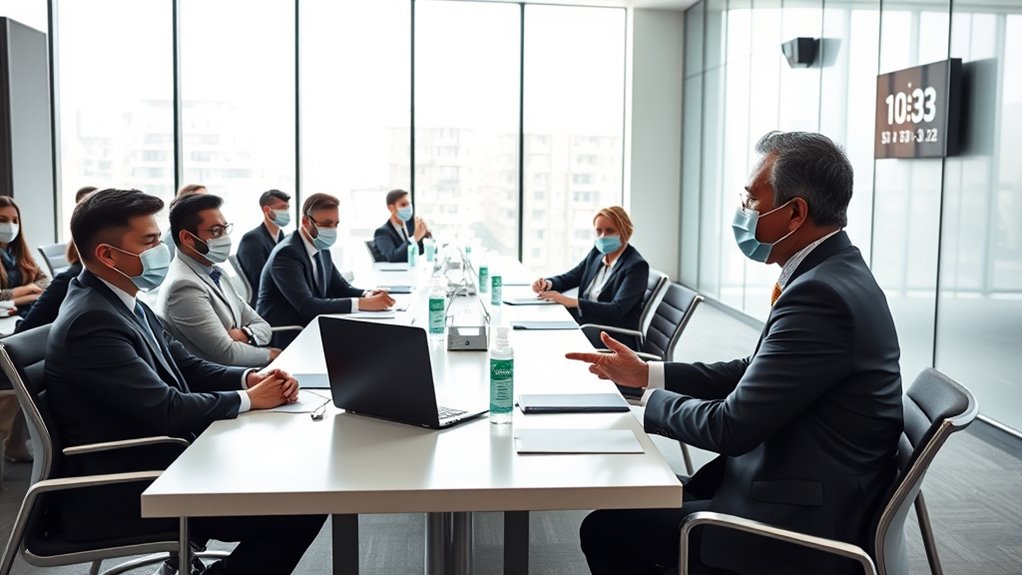

To make your meetings fewer, shorter, and better, start by questioning if each meeting is really necessary and explore alternatives like emails or shared documents. Prepare clear agendas and assign accountability to keep discussions focused. Set time limits to respect everyone’s schedule and aim for concise sessions that stick to priorities. Cultivate a culture of responsibility and purpose, so your meetings become productive tools rather than time wasters—there’s more to reveal with effective meeting hygiene.
Key Takeaways
- Prepare and share clear agendas in advance to set focused meeting objectives.
- Limit meeting duration and prioritize essential topics to maximize efficiency.
- Assign specific responsibilities for agenda items to ensure accountability and follow-up.
- Regularly assess if meetings are necessary or if goals can be achieved through alternative communication methods.
- Foster a culture of meeting discipline by enforcing time limits, clear roles, and purposeful discussions.

Have you ever left a meeting feeling like your time was wasted? If so, you’re not alone. Many people struggle with unproductive gatherings that drag on without clear purpose or direction. To improve your experience, focusing on meeting hygiene is essential. One key aspect is implementing virtual agendas. Before each meeting, take the time to prepare and share a well-structured agenda that clearly outlines topics, goals, and time allocations. Virtual agendas keep everyone on the same page and help prevent tangents or unnecessary discussions. When participants know what to expect, meetings become more focused and efficient. Additionally, establishing accountability standards can drastically improve the quality of your meetings. Make it clear who is responsible for each agenda item and ensure follow-through. This way, attendees come prepared and stay engaged, knowing their contributions are expected and valued. Setting expectations upfront creates a culture of responsibility, reducing the tendency for meetings to become a platform for vague conversations or endless debates. Incorporating data-driven strategies can also help identify patterns and optimize meeting effectiveness based on measurable results.
Keeping meetings shorter is another essential component of meeting hygiene. Aim for concise sessions that respect everyone’s time. This doesn’t mean rushing through topics but rather prioritizing what truly matters. If an issue can be resolved in 15 minutes, don’t schedule it for half an hour. Use time limits to maintain momentum and prevent fatigue. When meetings are brief and to the point, participants stay more alert and engaged, and the overall productivity of your team improves. Remember, not every topic requires a lengthy discussion, and sometimes a quick decision is the best outcome.
Another effective strategy is to question the necessity of each meeting. Ask yourself if the purpose can be achieved through an email, a quick chat, or a shared document instead. Fewer meetings mean less disruption to everyone’s workflow and more time to focus on actual work. When meetings are necessary, ensure they’re designed to be as productive as possible by sticking to the agenda, enforcing accountability standards, and setting clear expectations for participation. This creates a culture where meetings are no longer viewed as time-consuming obligations but as valuable tools for collaboration.
Frequently Asked Questions
How Can I Measure Meeting Effectiveness Objectively?
You can measure meeting effectiveness by tracking how well meeting agendas are followed and evaluating attendee participation. Use clear objectives to evaluate if goals are met, and observe if all participants contribute meaningfully. Collect feedback afterward to gauge engagement and clarity. Analyzing whether action items are completed on time also helps. These metrics give you an objective view of whether your meetings are productive and aligned with your team’s needs.
What Tools Best Support Brief and Focused Meetings?
Ever wonder what tools help keep meetings brief and focused? You’ll want apps that prioritize agenda clarity and time management, like Fellow or Doodle. These tools let you set clear agendas, allocate time slots, and track progress in real-time. They encourage accountability and guarantee everyone stays on topic. Isn’t it time you used technology to streamline your meetings and make every minute count?
How Do I Handle Dominant Voices in Meetings?
You handle dominant voices by encouraging silent participation and inclusive speaking. Gently steer the conversation to give quieter team members space to share their ideas. Use tools like round-robin discussions or digital polls to balance contributions. Set ground rules that everyone gets equal airtime, and politely interrupt if someone dominates. This approach fosters a more productive, inclusive meeting where all voices are heard and valued.
What Are Signs of Meeting Fatigue Among Participants?
You might notice signs of meeting fatigue, like participants yawning, checking their phones, or appearing distracted. Studies show that 67% of employees experience meeting burnout, leading to participant disengagement. When energy drops and conversations become one-sided, it’s a clear sign that the meeting is losing its effectiveness. If you see these signs, consider shortening meetings, encouraging active participation, or breaking them into smaller sessions to keep everyone engaged.
How Can Virtual Meetings Be Made More Engaging?
You can make virtual meetings more engaging by creating interactive agendas that encourage participation and collaboration. Use visual engagement tools like slides, polls, and shared screens to keep everyone’s attention. Incorporate Q&A sessions or breakout groups to foster active involvement. Keep the pace lively, and regularly check in with participants to guarantee they stay connected and interested throughout the meeting. This approach helps combat fatigue and boosts overall engagement.
Conclusion
Imagine your meetings like a garden—prune regularly, keep it tidy, and only nurture what truly matters. When you cut back on unnecessary meetings, you’ll find your time blooms with productivity and clarity. I once watched a team trim their meeting schedule, and suddenly, ideas grew stronger without the weeds of wasted minutes choking them. Embrace better meeting hygiene, and watch your workdays flourish like a well-tended garden—vibrant, focused, and rewarding.