

The Eisenhower Matrix helps you prioritize by dividing tasks into four categories: urgent and important, important but not urgent, urgent but not important, and neither. This tool guides you to focus on high-impact activities, handle crises efficiently, and schedule strategic tasks for long-term growth. By separating what truly matters, you prevent overwhelm and ensure your efforts align with your goals. Keep exploring to uncover how to use this matrix effectively for better results.
Key Takeaways
- Use the Eisenhower Matrix to categorize tasks into four quadrants: urgent & important, important but not urgent, urgent but not important, neither urgent nor important.
- Focus on completing urgent and important tasks promptly while scheduling time for important but not urgent activities like planning and skill development.
- Delegate or minimize tasks in the “urgent but not important” quadrant to free up time for higher-priority activities.
- Regularly review and update your task categories to ensure alignment with your goals and changing priorities.
- Eliminate or reduce non-essential activities in the “neither urgent nor important” quadrant to enhance overall productivity.
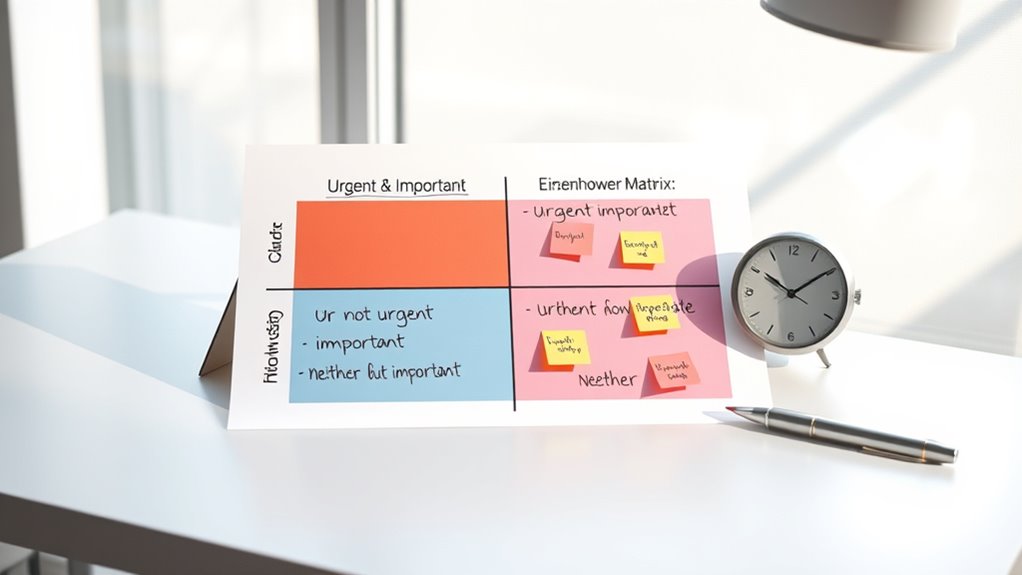
Effective prioritization is essential for managing your time and achieving your goals, especially when faced with numerous tasks. The Eisenhower Matrix is a powerful tool to help you distinguish between what’s urgent and what’s important, enabling you to focus on the right activities. When you’re overwhelmed with urgent tasks, it’s easy to get caught up in firefighting rather than engaging in strategic planning. The matrix encourages you to categorize your responsibilities into four quadrants: urgent and important, important but not urgent, urgent but not important, and neither urgent nor important. This system helps you avoid the trap of constantly reacting to urgent issues and instead directs your efforts toward meaningful, long-term objectives.
Prioritize wisely with the Eisenhower Matrix to focus on what truly advances your goals.
By identifying tasks that are urgent and important, you can tackle critical deadlines and crises head-on, but you should limit the time you spend here. These are things that require immediate attention, but they shouldn’t dominate your entire schedule. The next priority is to focus on important but not urgent tasks. These are often overlooked but are vital for your growth and success. Strategic planning falls into this category. When you dedicate time to these activities, you build a foundation that reduces future urgent tasks. For example, developing a new skill, creating a long-term plan, or improving processes can all be scheduled in this quadrant. Investing in these areas pays off by making your workload more manageable and less reactive over time.
The third quadrant—urgent but not important—contains tasks that may seem pressing but don’t markedly impact your goals. These could be interruptions, minor requests, or activities that someone else could handle. Recognizing these allows you to delegate or minimize their influence on your schedule. The last quadrant includes activities that are neither urgent nor important, such as mindless browsing or unnecessary meetings. These tend to distract you from your priorities and waste valuable time. Eliminating or reducing these tasks frees you up to focus on what truly matters.
Using the Eisenhower Matrix isn’t just about organizing your day; it’s about cultivating a mindset of intentionality. When you regularly evaluate your tasks through this lens, you develop better judgment about where to allocate your time and energy. This strategic planning approach ensures you’re not just busy but productive, working on activities that align with your overarching goals. Additionally, understanding how to incorporate natural elements and textures from Farmhouse Decor Inspirations can create a calming environment that supports focused work. Over time, mastering this prioritization method can lead to less stress, higher efficiency, and a clearer path toward your success.
Frequently Asked Questions
How Can the Eisenhower Matrix Improve Team Productivity?
You can improve team productivity by using the Eisenhower Matrix to streamline time management and decision making. It helps you and your team identify urgent versus important tasks, so you focus on high-impact activities. This reduces time wasted on less critical work and guarantees everyone is aligned on priorities. By clarifying what truly matters, you make smarter decisions faster, boosting overall efficiency and team performance.
What Tools Can Assist in Implementing the Eisenhower Matrix?
You can use digital planners and prioritization apps to implement the Eisenhower Matrix easily. These tools help you categorize tasks into urgent, important, or lower priority, streamlining your workflow. Apps like Todoist, Trello, or Microsoft To Do offer customizable boards and labels, making it simple to visualize your priorities. By leveraging these tools, you stay organized and guarantee you’re focusing on what truly matters.
How Do I Handle Urgent Tasks That Aren’t Important?
Like a skilled captain steering stormy seas, you should handle urgent but unimportant tasks with caution. Quickly assess their importance, and if they don’t considerably impact your goals, delegate or postpone them. Focus on tasks that truly matter, conserving your energy for priorities that align with your long-term vision. This way, you maintain control, avoid unnecessary stress, and keep your course steady toward success.
Can the Eisenhower Matrix Be Adapted for Personal Life?
Yes, you can adapt the Eisenhower Matrix for personal life to improve time management and goal setting. By categorizing your tasks into urgent and important, not urgent but important, urgent but not important, and neither, you gain clarity on what truly matters. This helps you focus on personal goals, set priorities accordingly, and manage your time effectively, ensuring you’re investing effort in what aligns with your long-term aspirations.
How Often Should I Reassess My Priorities Using the Matrix?
You should perform a priority review and modify the frequency of your reassessment based on your changing circumstances. Ideally, revisit your priorities weekly or biweekly to stay aligned with your goals and deadlines. If your situation is stable, monthly reviews may suffice. Be flexible, and don’t hesitate to increase the review frequency during busy or uncertain periods to ensure your priorities remain relevant and effective.
Conclusion
Now that you’ve unfastened the power of the Eisenhower Matrix, think of it as your guiding compass through a busy landscape. By sorting tasks like a skilled gardener tending to different plants, you’ll nurture what truly matters and prune away the distractions. With each focused step, you’re carving a clear path toward your goals, turning chaos into a well-orchestrated symphony. Embrace this tool, and watch your productivity bloom like a vibrant garden in full spring.