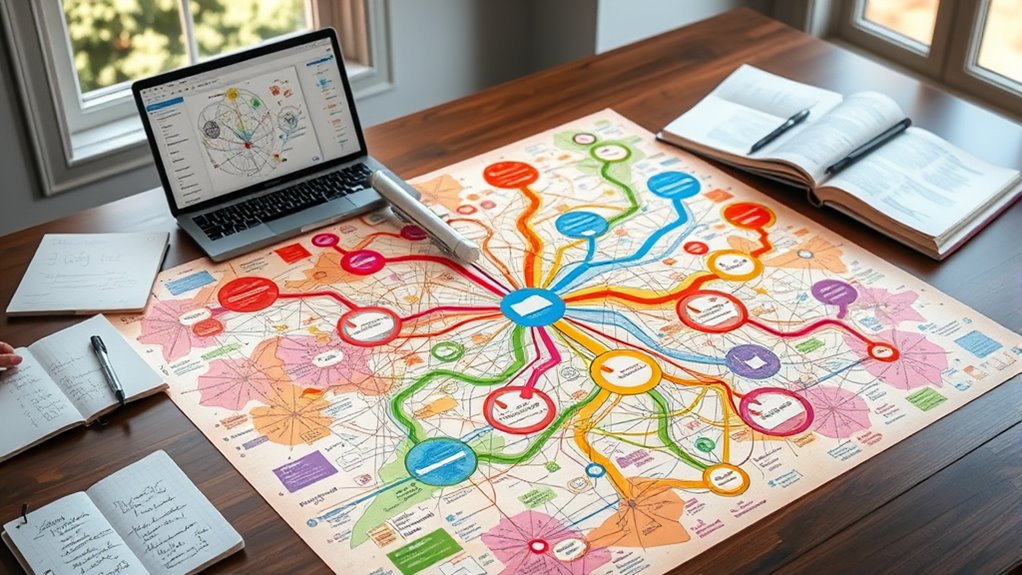

Curiosity mapping helps you structure lifelong learning by pinpointing what genuinely interests you and identifying your curiosity strengths. It guides you to develop personalized strategies that keep you motivated and engaged over time. By actively analyzing your responses and adjusting your approach, you turn curiosity into a powerful tool for continuous growth. If you want to explore how to create an effective curiosity map, keep exploring this topic further.
Key Takeaways
- Curiosity mapping identifies personal interests and strengths, guiding tailored lifelong learning pathways.
- It involves analyzing responses to topics or questions to understand curiosity patterns and areas for growth.
- Regular assessments help sustain engagement, prevent stagnation, and adapt learning strategies as interests evolve.
- Self-reflection fosters awareness of learning preferences, enabling intentional goal-setting and motivation development.
- Integrating curiosity mapping into routines transforms passive learning into active, ongoing discovery and innovation.

Have you ever wondered how curiosity shapes our understanding and drives innovation? It’s a powerful force that pushes you to explore new ideas, challenge assumptions, and seek out solutions. To harness this energy effectively, you need more than just a desire to learn—you need structure. That’s where curiosity mapping comes into play. By understanding your curiosity patterns, you can develop motivational strategies that keep your learning journey engaging and sustainable. A curiosity assessment helps you identify what sparks your interest and pinpoint areas where your curiosity is strongest. This process isn’t about passive observation; it’s about actively analyzing your responses to different topics, questions, or experiences. When you know what fuels your curiosity, you can tailor your learning activities to maximize engagement, making the pursuit of knowledge feel less like a chore and more like an exciting adventure.
Implementing motivational strategies based on curiosity assessments allows you to create a personalized roadmap for lifelong learning. For example, if you discover that you’re most curious about technological innovations, you can seek out related articles, podcasts, or courses that deepen your understanding. This targeted approach keeps your curiosity alive, preventing stagnation and boredom. Additionally, recognizing the moments when your curiosity wanes enables you to adjust your methods or switch topics, maintaining momentum and enthusiasm. Curiosity mapping isn’t just about identifying what excites you; it’s about structuring your learning in a way that nurtures that excitement over time. This proactive approach helps you develop a growth mindset, where challenges are seen as opportunities rather than obstacles.
Personalized curiosity strategies keep learning engaging and prevent stagnation, fueling continuous growth and passion.
Furthermore, curiosity mapping encourages self-reflection. As you evaluate your curiosity levels and responses, you gain insights into your learning preferences and habits. This awareness empowers you to make intentional choices that align with your interests and goals. Over time, you build a toolkit of motivational strategies—such as setting small, achievable goals or linking new information to your existing passions—that keep your curiosity thriving. What’s more, this process fosters resilience; when you encounter setbacks or slow progress, you can revisit your curiosity assessments to identify new angles or topics that reignite your passion for learning. Additionally, integrating home improvement principles—such as creating designated zones for different activities or regularly assessing clutter—can help sustain an organized and inspiring environment that nurtures your curiosity and focus.
In essence, curiosity mapping transforms the way you approach lifelong learning. It shifts the focus from passive absorption to active engagement, driven by a clear understanding of what motivates you. By regularly conducting curiosity assessments, you ensure your learning remains aligned with your evolving interests, making growth an ongoing, fulfilling journey. So, start exploring your curiosity patterns today and craft motivational strategies that turn curiosity into a powerful tool for continuous discovery.
personalized learning curiosity assessment
As an affiliate, we earn on qualifying purchases.
As an affiliate, we earn on qualifying purchases.
Frequently Asked Questions
How Can Curiosity Mapping Be Integrated Into Daily Routines?
To integrate curiosity mapping into your daily routines, start by identifying what sparks your interest each day. Use habit formation techniques to set aside specific times for exploring new topics or questions. Apply motivation strategies like rewarding yourself for curiosity-driven learning. Keep a curiosity journal to track your questions and discoveries, making it easier to stay motivated and develop a habit of continuous learning and exploration every day.
What Tools Are Recommended for Effective Curiosity Mapping?
You might think finding tools for curiosity mapping is simple—just jot down ideas, right? But for effective visualization, you’ll want digital platforms like mind-mapping apps or note-taking tools that organize your thoughts vividly. These platforms help you track interests and connections effortlessly. They turn curiosity into a visual journey, making your lifelong learning more engaging and manageable. Who knew that tech could turn curiosity into clarity?
How Does Curiosity Mapping Impact Long-Term Personal Growth?
Curiosity mapping boosts your long-term personal growth by fueling your intrinsic motivation to learn. When you organize your curiosities, you stay engaged and motivated, which helps you retain knowledge better. This process encourages continuous exploration, making learning a natural part of your life. As a result, you build resilience, adaptability, and a deeper understanding, setting a strong foundation for ongoing self-improvement and success.
Can Curiosity Mapping Be Adapted for Team or Organizational Learning?
Imagine curiosity mapping as a compass guiding a ship through uncharted waters. You can adapt it for teams and organizations by fostering interdepartmental collaboration and leadership development. By mapping collective questions and interests, you create a shared voyage of discovery. This approach reveal innovative ideas, strengthens bonds, and nurtures a culture of continuous learning, steering everyone toward growth and success in the vast ocean of organizational potential.
What Are Common Challenges Faced When Implementing Curiosity Mapping?
When implementing curiosity mapping, you often face challenges like overcoming resistance from team members who fear change or doubt its benefits. Resource allocation can also be tricky, as it requires time and effort that might compete with other priorities. To succeed, you need to clearly communicate the value of curiosity mapping, involve stakeholders early, and guarantee you allocate sufficient resources to foster an environment that encourages ongoing exploration and learning.
lifelong learning planner journal
As an affiliate, we earn on qualifying purchases.
As an affiliate, we earn on qualifying purchases.
Conclusion
Think of curiosity mapping as your personal treasure map, guiding you through uncharted territories of knowledge. When I started charting my learning journey, I uncovered gems I never knew existed—like discovering a new passion or skill. Just like explorers rely on maps to find hidden treasures, structuring your curiosity helps you navigate lifelong learning efficiently. Embrace this process, and you’ll reveal endless opportunities—your journey of discovery is just beginning.
motivation and goal setting workbook
As an affiliate, we earn on qualifying purchases.
As an affiliate, we earn on qualifying purchases.
self-reflection tools for learners
As an affiliate, we earn on qualifying purchases.
As an affiliate, we earn on qualifying purchases.