
To improve your water quality, choose filters based on the contaminants you want to remove—activated carbon for chlorine and odors, or reverse osmosis for heavy metals and bacteria. Regular testing helps you understand your water’s pH and impurity levels, ensuring safety and taste. Maintaining proper filtration and replacing filters as recommended keeps your water clean and safe. Keep exploring to discover how different systems can best meet your water needs and health concerns.
Key Takeaways
- Water quality impacts health, taste, and plumbing; regular testing ensures safety and proper pH balance.
- pH levels around 7 indicate balanced water; deviations can cause corrosion or taste issues.
- Different filtration systems, like activated carbon and reverse osmosis, target specific contaminants.
- Identifying contaminants through testing guides the selection of effective filters.
- Regular filter maintenance and testing are essential for maintaining safe, high-quality drinking water.
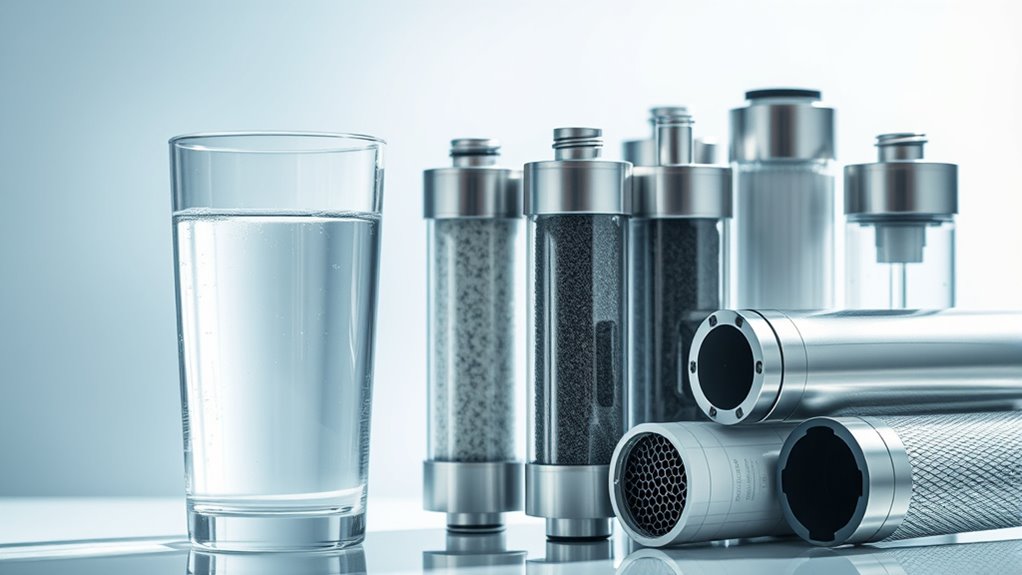
Have you ever wondered if the water you drink is truly safe? Water quality plays a vital role in your health, and understanding the basics can help you make better choices. One of the first things to consider is the pH balance of your water. The pH level indicates how acidic or alkaline your water is, with a neutral pH of 7. Being aware of this helps guarantee that your water isn’t too harsh or corrosive, which can affect both your health and your plumbing systems. If your water leans too acidic or too alkaline, it might cause issues like pipe corrosion or taste problems, so testing your water regularly can give you peace of mind. Many home filtration systems are designed to help balance the pH, making your water safer and more pleasant to drink.
Contaminant removal is another essential aspect of water quality. Contaminants can include bacteria, viruses, heavy metals, chemicals, and other impurities that might be present in your water supply. These unwanted substances can come from natural sources or pollution, and if left unchecked, they pose health risks. Using effective filters can considerably reduce or eliminate these contaminants, safeguarding your health. There are different types of filters available, from activated carbon to reverse osmosis systems, each targeting specific impurities. For example, activated carbon filters excel at removing chlorine and volatile organic compounds, improving taste and odor, while reverse osmosis systems can remove a broad spectrum of contaminants, including heavy metals and bacteria. Additionally, inspecting your water for potential contaminants through testing can help determine the most suitable filtration method.
Choosing the right filtration system depends on your water source and what contaminants are present. Testing your water before selecting a filter is a wise move. Once you identify the specific impurities, you can pick a system that effectively removes them, guaranteeing your water is clean and safe. It’s also important to maintain your filters properly, replacing them as recommended to keep their effectiveness. Regular maintenance and testing will help you stay ahead of potential issues and maintain excellent water quality.
In essence, paying attention to your water’s pH balance and investing in proper contaminant removal methods are key steps toward guaranteeing your drinking water is safe. These basics not only improve the taste and clarity but also protect your health from unseen hazards. Remember, understanding your water quality empowers you to make informed choices and take control of your health, one glass at a time.
Frequently Asked Questions
How Often Should I Replace My Water Filter?
You should replace your water filter according to its filter lifespan, which typically ranges from every 2 to 6 months. Check the manufacturer’s replacement schedule for your specific filter, as factors like usage and water quality can affect this. Regularly replacing your filter guarantees peak performance, clean water, and prevents buildup. Don’t wait too long; a timely replacement maintains the effectiveness of your filtration system and keeps your water safe and fresh.
What Is the Best Filter for Removing Lead?
Oh, so you think just any filter will do? Think again! For lead removal, look for filters certified by NSF/ANSI standards, especially those with activated carbon and ion exchange resins. These are your best bet for filter effectiveness. Don’t trust your health to anything less—choose a filter specifically designed for lead removal, and you’ll enjoy safer, cleaner water without the hidden risks lurking in your tap.
Are There Natural Methods to Improve Water Quality?
Yes, you can improve water quality naturally through natural purification methods like boiling, which kills bacteria, or using activated charcoal for filtration. You might also consider mineral enhancement by adding mineral drops or stones to boost your water’s health benefits. These methods are eco-friendly and cost-effective, helping you achieve cleaner, better-tasting water without relying solely on chemical filters. Always verify these methods suit your specific water source.
How Do I Test My Water for Contaminants?
Imagine you’re concerned about lead or bacteria in your water; you should start with contaminant detection using testing methods like home test kits or sending samples to a lab. These methods help identify pollutants accurately. To test your water, choose a reliable kit or professional service, follow instructions carefully, and interpret results to determine if contaminants are present, guiding you on necessary treatment steps or further testing.
Can Filters Remove Pharmaceuticals From Water?
Yes, filters can remove pharmaceuticals from water, but their effectiveness varies. Activated carbon filters are generally good at reducing many pharmaceuticals, especially those that are organic compounds, but they may not eliminate all traces. To guarantee better pharmaceutical removal, look for filters specifically designed for contaminant reduction, such as reverse osmosis or multi-stage systems. Always check the filter’s specifications to confirm its effectiveness against pharmaceuticals.
Conclusion
Remember, choosing the right water filter can turn your tap water from a murky swamp into crystal-clear, invigorating nectar. With the right filter, you’re not just drinking water; you’re sipping from a mountain spring nestled high in the Himalayas. Don’t settle for anything less than pure, pristine water—your health and taste buds deserve nothing short of a waterfall of freshness. Make the smart choice today and transform your everyday water into liquid perfection!