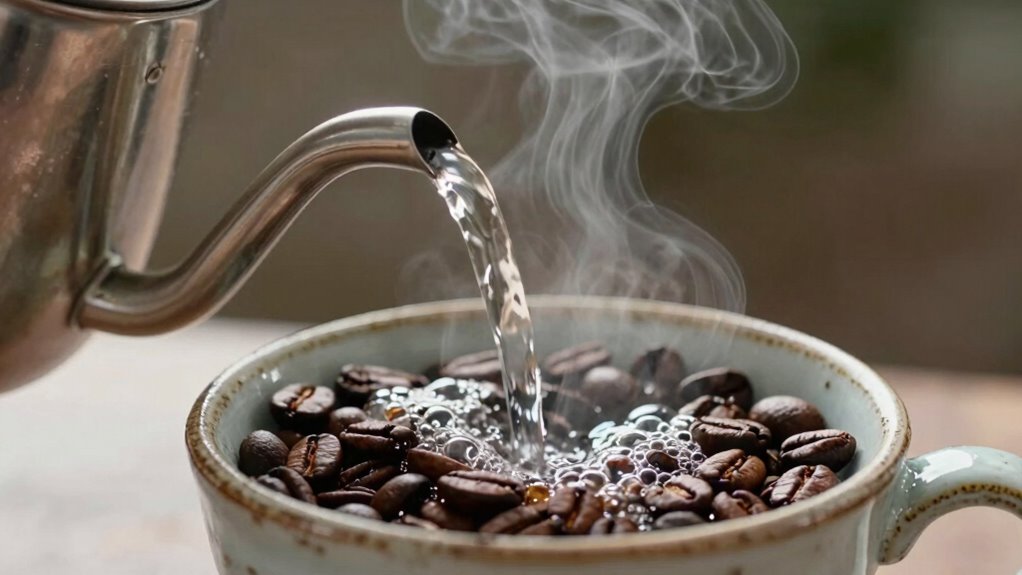

Water quality is the secret ingredient that can make your coffee taste better or worse. The minerals in water, like calcium and magnesium, influence extraction, flavor, and mouthfeel. Too soft or too hard water can lead to dull or bitter brews and even damage equipment. Balancing mineral levels through testing and adjustment guarantees consistency and flavor clarity. If you want to unlock the full potential of your coffee, understanding how water impacts your brew is essential—there’s more to discover.
Key Takeaways
- Water quality directly impacts coffee flavor, extraction, and mouthfeel, making it a crucial but often overlooked ingredient.
- Proper mineral balance in water enhances aromatic extraction and prevents dull or bitter tastes.
- Testing and adjusting water mineral content ensures consistency and protects equipment from scale buildup.
- Soft water can cause flat coffee, while hard water risks over-extraction and equipment issues.
- Using the right water profile elevates the overall coffee experience, emphasizing its role as the “secret ingredient.”
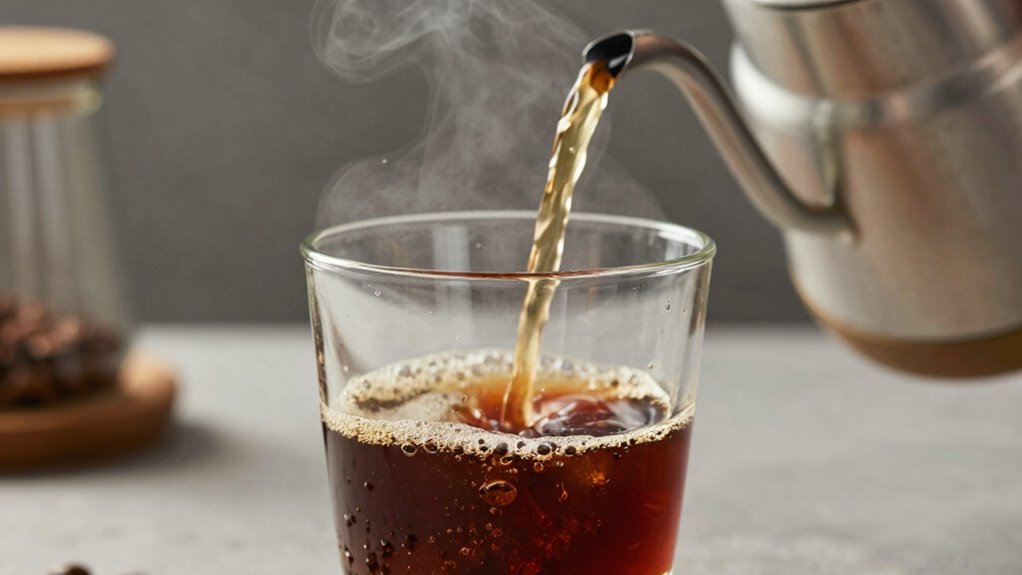
Have you ever wondered how water quality impacts your perfect cup of coffee? The truth is, water isn’t just a background element; it’s a essential ingredient that can make or break your brew. When you think about making great coffee, you probably focus on beans, grind size, and brewing time. But water quality plays an equally important role, especially when it comes to mineral content. The minerals dissolved in your water influence extraction, flavor, and mouthfeel. If your water is too soft, lacking natural minerals, your coffee may taste flat or dull. Conversely, if it’s too hard, with excessive minerals like calcium and magnesium, it can lead to over-extraction, resulting in bitterness or astringency. Striking the right balance is key, and that starts with understanding your water’s mineral content.
Mineral content in water affects how flavors develop during brewing. Water with the right amount of minerals helps extract the coffee’s aromatic oils and soluble compounds effectively. For example, calcium and magnesium are essential because they enhance extraction and contribute to a well-rounded taste. They also help prevent over-aggressive extraction caused by overly soft water, which lacks these minerals. On the other hand, water with high mineral levels—particularly excess calcium, magnesium, or other elements—can cause scale buildup in your equipment and lead to inconsistent extraction. This often results in a harsher, more bitter cup, which isn’t what you want. That’s why many baristas and coffee enthusiasts pay close attention to their water’s mineral profile, sometimes even using filtered or treated water to optimize the mineral content. Additionally, understanding the impact of mineral levels can help you tailor your water choices for optimal flavor extraction.
Your local tap water’s mineral levels vary depending on where you live, so it’s worth testing it before you start brewing regularly. A simple water test kit can reveal levels of calcium, magnesium, sodium, and other minerals. If your water is too soft, you might consider adding mineral drops or using mineral-rich spring water for your brewing. If it’s too hard, you may need to use a water filter or treatment system designed to reduce mineral levels without stripping all the beneficial minerals. The goal is to achieve a mineral balance that enhances the coffee’s natural flavors without causing scale buildup or bitterness. Understanding water quality, especially mineral content, empowers you to tweak your water source for a consistently excellent cup. After all, great coffee starts with good water—it’s the secret ingredient nobody talks about enough, but one that can elevate your brewing game considerably.
Frequently Asked Questions
How Does Water Temperature Affect Coffee Extraction?
Water temperature considerably impacts coffee extraction efficiency. When you use water that’s too hot, over-extraction occurs, making your coffee bitter and harsh. Conversely, if the water’s too cold, under-extraction results, leaving your brew weak and sour. Ideally, you should aim for a water temperature around 195-205°F (90-96°C). This range helps balance extraction efficiency, ensuring you get a rich, flavorful cup without undesirable bitterness or sourness.
Can Mineral Content in Water Alter Coffee Flavor?
Did you know mineral influence can dramatically change your coffee’s flavor? Water composition, especially minerals like calcium and magnesium, enhances extraction and adds complexity, making your brew taste richer or smoother. If your water has too many minerals, it can lead to bitter or overly harsh flavors. Conversely, balanced mineral content brings out nuanced notes, so consider testing your water’s mineral levels to perfect your coffee experience.
Is Filtered Water Always Better for Brewing Coffee?
Filtered water isn’t always better for brewing coffee, but it often improves water purity and helps maintain brewing consistency. When you filter water, you remove impurities that can interfere with extracting flavors, leading to a cleaner taste. However, if the filter removes beneficial minerals, it might negatively impact flavor. So, choose a filter that balances purity with mineral content to guarantee your coffee tastes just right every time.
How Does Water pH Impact Coffee Taste?
You might notice that water pH balance unexpectedly influences your coffee’s flavor. Slight water acidity, with a balanced pH around 6.5 to 7.5, enhances brightness and clarity. Too acidic or alkaline water can dull or overpower natural coffee notes. By paying attention to water pH, you guarantee ideal extraction and a well-rounded taste, turning an everyday brew into an extraordinary experience.
What Are the Best Water-To-Coffee Ratios for Brewing?
You should aim for a water-to-coffee ratio of about 16:1 for ideal brewing. Use a medium grind suited to your brewing equipment, whether it’s a French press or drip maker. Adjust slightly for personal taste, but keep in mind that too much water can dilute flavor, and too little can make it too strong. Experiment within this ratio to find your perfect balance for a rich, flavorful cup.
Conclusion
Remember, the water you use can make or break your coffee experience. Did you know that over 98% of your brewed coffee is water? So, choosing high-quality, clean water isn’t just a minor step—it’s essential. Next time you brew, pay attention to your water’s taste and mineral content. Doing so transforms each cup into a richer, more flavorful experience. After all, great coffee starts with great water.