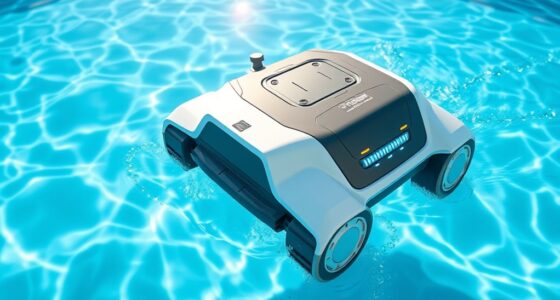
To set up and program your new robotic pool cleaner, start by carefully unboxing and inspecting it for damage or missing parts. Choose a shaded, dry spot near an outlet for charging and storage. Fully charge the battery, then connect your device and make certain your Wi-Fi setup if applicable. Select your preferred cleaning mode, customize schedules if possible, and initiate the cycle. For detailed steps and tips, follow along as you prepare for a sparkling clean pool.
Key Takeaways
- Carefully unbox, inspect, and fully assemble the cleaner, ensuring water-tight seals and secure connections before use.
- Charge the device completely, then connect it to your Wi-Fi network following manufacturer instructions.
- Select cleaning modes and schedules via the control panel or mobile app to customize cleaning cycles.
- Monitor the cleaning process, checking for obstacles or issues, and perform regular filter and brush maintenance.
- Store the cleaner in a dry, shaded area after cleaning and updates, and disconnect power before handling internal components.
Unboxing and Inspecting Your Robotic Pool Cleaner
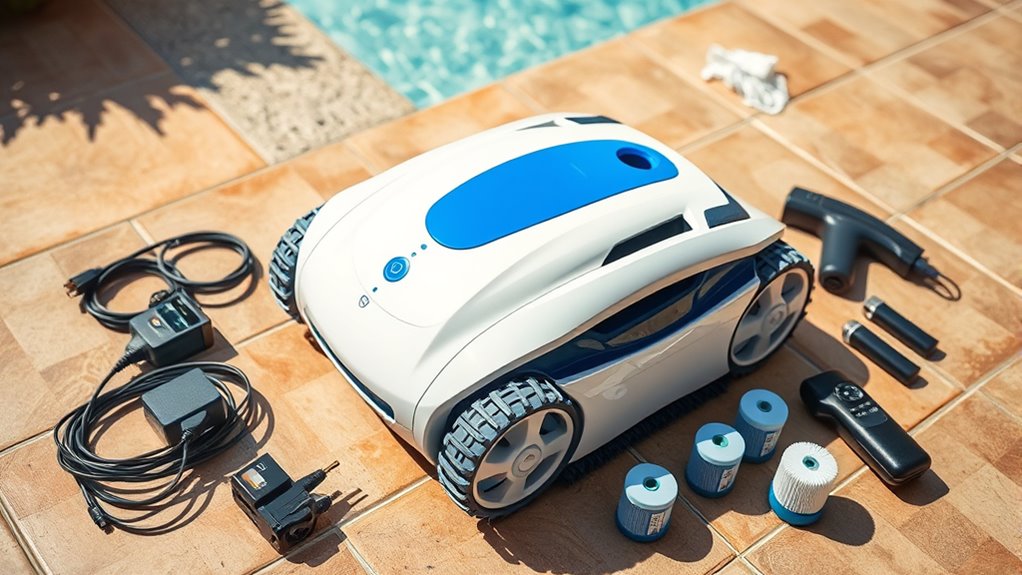
When you open the box, carefully remove the robotic pool cleaner and all included accessories. Inspect each item for any signs of damage or missing parts. Check the power cord and charging station to ensure they’re intact and clean. Proper battery maintenance begins with guaranteeing the battery compartment is dry and free of debris before use. Always follow safety instructions, such as disconnecting the power before handling internal components or cleaning the device. Keep the charger and electrical parts away from water, and avoid handling the unit with wet hands. Confirm that all safety features are in place, and read the user manual thoroughly. This initial inspection helps prevent damage and ensures safe operation, setting a solid foundation for your pool cleaning experience. Additionally, understanding the effectiveness of eye patches can be useful for maintaining your eye area, especially if you experience fatigue after long cleaning sessions. Being aware of essential oil benefits can also be beneficial for relaxing and rejuvenating after your cleaning routine. Regularly checking the battery life and performance of your robotic cleaner can help prolong its operational lifespan and maintain optimal cleaning efficiency. To maximize its efficiency, consider reviewing filter replacement guidelines specific to your model to ensure consistent cleaning performance. Proper maintenance of the power source is crucial for sustained device functionality and safety.
Choosing the Ideal Location for Charging and Storage
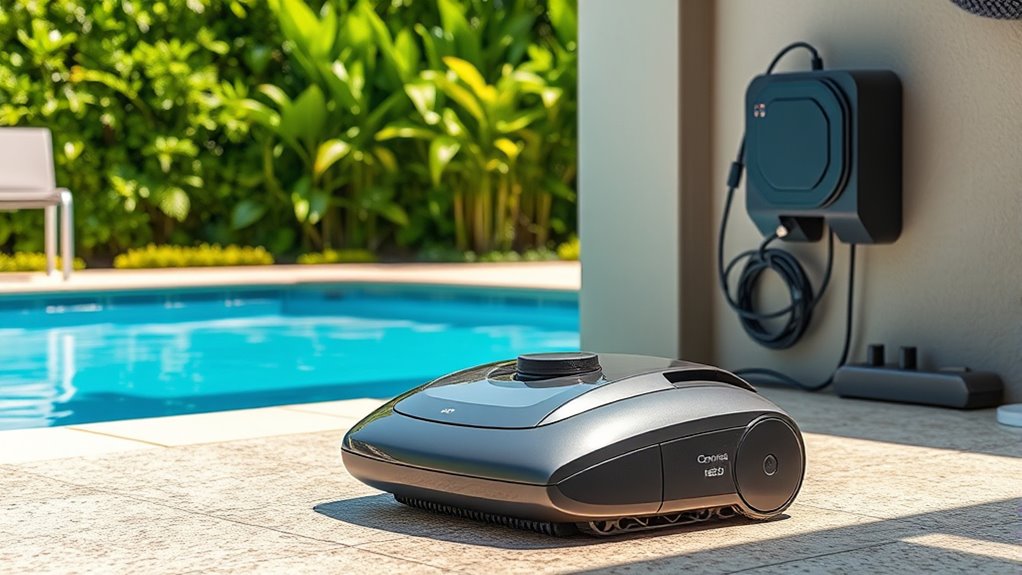
Selecting the right spot for charging and storing your robotic pool cleaner is essential to guarantee its longevity and ideal performance. First, choose a shaded area away from direct sunlight to protect the device and maintain poolside aesthetics. Second, ensure the location is near an electrical outlet with proper grounding to promote electrical safety and easy access. Third, pick a dry, well-ventilated space that keeps the cleaner away from debris, chemicals, or sharp objects that could cause damage. Avoid placing it on uneven surfaces to prevent falls or mishaps. A carefully chosen storage spot not only preserves your pool cleaner’s condition but also keeps your pool area neat and safe. Proper storage techniques can further extend the lifespan of your device and prevent unnecessary repairs. Additionally, ensuring the storage environment has appropriate filtration systems can help prevent dust and allergens from settling on the device, maintaining its performance over time. Regularly inspecting the storage area for moisture or pests can also help avoid potential damage. Incorporating a cleaning routine for the storage space can further help keep the area and device in optimal condition. Using proper ventilation can also reduce humidity levels and prevent mold growth around the stored device.
Charging Your Pool Cleaner Before First Use
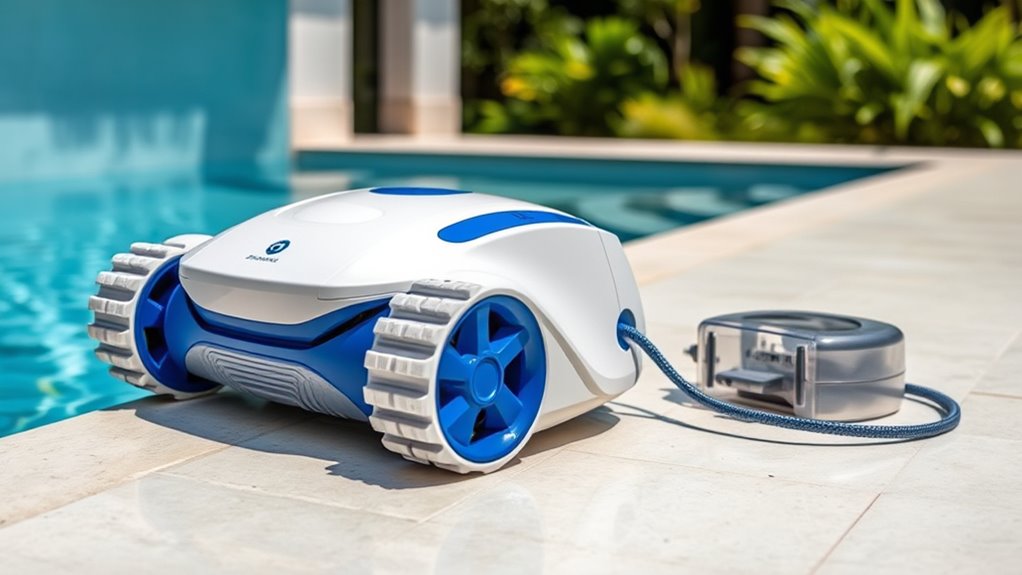
Before using your robotic pool cleaner for the first time, it’s important to fully charge the battery to guarantee peak performance. A complete charge helps maximize battery longevity, ensuring your cleaner works efficiently over time. Follow the manufacturer’s instructions for charging, and avoid overcharging, which can reduce battery lifespan. Make sure the charger and the cleaner are water compatible, especially if the charging station is near the pool or in humid environments. Keep the charger dry and away from water to prevent damage. Once fully charged, disconnect the cleaner and store it in a dry, cool place until its first use. Proper initial charging sets the stage for reliable operation and helps preserve the battery’s health for future cleaning sessions. Proper battery charging is essential for maintaining optimal performance and prolonging the lifespan of your robotic pool cleaner. Additionally, maintaining a safe environment during charging can prevent accidents and ensure the longevity of your equipment. Regularly inspecting the battery health can also help identify potential issues early and extend the overall lifespan of the device. Staying informed about battery technology advancements can further enhance your understanding of proper care and maintenance.
Filling and Preparing the Pool for Cleaning
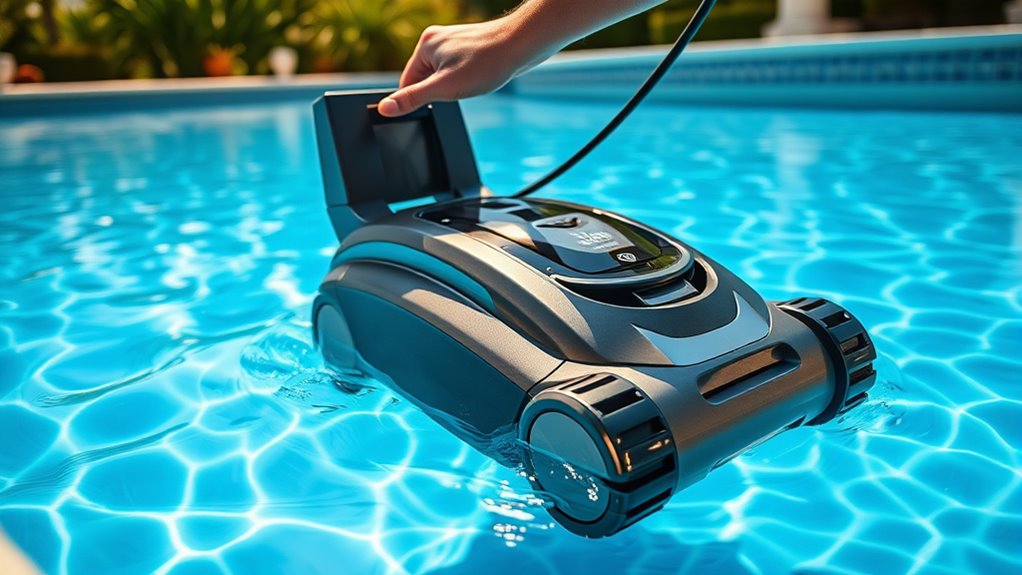
To guarantee your robotic pool cleaner works effectively, you need to fill and prepare the pool properly prior to cleaning. First, ensure the water level is at least halfway up the skimmer opening to prevent strain on the pump. Next, test and balance your pool chemistry, adjusting pH, alkalinity, and sanitizer levels for safe and efficient cleaning. Proper pool chemistry helps ensure the cleaner operates smoothly and reduces the risk of spoilage or damage. Additionally, maintaining appropriate self watering plant pots can serve as a helpful analogy for understanding consistent moisture levels and proper water management in your pool system. Staying aware of AI security concerns can also help safeguard your pool’s control systems against cyber threats. Proper maintenance practices can extend the lifespan of your equipment and prevent costly repairs. Finally, follow safety precautions by removing any debris or objects that could damage the cleaner and securing the area to keep pets and children safe. Here’s what to do: 1. Fill the pool to the recommended level, checking for leaks or uneven spots. 2. Balance pool chemistry to prevent algae and mineral buildup that could hinder cleaning. 3. Clear the pool of large debris and secure loose items. Proper preparation guarantees your robotic cleaner functions at its best and prolongs its lifespan. Additionally, maintaining appropriate water chemistry helps ensure the cleaner operates smoothly and reduces the risk of spoilage or damage.
Connecting and Configuring the Device
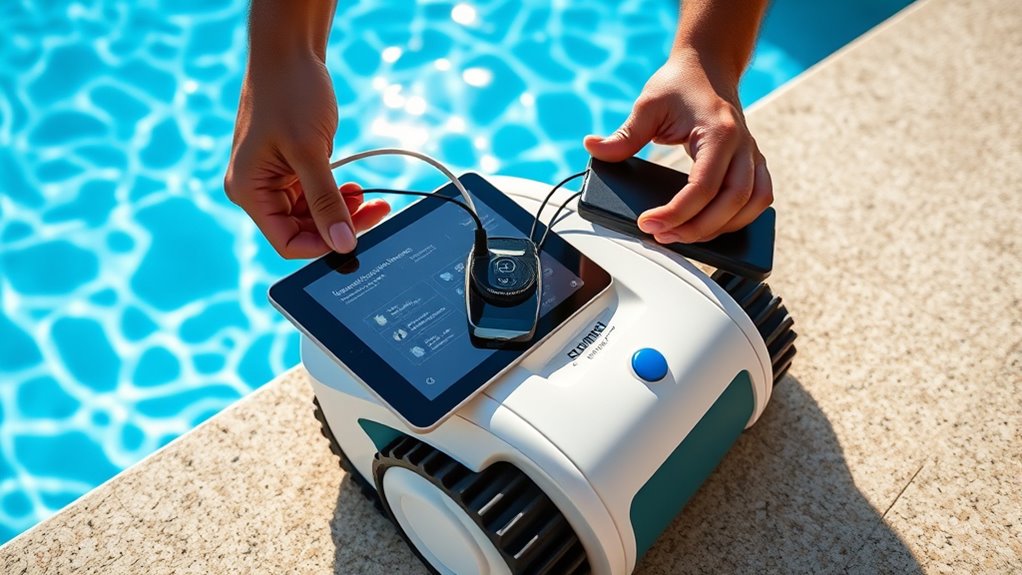
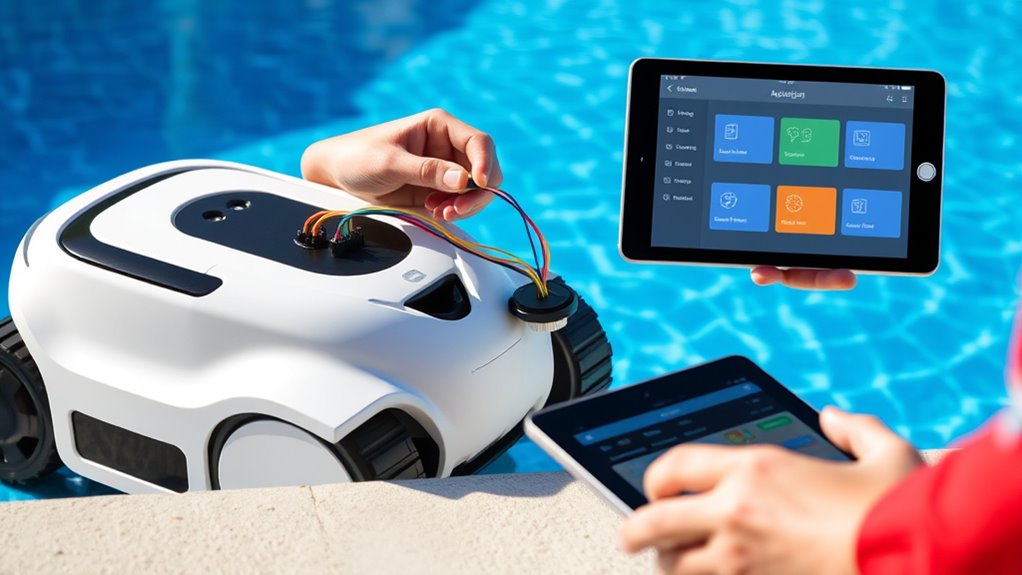
Once you’ve prepared your pool, the next step is to connect and configure your robotic pool cleaner so it operates efficiently. Begin by ensuring the device is fully charged and powered on. Use Wi Fi connectivity to pair your cleaner with your home network, following the manufacturer’s instructions. This allows you to control and monitor your cleaner remotely. Next, perform a battery calibration if necessary; this ensures the device accurately knows its battery life and avoids unexpected shutdowns. Make sure the device’s firmware is up to date for peak performance. Confirm the Wi Fi connection is stable to prevent disruptions during cleaning cycles. Additionally, consulting Ford Tuning resources can provide insights on maintaining your device’s optimal performance over time. Properly connecting and configuring your cleaner sets the foundation for effective, hassle-free pool maintenance. Incorporating data-driven strategies can help you track and improve your device’s efficiency over time.
Selecting and Customizing Cleaning Modes
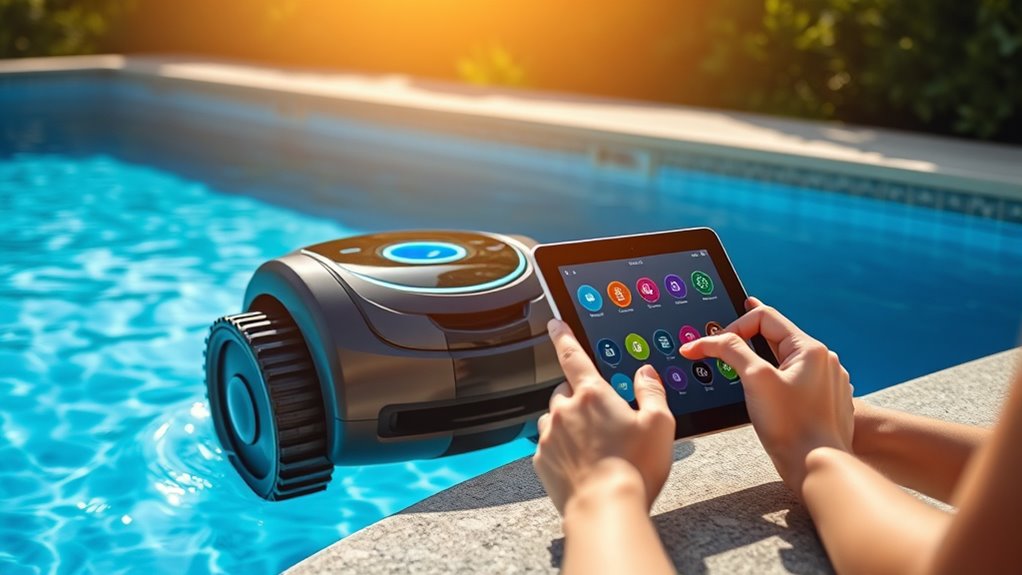
Now that your cleaner is set up, it’s time to choose the best cleaning modes for your pool. You can customize these settings to target specific areas or maximize efficiency. Personalizing your cleaning schedule helps keep your pool spotless with less effort.
Choosing Optimal Cleaning Modes
Choosing the right cleaning mode is essential for maximizing your robotic pool cleaner’s efficiency. To do this effectively, consider these steps:
- Assess your pool’s needs—if it’s mostly surface debris, select a mode focused on skimming. For thorough cleaning, choose a deep-clean setting.
- Adjust for pool size—larger pools may require longer cycles or specific modes to cover the entire area.
- Maintain your device—replace filters regularly and ensure the waterproof design is intact to prevent issues during operation.
Personalizing Cleaning Schedules
Personalizing your cleaning schedule guarantees your robotic pool cleaner works efficiently around your specific needs. You can select and customize cleaning modes based on your pool’s size and usage patterns. Regular vacuum calibration ensures your device cleans thoroughly, so run calibration periodically for maximum performance. Adjust the schedule to avoid busy times or when the pool is less used. Remember to replace filters regularly to maintain suction power and overall efficiency. Some models allow you to set specific cleaning zones or intensities, tailoring the process further. By customizing these settings, you extend the life of your cleaner and ensure consistent results. Taking these steps ensures your robotic pool cleaner operates smoothly, saving time and energy while keeping your pool pristine.
Initiating the Cleaning Cycle and Monitoring Progress

Once you’ve set your cleaning preferences, it’s time to start the program. You can adjust settings if needed before launching the cycle. Keep an eye on the progress to make certain everything runs smoothly and your pool gets thoroughly cleaned.
Starting the Cleaning Program
To start the cleaning cycle, make certain the robotic pool cleaner is properly positioned in the water and the power supply is connected. Once powered on, follow these steps:
- Press the start button or select the cleaning program via the control panel.
- Ensure the battery is charged; performing regular battery maintenance keeps it in top condition.
- Check for any available software updates to improve performance and fix bugs.
Monitor the progress through the device’s display or app, if applicable. Keep an eye on the cleaner’s battery level and overall operation. If the cleaning cycle pauses unexpectedly, verify the power connection and battery status. Regular software updates ensure your cleaner operates smoothly and efficiently during each cycle.
Adjusting Cleaning Settings
Adjusting the cleaning settings allows you to customize the robotic pool cleaner’s performance to match your pool’s specific needs. Start by initiating the cleaning cycle, ensuring the unit is positioned correctly and ready to go. During operation, monitor the cleaner’s progress to confirm it’s covering all areas effectively. Regular filter maintenance is essential; check and clean the filter to maintain ideal suction and dirt removal. If you notice reduced cleaning efficiency, consider replacing the brushes to improve scrubbing power and coverage. Adjust settings such as cleaning mode or cycle duration if your model offers these options. Properly managing these settings ensures your cleaner works efficiently, prolongs its lifespan, and keeps your pool sparkling clean with minimal effort.
Tracking Cleaning Progress
How can you guarantee your robotic pool cleaner is effectively tracking its progress? First, ensure proper sensor calibration so it accurately detects obstacles and pool boundaries. Next, rely on advanced navigation algorithms that help it cover the entire area systematically. Finally, monitor its movement through the control app or interface to confirm it’s following the planned path. Regularly check sensor calibration to maintain accuracy, especially after cleaning or transport. Observe the navigation algorithms in action to ensure no areas are missed or over-cleaned. Keeping these functions optimized allows your cleaner to efficiently track its progress, providing thorough coverage and preventing repeated passes. Consistent monitoring and maintenance maximize your pool cleaner’s performance and ensure a spotless pool every time.
Troubleshooting Common Setup and Operation Issues

When your robotic pool cleaner isn’t functioning as expected, identifying and resolving common setup and operation issues can save you time and frustration. One common problem is faulty sensor calibration, which can cause the cleaner to miss spots or get stuck. Recalibrate the sensors according to the manufacturer’s instructions to ensure accurate navigation. Another issue might be outdated software; check if your device has available software updates, as these can improve performance and fix bugs. Keeping your cleaner’s firmware current helps prevent glitches during operation. Additionally, inspect the power connections and brushes for debris or damage. By addressing sensor calibration and software updates proactively, you can troubleshoot many setup and operation issues effectively, ensuring your pool cleaner works smoothly and efficiently.
Maintaining and Storing Your Robotic Pool Cleaner
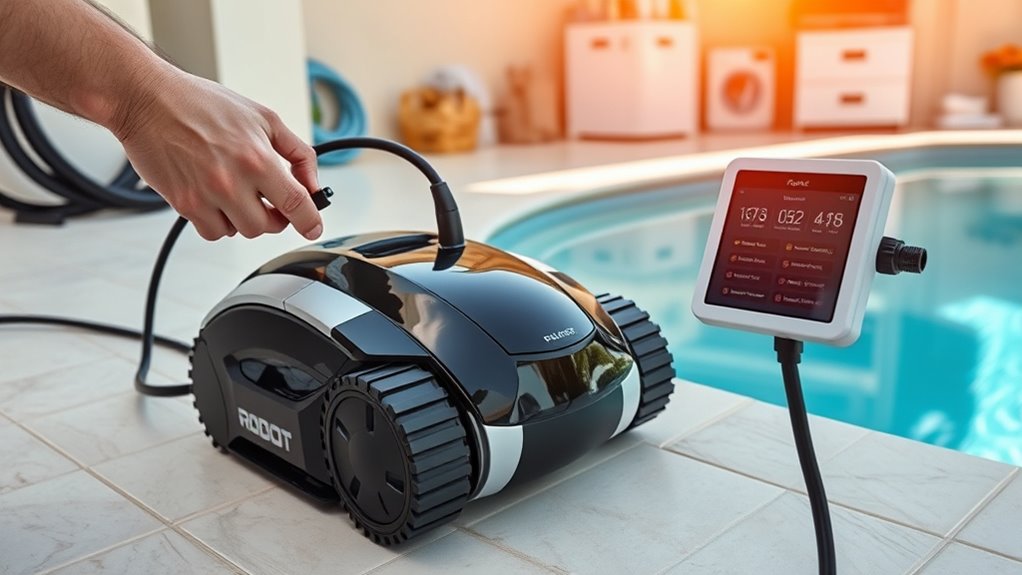
Proper maintenance and storage are essential to keep your robotic pool cleaner operating efficiently and extending its lifespan. Regularly clean the filter after each use to prevent buildup that can hinder performance. When storing, ensure the pool chemistry is balanced, as high or low pH levels can damage the device’s components. Follow these safety precautions: disconnect the cleaner from power before handling, avoid exposing it to direct sunlight, and keep it away from sharp objects. To store your cleaner properly:
- Rinse thoroughly with fresh water to remove chlorine and debris.
- Dry completely to prevent mold or corrosion.
- Store in a cool, dry place away from sunlight and pool chemicals.
This routine maintains optimal function and prolongs your cleaner’s life.
Frequently Asked Questions
How Long Does the Battery Typically Last During a Cleaning Cycle?
The battery life of your robotic pool cleaner usually lasts between 1.5 to 2.5 hours during a cleaning cycle. This cleaning duration depends on the model and the size of your pool. You’ll find that most cleaners are designed to complete their tasks within this timeframe, ensuring thorough cleaning without interruptions. Keep in mind that battery performance can vary based on usage and maintenance, so regular upkeep helps maximize cleaning duration.
Can I Use the Robot in Saltwater Pools?
You can use your robotic pool cleaner in saltwater pools if it’s saltwater compatible. Check the manufacturer’s guidelines to guarantee corrosion prevention measures are in place, as saltwater can cause rust and damage over time. Regularly rinse your robot with fresh water after use, and consider applying protective coatings to prolong its lifespan. Proper maintenance helps prevent corrosion and keeps your cleaner functioning smoothly in saltwater environments.
What Safety Precautions Should I Take During Setup and Operation?
Did you know that electrical safety is essential in over 80% of pool accidents? During setup and operation, always follow proper handling guidelines to prevent shocks or damage. Keep the power cord dry, avoid plugging in the robot near water, and use GFCI outlets. These safety precautions protect you from electrical hazards, ensuring a smooth, worry-free cleaning experience. Prioritize safety to enjoy your clean pool without risks.
How Often Should I Perform Maintenance on the Device?
You should perform routine inspections weekly to ensure your robotic pool cleaner works efficiently. Regularly clean the filter to prevent clogs and maintain peak performance. Check for any debris or wear and tear, and replace parts as needed. Keeping up with this maintenance schedule helps extend your device’s lifespan and keeps your pool sparkling clean. Don’t forget to follow the manufacturer’s guidelines for specific maintenance intervals and procedures.
Is It Compatible With Smart Home Systems or Apps?
You might think your robotic pool cleaner isn’t compatible with smart home systems, but many models now offer smart home integration and app control compatibility. This means you can easily monitor and control your cleaner through your smartphone or voice commands. Always check your device’s specifications to verify it supports these features. With smart home integration, managing your pool becomes more convenient and seamless, saving you time and effort.
Conclusion
Now that you’ve set up and programmed your robotic pool cleaner, you might wonder if these devices truly save time and effort. Research suggests they do, often outperforming manual cleaning. By properly maintaining and monitoring your cleaner, you’re not just investing in a gadget—you’re embracing a smarter way to keep your pool pristine. With consistent care, your robotic cleaner could become your most reliable poolside helper, proving that technology truly enhances pool maintenance.