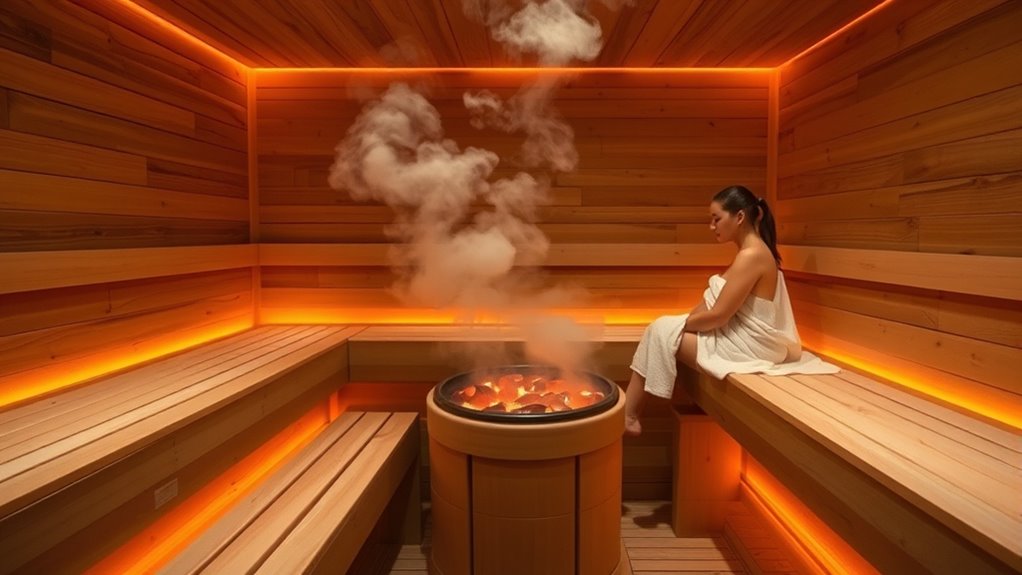

Saunas provide a great way to relax, boost circulation, and support recovery by promoting sweating and easing muscle tension. To stay safe, stay hydrated, limit sessions to 15-20 minutes, and listen to your body. Avoid alcohol and heavy meals beforehand, and consult your doctor if you’re pregnant or have health issues. Proper use and precautions guarantee you enjoy the benefits while minimizing risks—seeking more tips enhances your experience.
Key Takeaways
- Saunas promote sweating, enhance circulation, relax muscles, and improve skin, aiding in recovery and overall health.
- Limit sessions to 15-20 minutes, stay hydrated, and avoid alcohol or heavy meals before use for safety.
- Always listen to your body; exit immediately if feeling dizzy, nauseous, or uncomfortable during sauna sessions.
- Pregnant women and individuals with heart conditions should consult a healthcare provider prior to sauna use.
- Shower beforehand to remove impurities, and cool down after to prevent overheating and support recovery.
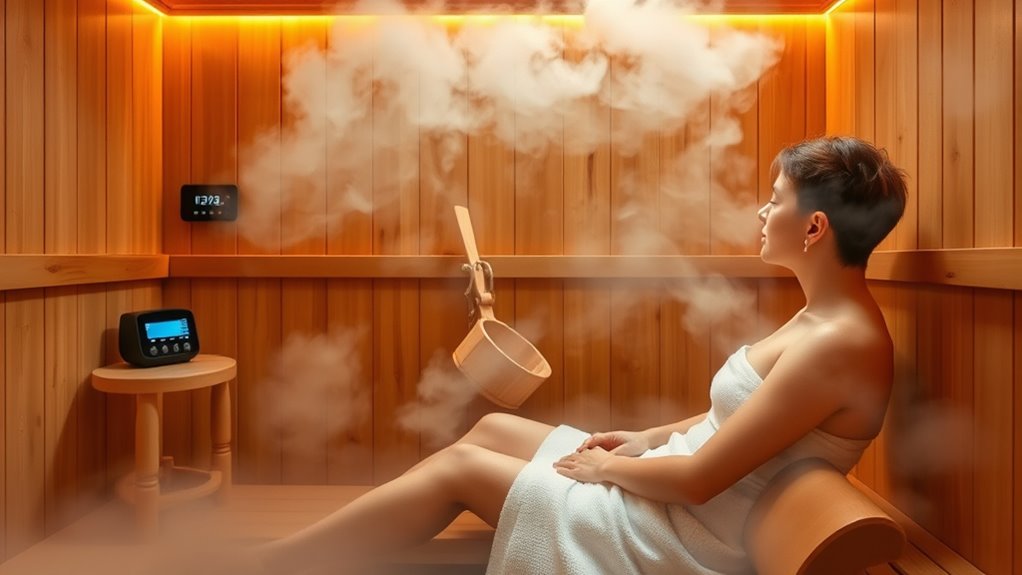
Have you ever wondered what makes saunas so popular for relaxation and health? It’s because they offer a unique way to unwind while providing a range of benefits of saunas that boost your well-being. When you sit in a sauna, the intense heat causes your body temperature to rise, promoting sweating and increasing blood circulation. This process can help relax tense muscles, reduce stress, and improve your skin’s appearance by flushing out toxins. Regular sauna use may even support cardiovascular health by encouraging better blood flow and lowering blood pressure over time. Plus, many people find that the warmth helps ease joint pain and stiffness, making it a popular choice for athletes and those with chronic aches.
However, while the benefits of saunas are impressive, it’s essential to prioritize sauna safety tips to enjoy these advantages without risking your health. First, always listen to your body. If you start feeling dizzy, nauseous, or uncomfortable, it’s best to exit the sauna immediately. Staying hydrated is vital, so drink plenty of water before, during, and after your session to replenish fluids lost through sweating. Limit your time in the sauna to about 15-20 minutes, especially if you’re new to it or sensitive to heat. Overexposure can lead to dehydration or heat exhaustion, which is why moderation is key. If you’re pregnant, have cardiovascular issues, or any other health concerns, consult your doctor before using a sauna to confirm it’s safe for you.
Another important sauna safety tip is to avoid alcohol or heavy meals before entering the heat. Alcohol impairs your body’s ability to regulate temperature and increases the risk of dehydration, while a heavy meal can make you feel uncomfortable or nauseous during your session. Always shower beforehand to remove lotions, oils, or dirt that could clog pores or cause irritation when sweating. When you’re finished, take a cool shower to help your body gradually return to normal temperature. Additionally, using appropriate sauna equipment can enhance safety and comfort during your sessions. If you have any doubts or experience symptoms like chest pain, dizziness, or extreme weakness, seek medical attention promptly.
Frequently Asked Questions
Can Saunas Help With Chronic Health Conditions?
Yes, saunas can help with chronic health conditions by promoting detoxification benefits and enhancing mental wellness. When you spend time in a sauna, you may flush out toxins and improve circulation, which supports your body’s healing process. Additionally, the relaxing heat can reduce stress and boost your mood. Just remember to stay hydrated and consult your healthcare provider to guarantee sauna use is safe for your specific condition.
What Are the Best Durations for Sauna Sessions?
You should aim for sauna sessions lasting 15 to 20 minutes to maximize benefits without risking dehydration. Remember hydration tips like drinking water before and after each session to stay safe. Follow sauna etiquette by keeping quiet, respecting others’ space, and not overdoing it. If you feel dizzy or uncomfortable, exit immediately. Listening to your body guarantees a safe, enjoyable experience while reaping sauna’s benefits.
Are There Any Age Restrictions for Sauna Use?
Is age just a number when it comes to sauna safety? For children and seniors, age restrictions often apply because their bodies may not handle heat as well. Children under age 12 and older adults should consult a healthcare professional before using a sauna. Always prioritize safety by following age guidelines, monitoring how you feel, and avoiding prolonged sessions to prevent dehydration or overheating.
How Does Sauna Use Affect Blood Pressure?
Using a sauna can temporarily lower your blood pressure by promoting blood vessel dilation, aiding blood pressure regulation. However, the heat also has a cardiovascular impact, increasing your heart rate as your body works to cool down. If you have existing blood pressure issues or heart conditions, you should consult a healthcare professional before regular sauna use, as it can affect your cardiovascular health differently.
Can Saunas Be Used During Pregnancy?
Pregnancy precautions prohibit sauna use during pregnancy. You should avoid saunas because heat can harm you and your baby. Sauna restrictions emphasize safety, so it’s best to skip steam sessions when expecting. Instead, opt for safer, cooler activities that promote pregnancy safety. Prioritize your health and your baby’s well-being by steering clear of saunas until your doctor confirms it’s safe to return.
Conclusion
So, now you’re basically a sauna expert—ready to sweat, recover, and maybe even impress your friends with your steamy knowledge. Just remember, if you turn into a raisin or start seeing steam monsters, it’s time to cool off. Embrace the heat, respect your limits, and enjoy the relaxing (and slightly hilarious) world of saunas. After all, what’s life without a little sweat, a lot of relaxation, and some good old-fashioned steam-induced humor?