
Relying heavily on recovery data can subtly dull your natural sense of your body’s signals. When you focus too much on metrics like sleep scores or heart rate variability, you might ignore how you actually feel. This fixation can lead to emotional stress and a disconnection from your internal cues, making it harder to trust your instincts. To stay in tune with your body, it’s important to balance data with awareness of your feelings—and there’s more to uncover if you keep exploring.
Key Takeaways
- Overreliance on recovery metrics can overshadow internal bodily signals, reducing mindfulness and intuitive awareness.
- Excess focus on data may cause anxiety, leading to misinterpretation of bodily cues and decreased bodily trust.
- Metrics like heart rate variability and sleep scores may not accurately reflect true wellness, causing confusion and disconnection.
- Relying solely on external data can diminish sensitivity to subtle internal cues indicating fatigue or stress.
- Balancing data with mindfulness practices helps maintain innate body awareness and prevents dependence on quantitative metrics.
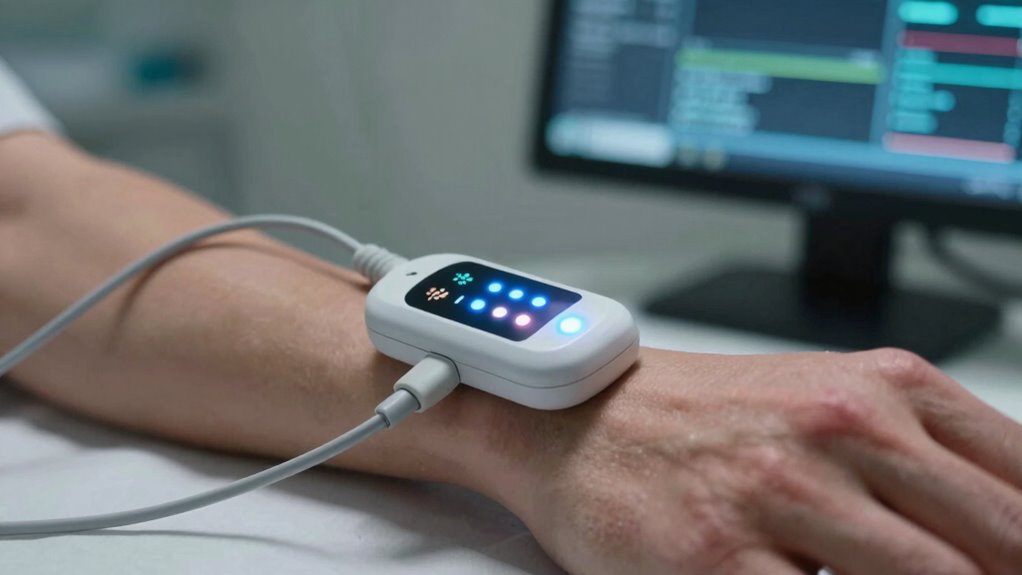
In today’s world of constant data tracking, recovery metrics like heart rate variability and sleep scores are becoming standard tools for monitoring your health. While they offer valuable insights, relying heavily on these numbers can subtly dull your natural sense of your body’s signals. Instead of tuning into how you feel, you might start to depend on the data to tell you when you’re tired, stressed, or ready to push harder. This shift can impact your mindfulness awareness — the ability to stay present and attuned to your internal cues. When you prioritize numbers over sensations, you risk disconnecting from what your body is actually telling you at any moment.
Your emotional regulation can also suffer as a result. When you’re fixated on quantified recovery data, you might become anxious about your performance or recovery status, even when your body feels fine. This can create a cycle where your emotional response to the data influences your physical state, rather than your body’s intrinsic signals guiding you. Over time, this dependency can diminish your capacity to interpret subtle changes, like fatigue, stress, or relaxation, which are often better indicators of your well-being than any number on a screen. Recognizing how biological signals fluctuate naturally can help you maintain a more balanced understanding of your health. Additionally, understanding the importance of interoception, or the sense of internal body awareness, can support your ability to trust your instincts over external data. Developing a stronger awareness of internal cues can help you stay aligned with what your body is truly telling you, rather than just the data.
The danger lies in the subtlety of this shift. You might start to believe that your recovery is only complete when your heart rate variability hits a certain threshold or your sleep score reaches a specific target. But your body’s wisdom isn’t always captured fully by these metrics. Sometimes, you’ll feel energized and ready to train, even if your numbers suggest otherwise. Conversely, you might feel exhausted but see a good sleep score, leading to confusion or unnecessary rest days. This disconnect can erode your trust in your own instincts, making you more reliant on external data rather than your internal signals. Being aware of body awareness practices can help you stay connected to your natural cues and prevent overdependence on external metrics. Recognizing the role of internal signals in your overall health can further enhance your ability to interpret subtle bodily changes accurately.
To maintain your intuitive connection with your body, it’s essential to balance data with mindfulness awareness. Pay attention to how you feel during and after activities, notice your breathing patterns, and observe your emotional responses. Developing this awareness helps you recognize when recovery is truly complete, beyond what the numbers say. Emotional regulation improves when you trust your internal cues, reducing anxiety caused by data fluctuations. Ultimately, while recovery metrics are useful tools, your body’s innate signals remain the most reliable guides. Cultivating mindfulness awareness ensures you stay connected to your body’s natural intelligence, preventing recovery data from quietly dulling your intuition.
As an affiliate, we earn on qualifying purchases.
Frequently Asked Questions
How Does Recovery Data Impact Daily Decision-Making?
Recovery data influences your daily decisions by shaping your mindful awareness of how your body responds. When you rely on this data, you might prioritize rest or adjust activity levels, which can boost emotional resilience. However, it can also make you less intuitive about your body’s natural signals, leading to overdependence on metrics rather than trusting your instincts. Balancing recovery data with mindful awareness helps you make healthier, more instinctive choices daily.
Can Over-Reliance on Data Reduce Bodily Awareness?
Yes, over-reliance on recovery data can reduce your body awareness and hinder intuitive decision-making. When you focus too much on numbers and metrics, you might ignore how your body truly feels, missing subtle signals of fatigue or stress. This reliance can make you less attuned to your body’s natural cues, leading to less instinctive choices about rest, activity, or nutrition, ultimately weakening your overall body awareness.
What Types of Recovery Data Are Most Misleading?
Misleading metrics like heart rate variability or sleep scores can tempt you into misinterpretation, making you think you’re more recovered than you are. You might overlook subtle signs of fatigue or stress, relying solely on data. This can dull your bodily intuition. To stay in tune, combine recovery data with your physical sensations, and question the numbers rather than accepting them blindly. Remember, data is a guide, not the whole story.
Does Recovery Data Affect Mental Health?
Recovery data can influence your mental health by impacting your emotional resilience. When you rely heavily on data, you might feel anxious or frustrated if results don’t meet expectations, reducing your confidence. To counteract this, practicing mindfulness can help you stay present and grounded. By focusing on your body’s signals and emotions, you strengthen your intuition and emotional resilience, ensuring recovery data supports rather than undermines your mental well-being.
How Can I Balance Data Use and Intuition?
To balance data use and intuition, trust your intuitive sense while using data as a guide, not a rule. Avoid data overreach by not letting numbers override how you feel physically. Develop intuitive trust by paying attention to your body’s signals and using data to confirm or refine those feelings. This approach helps you stay connected to your body’s natural cues without becoming overly dependent on metrics.
Conclusion
Imagine tracking every detail of your recovery, but over time, you start ignoring your gut feelings. For example, if your data shows you’re fine after a workout, you might dismiss your body’s signals of fatigue or pain. Without trusting your instincts, you could push too hard or miss warning signs. So, while data is helpful, don’t forget to listen to your body’s subtle cues—sometimes, your intuition knows best, even when the numbers say otherwise.