Choosing the right BTU for your portable AC is key to avoiding overpaying and ensuring efficient cooling. If your unit is too powerful, it’ll cycle on and off, wasting energy and making more noise. If it’s too small, it won’t cool effectively and could increase your energy bills. By understanding how to match BTU to your space, you can save money and get ideal performance. Keep going to discover the simple math that makes this easier.
Key Takeaways
- Calculate the room size in square feet to determine the appropriate BTU for effective cooling.
- Avoid oversizing to prevent energy waste, noise, and frequent cycling of the portable AC unit.
- Match the BTU rating to your space to ensure efficient cooling and lower energy bills.
- Consider energy efficiency ratings like EER or ENERGY STAR to maximize performance and save money.
- Balance BTU capacity with noise levels for a quieter, more comfortable cooling experience.
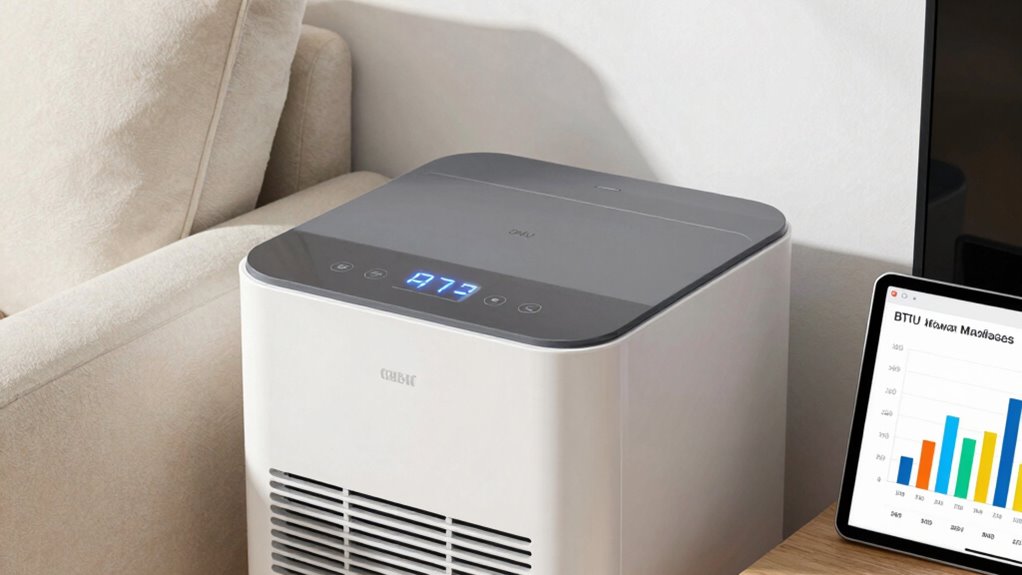
Portable AC units are a convenient solution for cooling specific spaces without the hassle of permanent installation. They’re perfect if you want to cool a single room, office, or small apartment without committing to a window unit or central air system. When shopping for one, understanding the BTU (British Thermal Unit) rating is essential. It helps you choose a model with the right cooling capacity, ensuring you don’t overpay for an oversized unit or end up with insufficient cooling from an undersized one. But beyond just BTU, you also need to consider energy efficiency and noise levels, as these factors substantially impact your overall satisfaction and energy bills. Additionally, selecting a unit with proper sizing ensures optimal performance and energy consumption. Energy efficiency is vital because it determines how much electricity your portable AC consumes to produce the cooling you need. A more efficient unit uses less power, saving you money over time. Look for models with an Energy Efficiency Ratio (EER) rating or those labeled as ENERGY STAR certified. These units are designed to deliver effective cooling while minimizing energy waste. An efficient portable AC not only cuts down your electricity bills but also reduces your carbon footprint, making it a smarter long-term investment. Keep in mind that choosing a unit with the appropriate BTU for your space also impacts energy efficiency. An overpowered unit will cycle on and off frequently, wasting energy, while an underpowered one will struggle to cool the room effectively, leading to higher energy use as it works harder to compensate.
Noise levels are another essential consideration, especially if you plan to use the unit in a bedroom or home office. Some portable ACs operate quietly, allowing you to sleep or work without distraction, while others can be quite loud, disrupting your focus or rest. When researching models, check the decibel (dB) ratings—lower numbers indicate quieter operation. Many modern units feature noise-reduction technology to keep sound levels minimal. Selecting a quieter model enhances comfort and productivity, making your cooling experience more pleasant. Keep in mind that larger BTU units tend to generate more noise, so if noise is a concern, opt for a model with a higher efficiency rating and a quieter operation profile.
Frequently Asked Questions
How Do I Calculate the BTU Needed for Irregularly Shaped Rooms?
To calculate the BTU needed for an irregular room, break the space into smaller sections with simpler shapes. Measure each area’s length and width, then find their individual square footage. Perform a BTU calculation for each part, considering factors like windows and insulation, and add them together. This method guarantees you get an accurate BTU calculation tailored to your irregular room, preventing over- or under-cooling.
Can Portable AC Units Cool Multiple Rooms Simultaneously?
Yes, portable AC units can cool multiple rooms simultaneously, especially if they have multi-room cooling features or a higher BTU rating. However, a portable vs window unit comparison shows that window units often cool larger areas more efficiently. To maximize effectiveness, consider the layout and whether you need flexible mobility or fixed cooling, ensuring your portable AC’s BTU matches the size and insulation of your spaces.
How Does Humidity Affect the BTU Requirements of a Portable AC?
Humidity impacts your portable AC’s BTU needs because higher humidity makes the air feel warmer and can overload its dehumidification efficiency. When humidity rises, you should choose a unit with a higher BTU rating to improve humidity control strategies and maintain comfort. Proper dehumidification guarantees faster cooling, so consider models that excel in humidity control to avoid overpaying and ensure effective cooling in humid environments.
Are Higher BTU Units Always More Energy-Efficient?
Like a wise wizard in a fairy tale, you should know that higher BTU units aren’t always more energy-efficient. Bigger isn’t always better; it can lead to overpayment risk and wasted energy. Instead, focus on the right size for your space to maximize energy efficiency and save money. An oversized unit cools too quickly, reducing efficiency, so choose wisely to avoid unnecessary expenses and maintain comfort.
What Are Common Misconceptions About Portable AC BTU Ratings?
You might think higher BTU ratings always mean better cooling, but BTU misconceptions often lead you astray. Many believe bigger is always better, yet oversizing can cause inefficient operation and humidity issues. Cooling myths also suggest that lower BTUs can’t cool effectively, which isn’t true if you choose the right size for your space. Always match BTU ratings to your room’s size to avoid overpaying and guarantee ideal comfort.
Conclusion
Now that you understand the BTU math behind portable AC units, you’re equipped to choose the perfect size without overpaying. Think of it as finding the Goldilocks zone—just right for your space. When you pick the right unit, it’ll work efficiently, saving you money and keeping your cool. So, don’t get swept away by the hype; use the numbers to steer your decision, and enjoy a comfortable, budget-friendly summer.