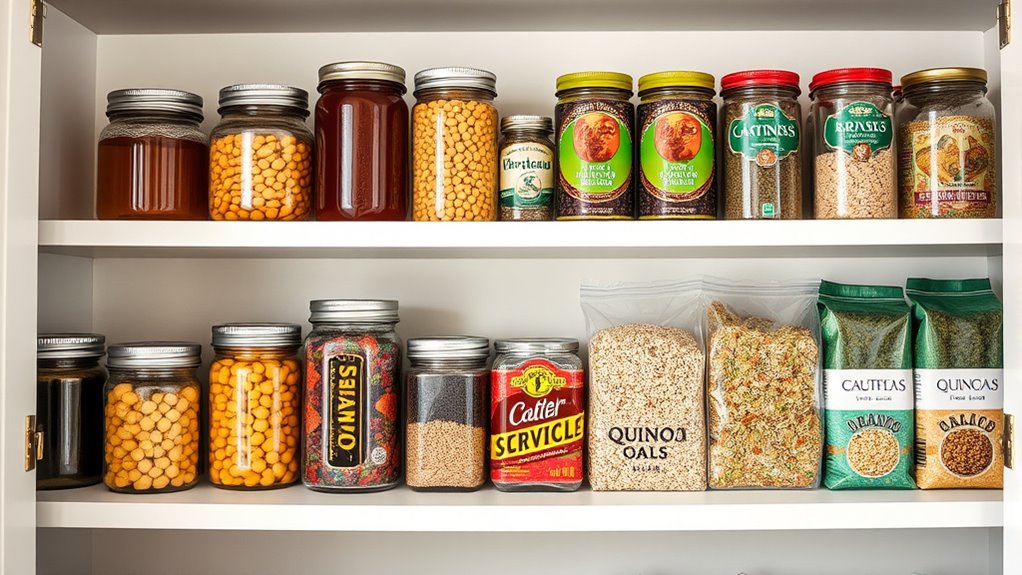

To build a healthy pantry base, stock versatile staples like whole grains (brown rice, oats, whole-wheat pasta), legumes (lentils, chickpeas, black beans), nuts and seeds, healthy oils like extra virgin olive oil, and flavorful spices stored in airtight containers. Organize with clear, labeled containers to keep items fresh and accessible. Regularly check expiration dates to prevent waste. If you keep exploring, you’ll discover tips to optimize storage and meal prep for lasting freshness.
Key Takeaways
- Stock whole grains like brown rice, oats, and whole-wheat pasta for fiber-rich, versatile meal options.
- Include legumes such as lentils, chickpeas, and black beans for plant-based protein and nutrients.
- Keep nuts and seeds like almonds, chia, and flaxseeds for healthy fats and added texture.
- Store healthy oils (extra virgin olive oil) and spices in airtight containers in a cool, dark place for freshness.
- Use organized, airtight containers to maximize space, monitor freshness, and simplify meal prep.
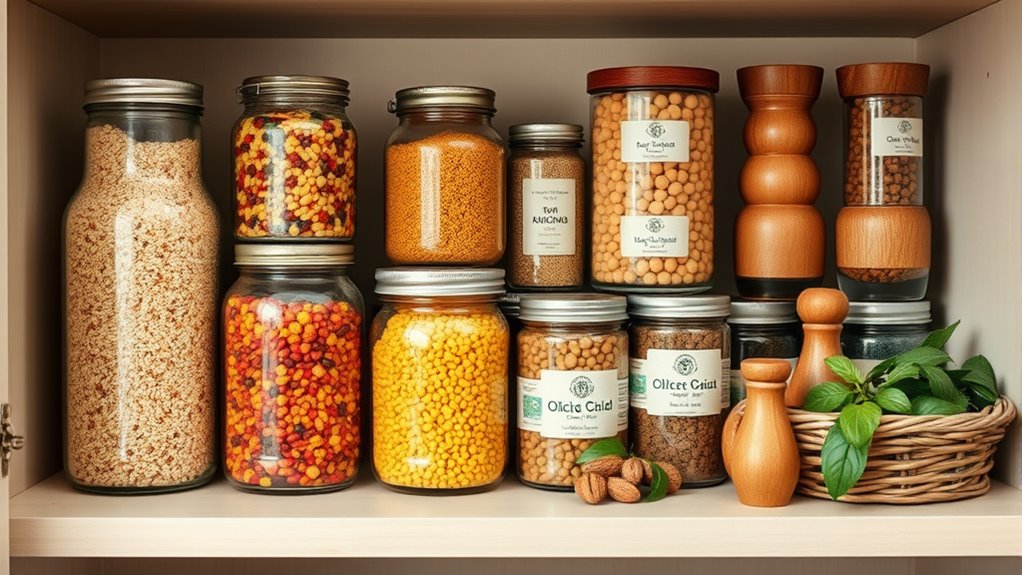
Have you ever wondered what staples are essential to keep in your pantry? Building a healthy base starts with selecting the right ingredients and organizing them efficiently. When you focus on meal prep tips, you can save time and reduce stress during busy weekdays. Stocking your pantry with versatile, nutritious staples allows you to whip up quick, balanced meals without last-minute grocery runs. To keep everything fresh and accessible, you need effective storage solutions. Clear, airtight containers are your best friends—they preserve the quality of grains, nuts, and dried fruits while making it easy to see what you have at a glance. Labeling these containers helps you stay organized and find ingredients quickly, preventing clutter and waste.
Start by prioritizing whole grains like brown rice, oats, and whole-wheat pasta. They’re easy to store and serve as the backbone of many healthy meals. Legumes such as lentils, chickpeas, and black beans are also excellent options—they’re rich in fiber and protein, and they keep well for months. Keep a variety of canned and dried options, but opt for low-sodium or no-salt-added versions when possible. Having a good mix of grains and legumes allows you to prepare wholesome soups, salads, and grain bowls effortlessly. Nuts and seeds, like almonds, chia seeds, and flaxseeds, add healthy fats and nutrients and can be sprinkled over yogurt or incorporated into smoothies.
Prioritize whole grains, legumes, nuts, and seeds for a healthy, versatile pantry.
Fats and oils are essential, but choose wisely. Extra virgin olive oil is a healthy choice for cooking and dressings, and keep it stored in a cool, dark place to preserve quality. Spices and herbs are the secret to transforming simple ingredients into flavorful dishes. Store dried spices in airtight containers in a cool, dark cabinet to maintain their potency. Incorporate meal prep tips by portioning out ingredients into manageable sizes for quick cooking, which minimizes waste and maximizes freshness.
In addition to choosing the right items, your storage solutions will keep your pantry organized and functional. Use stackable containers to maximize space and keep similar items grouped together. Install shelves or pull-out drawers if possible—they make accessing ingredients easier and prevent forgotten items from going bad. Regularly check expiration dates and rotate stock to ensure you’re always using the freshest ingredients. By combining smart meal prep tips with practical storage solutions, you’ll create a pantry that not only supports a healthy diet but also streamlines your cooking routine.
Frequently Asked Questions
How Do I Store Pantry Items to Maximize Freshness?
To maximize freshness, store your pantry items in airtight containers to keep out moisture and pests. Keep grains, spices, and snacks in these sealed containers, and place them in a cool, dark, and dry spot. Proper labeling helps you track expiration dates and prevents spoilage. Regularly check your supplies and rotate older items to guarantee everything stays fresh and safe to eat, making your pantry both organized and efficient.
Which Pantry Staples Are Best for Gluten-Free Diets?
Did you know about 1 in 100 people have celiac disease, making gluten-free staples essential? For your gluten-free diet, stock up on gluten-free grains like rice, quinoa, and buckwheat, which are versatile and nutrient-rich. These staples support gluten-free baking and meal prep, ensuring you have healthy, safe options. Keep them in airtight containers to preserve freshness, making your gluten-free cooking both convenient and delicious.
How Often Should I Rotate and Replace Pantry Supplies?
You should rotate your pantry supplies every 3 to 6 months, checking expiration dates regularly. Follow a rotation schedule where you use older items first to prevent waste. Make it a habit to inspect your pantry monthly, replacing any expired or soon-to-expire products. This way, you keep your pantry fresh, safe, and stocked with healthy essentials, ensuring you always have nutritious options on hand.
Can Pantry Essentials Help With Meal Planning and Budgeting?
Pantry essentials are your secret weapon, like a sturdy compass guiding your meal prep strategies and budget friendly shopping. They help you plan meals ahead, reducing last-minute takeout costs, and keep staples on hand for quick, nutritious dishes. With a well-stocked pantry, you can turn everyday ingredients into delicious meals, saving money and time while maintaining a healthy lifestyle. It’s the foundation that keeps your kitchen running smoothly and your budget intact.
What Are Healthy Alternatives to Common Pantry Ingredients?
You can replace common pantry ingredients with healthy alternatives like whole grain swaps for white bread, pasta, and rice to boost fiber and nutrients. Use natural sweeteners such as honey or maple syrup instead of refined sugar to satisfy your sweet tooth more healthily. These choices help you maintain a balanced diet, support your wellness goals, and make your meals more nourishing without sacrificing flavor.
Conclusion
By stocking your pantry with these essentials, you’re building a sturdy foundation for healthful meals. Think of your pantry as the roots of a great tree—strong and reliable, supporting your entire well-being. When you keep these nutritious staples on hand, you’re planting the seeds for vibrant, delicious dishes that nourish both body and soul. With each ingredient, you’re cultivating a resilient, flavorful life—ready to grow and flourish with every meal you create.