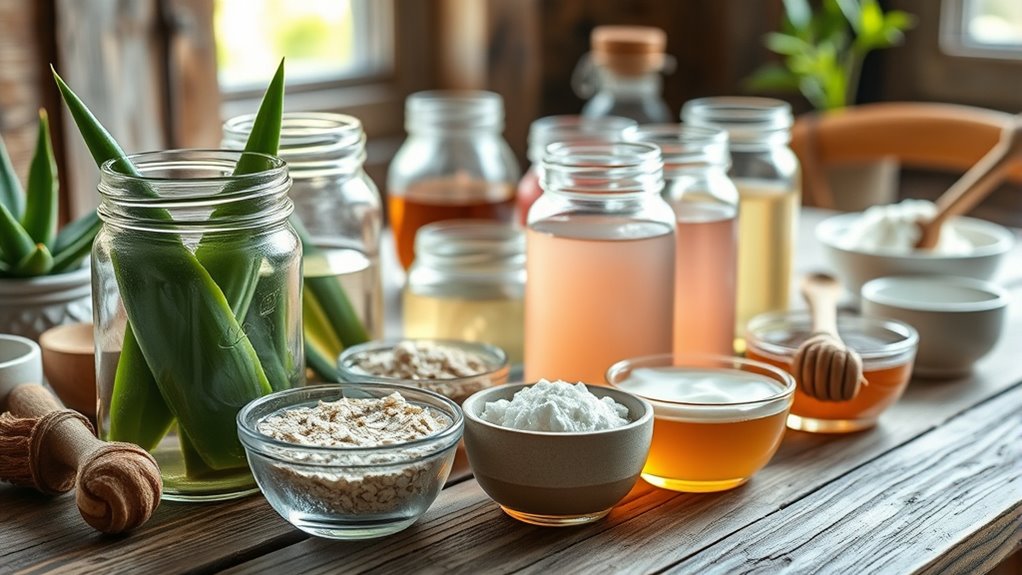

To practice low-waste personal care, you can make your own products using eco-friendly packaging like glass jars and metal tins, which you can reuse or recycle. Focus on sourcing natural, local ingredients to reduce environmental impact and avoid excess waste. DIY recipes help you control ingredients and cut down on packaging, but always follow safety guidelines to prevent contamination or allergic reactions. Explore more tips to balance eco-friendly choices with safety and effectiveness as you continue your journey.
Key Takeaways
- DIY personal care reduces waste by using minimal, reusable containers and avoiding excessive packaging found in commercial products.
- Proper research and safety measures are essential to prevent skin irritations, infections, and allergic reactions from DIY recipes.
- Contamination and lack of preservatives in homemade products can lead to mold growth and compromised safety.
- Sourcing ingredients locally and choosing organic, ethically harvested options minimizes environmental impact and enhances product safety.
- Staying informed about sustainable packaging innovations can further reduce waste and improve eco-friendliness in personal care routines.
Ever wondered how you can reduce your environmental impact while taking care of yourself? Embracing low-waste personal care is a great place to start. One effective way to do this is by paying attention to recycling packaging. Instead of tossing out plastic bottles and containers once they’re empty, you can find ways to recycle or reuse them. Many brands now offer refill stations or packaging made from recycled materials, which helps cut down on waste. You might also consider repurposing jars and bottles for homemade products or storage, giving them a second life instead of contributing to landfills. Recycling packaging isn’t just about disposing responsibly; it’s about actively choosing products that prioritize eco-friendly packaging in the first place. Moreover, staying informed about AI in retail success can help you discover innovative ways brands are adopting sustainable packaging solutions to reduce waste across their supply chains.
Reduce waste by recycling or reusing packaging and choosing eco-friendly products.
Another essential aspect is ingredient sourcing. When you make your own personal care products, you control what goes into them. Sourcing ingredients locally or from reputable suppliers that prioritize sustainability minimizes your carbon footprint. Look for organic, ethically harvested ingredients, and avoid those with excessive packaging or that are heavily processed. By selecting high-quality, natural ingredients, you ensure your products are safer for your skin and better for the environment. This approach also reduces the demand for synthetic ingredients that often involve environmentally damaging manufacturing processes. Sourcing responsibly means you’re not only caring for your body but also supporting sustainable practices across the supply chain.
Creating DIY recipes for personal care allows you to cut down on waste and avoid the often excessive packaging found in commercial products. Making your own deodorant, body scrubs, or lotions means you can use minimal, reusable containers—think glass jars or metal tins—that reduce waste. Plus, you have full control over the ingredients, avoiding preservatives, synthetic fragrances, or harmful chemicals. When you source ingredients thoughtfully, you also lessen the environmental impact associated with their transportation and packaging. For example, buying in bulk from local suppliers or farmers reduces packaging waste and supports local economies. You can even grow some ingredients at home, like herbs or aloe vera, further minimizing the need for packaging and transportation.
However, it’s important to recognize the risks involved in DIY personal care. Not all recipes are safe or effective, especially if you’re unfamiliar with ingredient interactions or proper preservation methods. Using contaminated or improperly stored ingredients can lead to skin irritations or infections. Additionally, some DIY formulations lack preservatives, which can cause bacteria or mold growth over time, making the products unsafe. Without proper knowledge, you might also inadvertently use ingredients that cause allergic reactions. Always research recipes thoroughly, use clean equipment, and follow safety guidelines. When in doubt, consult resources or professionals to ensure your homemade products are both safe and eco-friendly.
Frequently Asked Questions
Are DIY Personal Care Products as Effective as Commercial Ones?
You might wonder if DIY personal care products are as effective as commercial ones. It depends on your ingredients and techniques, as natural preservatives and ingredient potency vary. While homemade formulas can work well for mild needs, they often lack the stabilizers found in store-bought products, which can affect their longevity and effectiveness. With proper knowledge and care, you can create effective DIY solutions, but they might not always match commercial strength.
How Long Do Homemade Personal Care Products Last?
Back to the future, your homemade personal care products typically last about one to three weeks. Their shelf life depends on ingredients and storage tips. Keep them in airtight containers, away from sunlight and heat to prolong freshness. Proper storage prevents bacteria growth and spoilage. Always check for signs of change, like smell or texture, before use, and make small batches to ensure they stay effective and safe.
Can DIY Recipes Cause Allergic Reactions or Skin Irritation?
DIY recipes can cause allergic reactions or skin irritation if you use allergenic ingredients or have skin sensitivities. You might not realize certain natural components, like essential oils or plant extracts, can trigger reactions. Always patch-test new products on a small skin area before full use. Being aware of your allergies and choosing ingredients carefully helps prevent adverse effects and keeps your skin safe.
What Are Common Ingredients to Avoid in Low-Waste Products?
You should steer clear of ingredients that could cause more harm than good. Watch out for synthetic preservatives—they might extend shelf life but can irritate your skin or upset your system. Microplastic ingredients are another red flag, polluting both your skin and the environment. Avoid these common culprits in your DIY products to keep your skincare safe and eco-friendly, and remember, less is more when it comes to ingredients.
Is Professional Guidance Needed for Creating Personalized Formulations?
When creating personalized formulations, you might wonder if professional guidance is necessary. It’s highly recommended because formulation expertise guarantees ingredient safety and product effectiveness. Without proper knowledge, you risk using incorrect proportions or unsafe ingredients. Professionals can help you understand ingredient interactions and proper preservation methods. This guidance minimizes risks and guarantees your low-waste personal care products are safe, effective, and environmentally friendly.
Conclusion
By trying DIY recipes and reducing waste, you’re making a positive impact on the environment. But are you fully aware of the potential risks involved? While low-waste personal care can be rewarding, it’s essential to stay informed and cautious. Are you willing to compromise safety for sustainability, or will you find a balanced approach that protects both your health and the planet? Remember, mindful choices lead to truly sustainable habits.