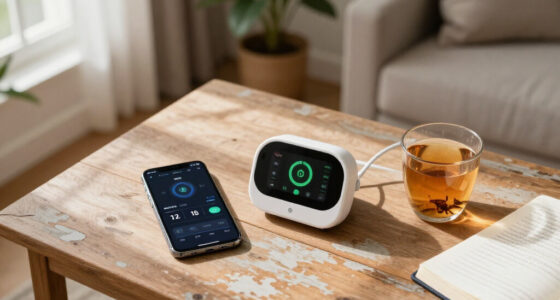
To measure your home’s air quality, use air quality monitors or meters that detect pollutants like dust, pollen, and VOCs. Improve air quality by increasing ventilation with exhaust fans, installing ERV or HRV systems, and using HEPA air purifiers. Regularly clean and maintain HVAC filters, seal gaps, and switch to low-emission products. If you want to learn effective methods to assess and enhance your indoor air, you’ll discover helpful tips ahead.

Get the latest gadgets delivered free with Prime
- Fast, free delivery on millions of items
- Prime Video, Amazon Music and more included
- Member-only deals all year
Key Takeaways
- Use indoor air quality monitors to measure pollutants like VOCs, particulate matter, humidity, and carbon dioxide levels.
- Identify sources of indoor pollution such as cooking fumes, smoking, pets, and cleaning products for targeted control.
- Improve air quality by increasing ventilation with exhaust fans, ERV/HRV systems, and regular window airing.
- Reduce indoor pollutants through source control, like switching to low-emission products and maintaining HVAC filters.
- Continuously monitor indoor air quality to assess improvements and adjust ventilation and purification strategies accordingly.

Good indoor air quality is vital for your health and comfort at home. When your indoor environment is filled with indoor pollutants, it can lead to a range of health issues, from allergies and asthma to fatigue and headaches. These pollutants come from various sources, including cooking fumes, tobacco smoke, cleaning products, pet dander, and even outdoor air that seeps inside. Recognizing the presence of indoor pollutants is the first step toward creating a healthier living space. You might notice persistent odors, increased allergy symptoms, or a general sense of stuffiness, which can all signal compromised air quality. To improve this, effective ventilation strategies are key. Proper ventilation helps remove indoor pollutants and bring in fresh air, diluting contaminants that accumulate inside.
Implementing good ventilation strategies involves more than just opening windows now and then. It’s about creating a consistent flow of fresh air that replaces stale indoor air. Exhaust fans in kitchens and bathrooms are essential tools, as they immediately vent out moisture, cooking fumes, and other pollutants. If you’re serious about maintaining good air quality, consider installing an energy recovery ventilator (ERV) or heat recovery ventilator (HRV). These systems actively exchange indoor and outdoor air while conserving energy, ensuring you get continuous fresh airflow without skyrocketing your energy bills. In areas where outdoor air quality is poor, using air purifiers equipped with HEPA filters can also help reduce indoor pollutants, especially dust, pollen, and pet dander.
Another effective ventilation strategy is to control the sources of indoor pollutants themselves. For example, switch to natural or low-emission cleaning products, avoid smoking indoors, and regularly clean and vacuum to reduce dust and dander buildup. Properly sealing gaps and leaks around windows and doors also prevents outdoor pollutants from entering, while still allowing for controlled ventilation. Regular maintenance of your HVAC system, including replacing filters regularly, plays a vital role in minimizing indoor pollutants and ensuring your ventilation strategies work efficiently. Additionally, understanding indoor air quality and how to measure it can help you identify specific issues and track improvements over time.
Frequently Asked Questions
How Often Should I Test My Home’s Air Quality?
You should perform air quality monitoring regularly to keep your home’s air safe. Testing frequency depends on your environment, but generally, testing every three to six months is recommended, especially if you notice unusual odors, allergies, or symptoms. If you live in an area with pollution or have pets, consider testing more often. Staying proactive guarantees you maintain a healthy indoor environment and address issues promptly.
Can Indoor Plants Improve Air Quality Effectively?
Indoor plants can offer plant benefits, but their impact on air purification is often limited. While they do absorb some toxins and boost humidity, they shouldn’t be solely relied upon for improving air quality. To truly enhance your home’s air, combine plants with proper ventilation, air filters, and regular cleaning. Remember, indoor plants are a nice addition, but active air purification methods are more effective for healthier indoor air.
What Are the Health Risks of Poor Indoor Air Quality?
Poor indoor air quality can pose serious health risks like respiratory issues, allergies, and asthma. You’re exposed to pollutant sources such as mold, dust, and chemicals, which can worsen these conditions. Without proper ventilation strategies, these pollutants accumulate, increasing health hazards. To protect yourself, make sure good airflow, reduce sources of indoor pollutants, and regularly clean your space to minimize health risks associated with poor indoor air quality.
Do Air Purifiers Remove All Types of Pollutants?
Air purifiers can’t remove all types of pollutants because their effectiveness varies depending on the type of pollutants. HEPA filters, for example, excel at capturing allergens and dust particles, but they don’t eliminate gases or odors. Activated carbon filters can reduce odors and some chemicals, but may not fully remove certain volatile organic compounds. So, you’ll want to choose a purifier suited to the specific pollutants you’re concerned about for the best results.
How Does Weather Affect Indoor Air Quality?
Sure, weather really loves to mess with your indoor air quality, doesn’t it? You might think it’s all about ventilation and filters, but outdoor humidity and seasonal variations sneak in, changing your home’s air dynamics. High humidity from rainy days can increase mold, while dry winter air can irritate your lungs. So, next time you notice stuffy or dry air indoors, blame the weather’s unpredictable mood swings.
Conclusion
By paying attention to your home’s air quality, you’re nurturing a healthy environment that breathes life into your daily routine. Regularly measuring and improving your indoor air is like tuning a delicate instrument—small adjustments can make a world of difference. Don’t let unseen pollutants cloud your comfort; take action now. Your home’s air is the silent partner in your well-being, so keep it clear and pure like a mountain stream flowing fresh and free.
Halloween Picks
halloween
As an affiliate, we earn on qualifying purchases.