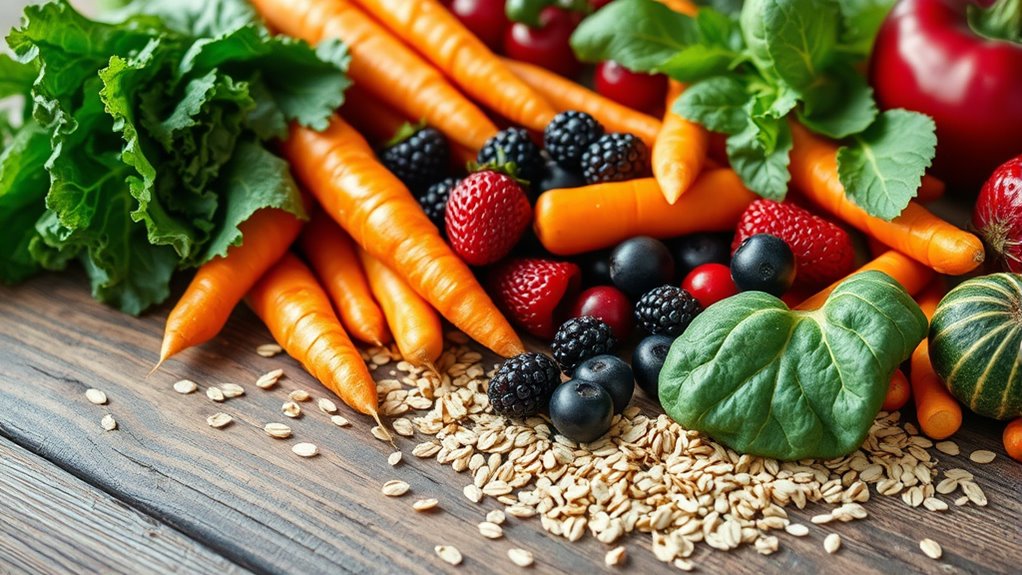

To support your gut health with fiber, include a variety of fruits, vegetables, whole grains, nuts, and seeds in your diet. Gradually increase your fiber intake and drink plenty of water to prevent bloating and discomfort. Focus on consuming both soluble and insoluble fibers, especially prebiotic types like garlic, onions, and bananas, which nourish beneficial bacteria. Keep exploring how a diverse, fiber-rich diet can boost your digestion and immune resilience.
Key Takeaways
- Incorporate a variety of fiber-rich foods like fruits, vegetables, and whole grains to support gut microbiome diversity.
- Gradually increase fiber intake and stay well-hydrated to prevent digestive discomfort.
- Focus on consuming prebiotic fibers from garlic, onions, and bananas to promote beneficial bacteria growth.
- Fermentation of dietary fiber produces short-chain fatty acids that strengthen gut lining and boost immunity.
- A diverse, fiber-rich diet helps prevent constipation, improve digestion, and enhance overall gut health.
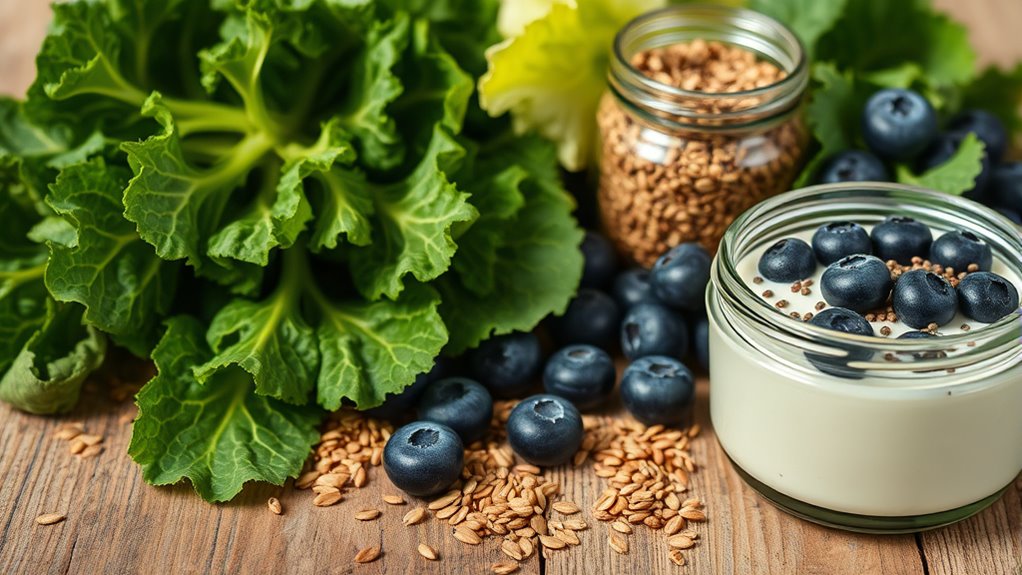
Have you ever wondered how your diet influences your gut health? One of the most impactful factors is your fiber intake. Fiber isn’t just about keeping you regular; it plays a crucial role in shaping your gut microbiome—the community of microorganisms living in your digestive system. When you eat enough fiber, you provide your gut bacteria with the nutrients they need to thrive. These microbes ferment fiber, producing beneficial substances like short-chain fatty acids, which support your immune system and help maintain the integrity of your gut lining. Without sufficient fiber, your microbiome can become imbalanced, leading to digestive issues and even increasing your risk of chronic diseases.
Incorporating a variety of fiber-rich foods into your diet is one of the best ways to promote a healthy gut microbiome. Fruits, vegetables, whole grains, nuts, and seeds are excellent sources. These foods contain different types of fiber—soluble and insoluble—that feed different bacteria in your gut. Soluble fiber dissolves in water, forming gel-like substances that slow digestion and help regulate blood sugar levels. Insoluble fiber adds bulk to your stool, preventing constipation and encouraging regular bowel movements. By including a diverse range of these foods, you support a diverse microbiome, which is key to overall gut health.
It’s important to increase your fiber intake gradually. Suddenly consuming a lot of fiber can cause bloating, gas, and discomfort. Instead, add fiber-rich foods steadily to your meals, and drink plenty of water to help fiber do its job effectively. As your gut bacteria adapt, you’ll likely notice improvements in digestion, energy levels, and even mood. Keep in mind that not all fibers are created equal—some are more fermentable and beneficial than others. Prebiotic fibers, found in foods like garlic, onions, leeks, asparagus, and bananas, specifically stimulate the growth of good bacteria. Including these in your diet can profoundly enhance your gut microbiome’s diversity and resilience.
Frequently Asked Questions
Can Fiber Help With Specific Gut-Related Conditions Like IBS or Crohn’s Disease?
Fiber can help manage gut conditions, but it relies on your situation. If you have fiber intolerance or fiber allergies, increasing fiber might worsen symptoms like bloating or pain. For IBS or Crohn’s disease, some people benefit from soluble fiber, while others need to limit it. Always consult your doctor or dietitian before making changes, as personalized advice ensures you avoid triggers and manage your condition effectively.
Are All Types of Fiber Equally Beneficial for Gut Health?
Don’t put all your eggs in one basket. Not all fiber types are equally beneficial for gut health. Soluble fiber, found in oats and fruits, promotes gut benefits by softening stool and feeding good bacteria. Insoluble fiber, in vegetables and whole grains, adds bulk and aids digestion. Both types support your gut, but balancing them is key for peak health. Knowing the different fiber types helps you make smarter choices.
How Does Fiber Intake Affect Gut Microbiome Diversity?
Your fiber intake markedly impacts gut microbiome diversity through fiber fermentation, which feeds beneficial bacteria. As these bacteria ferment fiber, they produce short-chain fatty acids that promote microbiome modulation, enhancing diversity. A varied fiber diet encourages a broader range of microbes, supporting overall gut health. By incorporating different fiber sources, you help foster a resilient and balanced microbiome, benefiting digestion and immune function.
What Are Signs of Fiber Intolerance or Allergic Reactions?
You might notice symptoms like bloating, abdominal pain, or diarrhea after eating high-fiber foods, indicating fiber sensitivity or allergic reactions. For example, Sarah experienced allergic symptoms such as hives and swelling after consuming oats. These reactions could signal a fiber intolerance or allergy. Pay attention to persistent symptoms, especially if they worsen with increased fiber intake, and consult a healthcare professional to identify and manage fiber sensitivities effectively.
Can Fiber Intake Influence Mental Health Through Gut-Brain Connection?
Yes, your fiber intake can influence mental health through the gut-brain axis. When you consume fiber, it promotes the growth of beneficial gut bacteria that produce neurotransmitters like serotonin, which affect mood and cognition. A healthy gut microbiome enhances communication along the gut-brain axis, potentially reducing anxiety and depression. So, increasing fiber-rich foods could support your mental well-being by fostering ideal neurotransmitter production and gut-brain signaling.
Conclusion
By adding more fiber to your diet, you’re not just supporting digestion—you’re nurturing a healthier gut. Think of fiber as your gut’s best friend, helping it stay balanced and happy. Even if you worry about bloating or discomfort, start small and gradually increase your intake. Picture your gut as a thriving garden, flourishing with each fiber-rich meal you enjoy. Consistent choices today lead to a stronger, happier gut tomorrow.