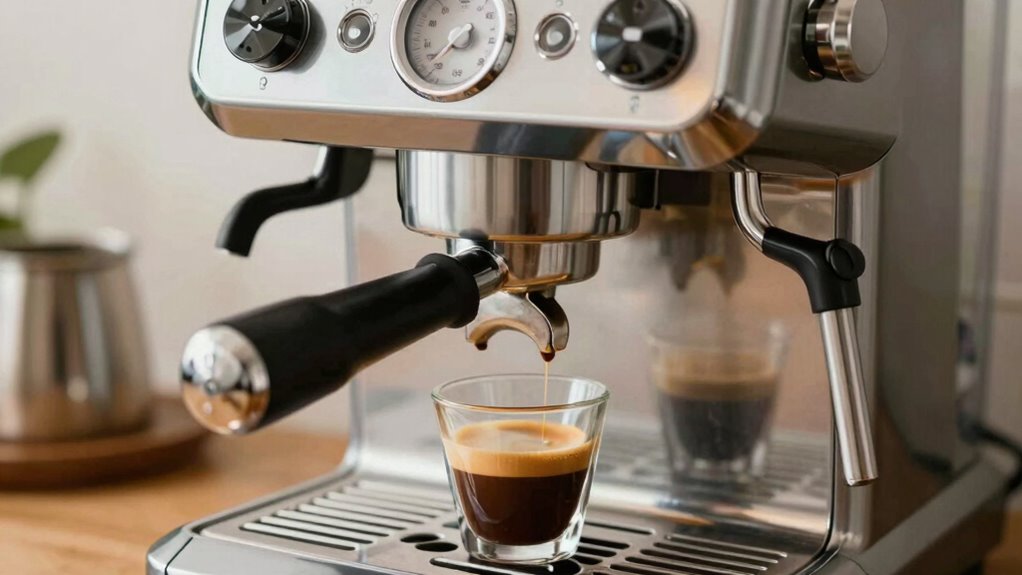
If you want to make home espresso that really “click,” choosing the right machine is key. Semi-automatic models give you control over grind size, pressure, and extraction time, while fully automatic machines simplify the process with push-button convenience. Both types require regular maintenance and proper grinding techniques to get perfect shots. Want to discover how to optimize your equipment, keep it running smoothly, and brew barista-quality coffee? Keep exploring to learn all the secrets.
Key Takeaways
- Different espresso machine types, like semi-automatic and fully automatic, offer varying levels of control and convenience for home brewing.
- Proper grind size and maintenance are crucial for optimal extraction and flavor in all types of espresso machines.
- Semi-automatic machines require manual operation for grinding, tamping, and extraction, offering customization.
- Fully automatic machines simplify brewing with automated grinding, tamping, and brewing functions, ideal for convenience.
- Regular cleaning and water quality checks are essential to keep your espresso machine performing and tasting its best.
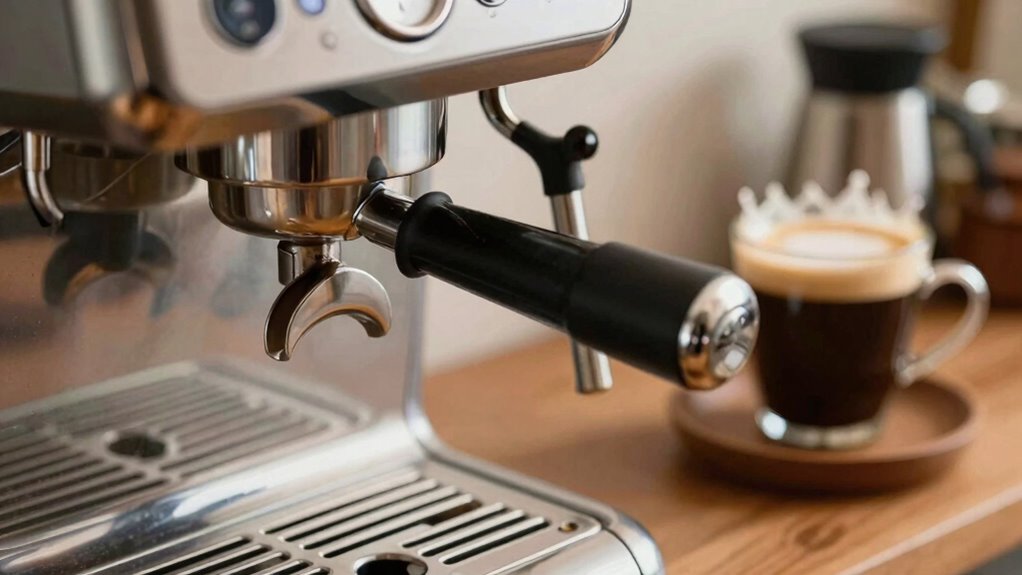
If you’re passionate about coffee, understanding how espresso machines work can elevate your brewing experience. One of the most vital factors in making a great espresso is your coffee grind. The grind size directly impacts extraction, flavor, and crema. For espresso, you want a fine, consistent grind—almost powdery but not so fine that it clogs the machine or causes overextraction. If your grind is too coarse, your shot will taste weak and watery; too fine, and the machine might struggle to push water through, resulting in a bitter or overly strong brew. Experimenting with your coffee grind is essential to find that perfect balance for your machine and beans.
Proper machine maintenance is equally important. Regular cleaning prevents buildup of coffee oils and mineral deposits, which can affect flavor and machine performance. This means daily rinsing, descaling as recommended by the manufacturer, and cleaning removable parts like the portafilter and drip tray. Neglecting maintenance can lead to clogged components, inconsistent pressure, and even damage to your espresso machine over time. A well-maintained machine ensures consistent extraction and longevity, making your investment worthwhile.
Regular cleaning and descaling keep your espresso machine performing at its best.
Understanding your espresso machine’s mechanics helps you troubleshoot issues and optimize your brewing process. For instance, if your machine isn’t reaching the right pressure, it might be a sign of a clogged filter or a need for descaling. Knowing how to adjust your coffee grind and keep your machine clean empowers you to produce high-quality espresso shot after shot. It’s not just about pressing a button; it’s about mastering the interplay of grind size, tamping pressure, and machine upkeep.
Additionally, different espresso machines require different maintenance routines. Semi-automatic machines may need more hands-on cleaning, while fully automatic models might have self-cleaning features. Regardless of the type, staying proactive with machine maintenance guarantees better performance and flavor. Keep an eye on water quality, replace filters as needed, and regularly inspect seals and valves to prevent leaks and pressure issues.
In essence, understanding the importance of your coffee grind and maintaining your machine isn’t complicated, but it’s vital. These practices give you control over your brewing process and help you consistently produce rich, flavorful espresso. When you pay attention to these details, your home coffee experience becomes more satisfying—and that click of the espresso machine becomes even sweeter. Additionally, exploring different free floating techniques can help customize your espresso extraction for even richer flavors.
Frequently Asked Questions
How Long Does It Take to Brew a Shot of Espresso?
A shot of espresso typically takes about 25 to 30 seconds to brew, which is the ideal brew time for a balanced shot. You’ll notice the shot speed as the espresso flows steadily from the portafilter, ensuring proper extraction. Factors like grind size and tamping pressure influence the brew time, so adjusting these can help you achieve the perfect shot speed for rich, flavorful espresso every time.
What’s the Best Cleaning Routine for Home Espresso Machines?
You should clean your home espresso machine regularly, following maintenance tips like daily rinsing, weekly descaling, and monthly deep cleaning. Wipe the steam wand and portafilter after each use, run water through the machine to clear out residual oils, and use descaling solutions periodically to prevent mineral buildup. Consistent cleaning preserves flavor, extends machine life, and ensures your espresso always tastes fresh. Stay diligent, stay consistent, and enjoy perfect coffee every time.
Can I Use Ground Coffee Instead of Beans?
Yes, you can use ground coffee instead of beans, but you’ll need to pay attention to coffee bean selection and grind size adjustment. Choose a fresh, high-quality pre-ground coffee suited for espresso, and make sure you grind it to a fine consistency. Proper grind size is essential for maximum extraction, so tweak your grinder if needed. This way, you’ll get a rich, flavorful espresso even without whole beans.
How Often Should I Descale My Espresso Machine?
You should descale your espresso machine every 1 to 3 months, depending on how often you use it—because, of course, ignoring machine maintenance is the secret to good coffee, right? Regular descaling prevents mineral buildup and keeps your machine running smoothly. So, don’t wait until your espresso tastes funny; stay ahead with consistent descaling. Trust us, your coffee will thank you for the extra effort.
Are There Models Suitable for Small Kitchen Spaces?
Yes, there are espresso machines with a compact design perfect for small kitchens. These models feature space-saving features like slim profiles and multi-functional designs that fit easily on limited countertops. Look for machines labeled as “compact” or “small footprint,” which maximize your space without sacrificing performance. By choosing a space-efficient espresso machine, you can enjoy quality coffee without clutter, making your small kitchen both stylish and functional.
Conclusion
Now that you understand the different types of espresso machines, you’re ready to choose the perfect one for your home. Imagine waking up to rich, aromatic espresso every morning, just like Sarah did when she upgraded to an automatic machine. With the right choice, your daily coffee ritual becomes effortless and enjoyable. So, go ahead—pick the machine that suits your lifestyle, and enjoy that satisfying “click” every time you brew a perfect shot.