

To improve your couples communication, focus on practical tools like active listening, paraphrasing, and emotional validation. Give your partner your full attention, make eye contact, and avoid interrupting. Restate what they say to guarantee understanding and show empathy by acknowledging their feelings. These techniques build trust, reduce misunderstandings, and strengthen your bond. Mastering these skills can transform your interactions, and if you keep exploring, you’ll uncover even more ways to connect deeply.
Key Takeaways
- Practice active listening by giving full attention, maintaining eye contact, and avoiding interruptions during conversations.
- Use paraphrasing to restate your partner’s feelings, confirming mutual understanding and demonstrating genuine engagement.
- Validate your partner’s emotions with empathy, acknowledging their feelings without dismissing or minimizing them.
- Focus on understanding and emotional connection rather than planning responses to foster trust and openness.
- Develop consistent communication habits that promote honesty, reduce misunderstandings, and strengthen your relationship over time.
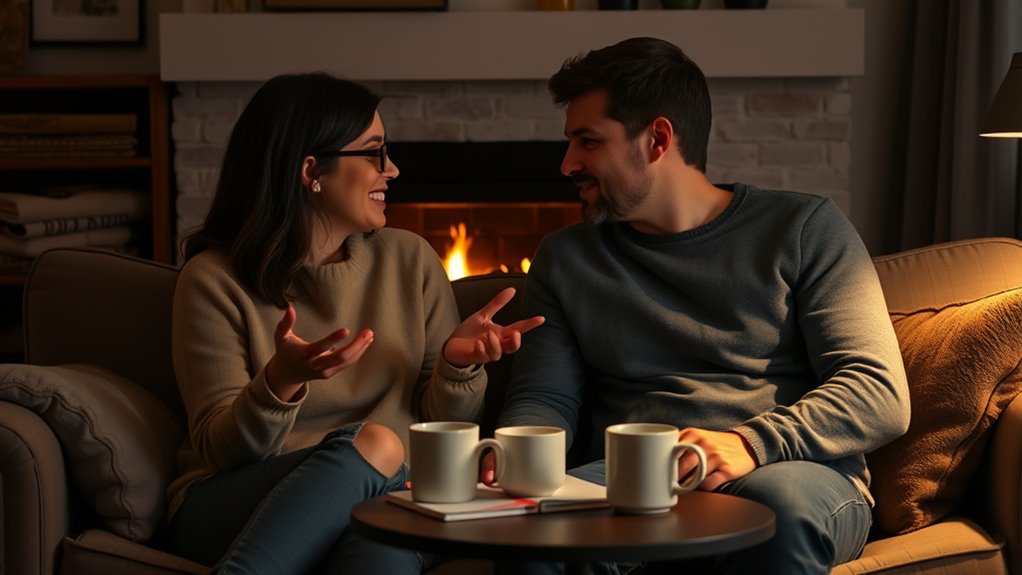
Ever wonder why some couples seem to communicate effortlessly while others struggle? The secret often lies in the way they listen and validate each other’s feelings. Active listening is a powerful tool that can transform your conversations. Instead of just waiting for your turn to speak, you fully engage with your partner by giving them your undivided attention. Make eye contact, nod occasionally, and avoid interrupting. When your partner shares something, paraphrase what they’ve said to show you’re truly listening. For example, you might say, “It sounds like you’re feeling overwhelmed with work,” which confirms you understand their perspective. This not only makes your partner feel heard but also reduces misunderstandings and defensiveness.
Active listening and validation foster understanding, reduce misunderstandings, and strengthen emotional connections in relationships.
Along with active listening, emotional validation plays an essential role in healthy communication. When your partner opens up about their feelings, resist the urge to dismiss or minimize them. Instead, acknowledge their emotions with empathy. Phrases like “That sounds really tough,” or “I understand why you’d feel that way,” help your partner feel accepted and supported. Emotional validation fosters trust and encourages openness, creating a safe space where both of you can express yourselves honestly. It shows you respect their feelings, even if you see the situation differently. Remember, validation isn’t about agreeing with everything your partner says; it’s about recognizing their emotional experience as legitimate.
Practicing active listening and emotional validation requires conscious effort, especially during disagreements. Instead of jumping in with solutions or judgments, focus on understanding where your partner is coming from. This means listening without planning your response, and genuinely trying to see the situation through their eyes. When you validate their feelings, you’re signaling that their emotions matter, which can defuse tension and foster cooperation. Over time, these habits strengthen your emotional connection and improve the overall flow of communication. You’ll find that your conversations become more respectful, supportive, and genuine.
Incorporating active listening and emotional validation into your daily interactions isn’t complicated, but it does demand consistency. It’s about making a habit of truly being present and showing empathy. When you do this, you send a clear message: your partner’s feelings are important to you, and you value their voice. This foundation of trust and understanding sets the stage for more meaningful conversations, even in difficult times. By mastering these skills, you’ll not only communicate better but also deepen your emotional bond, creating a stronger, more resilient relationship. Recognizing the importance of color accuracy and contrast ratio in your communication can also help in understanding each other’s perspectives more clearly, much like how visual clarity enhances a home cinema experience.
Frequently Asked Questions
How Can I Improve Communication During Conflicts?
You can improve communication during conflicts by practicing emotional intelligence, which helps you stay aware of your feelings and those of your partner. Pay attention to nonverbal cues like tone, gestures, and facial expressions, as they often reveal more than words. Stay calm, listen actively, and validate each other’s emotions. This approach fosters understanding, reduces defensiveness, and creates a safe space for resolving conflicts constructively.
What Are Signs of Poor Communication in a Relationship?
You might notice signs of poor communication when non-verbal cues, like avoiding eye contact or crossed arms, create distance. Emotional triggers can cause misunderstandings or defensiveness, making conversations tense. If you or your partner frequently interrupt, dismiss feelings, or misinterpret each other’s words, it’s a sign communication needs improvement. Recognizing these signs helps you address issues early, fostering healthier dialogue and connection in your relationship.
How Do I Listen Actively Without Interrupting?
Sure, because interrupting is everyone’s favorite pastime, right? To listen actively without interrupting, focus on practicing empathy exercises like reflective listening. Pay close attention, nod occasionally, and paraphrase what your partner says. Resist the urge to jump in with advice or stories. This shows you’re genuinely engaged. By doing so, you create a safe space for honest sharing, and your partner feels truly heard—no interruptions required.
When Is Therapy Necessary for Communication Issues?
You should consider therapy when your communication struggles persist despite trying to improve your emotional intelligence and conflict resolution skills. If disagreements become frequent, emotional responses escalate, or you’re unable to understand each other’s perspectives, a therapist can help. They provide a safe space to develop better communication habits, enhance emotional awareness, and resolve conflicts effectively, ultimately strengthening your relationship and fostering healthier interactions.
How Can Technology Hinder Couples’ Communication?
You might think technology helps us stay connected, but texting distractions and social media interference can actually hinder your communication. When you’re glued to your phone, you miss non-verbal cues and meaningful conversations. Social media can breed jealousy or misunderstandings, making it harder to trust or truly listen. To improve, set boundaries like tech-free dinners or dedicated talk time, so you can reconnect without digital interruptions.
Conclusion
By mastering these tools, you’re planting seeds of understanding that bloom into trust and harmony. Imagine your conversations as gentle rivers, flowing smoothly around rocks of misunderstanding, carving a clear path to deeper connection. When you communicate openly, you’re weaving a tapestry of love, vibrant and strong. Keep nurturing this garden of dialogue, and watch your relationship flourish like a sunlit meadow, where every word blooms into a bond that lasts a lifetime.