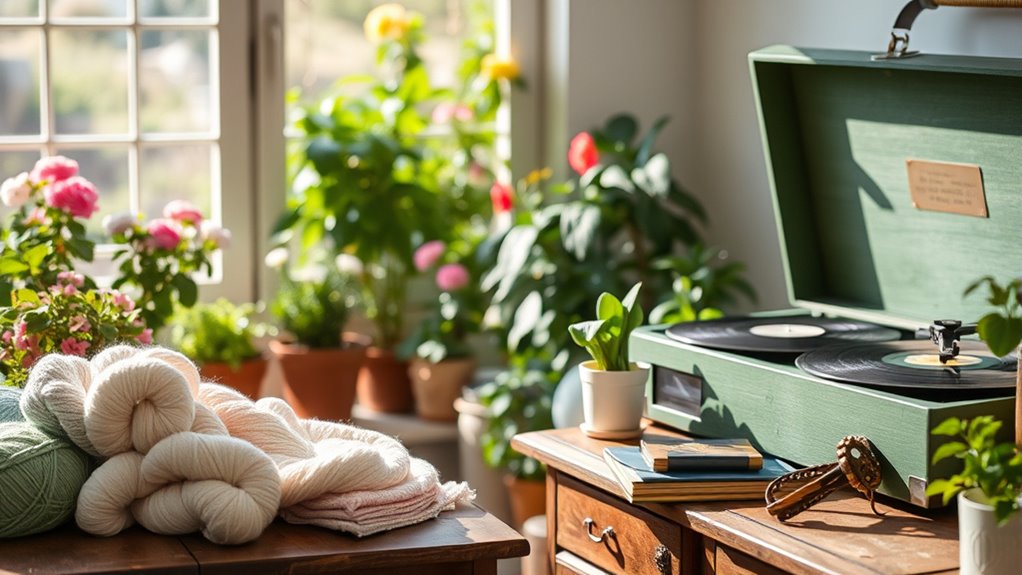

Engaging in hobbies like crafting, gardening, and playing music can create calming moments that boost your mindfulness and reduce stress. Crafting activities like knitting or painting offer a meditative focus, while gardening connects you with nature and encourages slowing down. Playing an instrument provides emotional expression and creativity. Incorporating these relaxing pursuits into your routine can strengthen your sense of peace and resilience—keep exploring to discover more ways to nurture calmness in your daily life.
Key Takeaways
- Engaging in crafting, gardening, or music provides tactile, meditative focus that promotes relaxation and mental calmness.
- These hobbies facilitate mindfulness by keeping attention on repetitive, present-moment activities.
- Regular practice of calm hobbies helps reduce stress, enhance self-awareness, and improve emotional regulation.
- Incorporating these activities into daily routines creates a peaceful sanctuary from daily stressors.
- They offer accessible ways to cultivate inner peace, flexibility, and a calm mindset for overall well-being.

Finding hobbies that promote calm can substantially reduce stress and help you unwind after a busy day. When you make time for activities like mindful meditation and gentle yoga, you create a peaceful space to relax your mind and body. These practices encourage you to stay present and focus on your breath, which can quiet racing thoughts and ease tension. Mindful meditation, in particular, helps you develop awareness of your sensations and emotions without judgment. You might start by sitting comfortably, closing your eyes, and paying attention to your breath or a calming mantra. Over time, this simple routine can become a powerful tool for reducing anxiety and fostering a sense of inner peace.
Practicing mindful meditation and gentle yoga can help you relax, stay present, and reduce stress effectively.
Gentle yoga complements mindful meditation by combining slow, deliberate movements with deep breathing. It’s accessible for all skill levels and requires minimal equipment, making it an easy hobby to incorporate into your daily routine. As you flow through gentle stretches and poses, you activate the relaxation response, easing muscle tightness and promoting better sleep. The focus on breath control during gentle yoga helps you stay centered, preventing your mind from wandering into stress-inducing thoughts. Regular practice not only improves flexibility and strength but also cultivates a calm mindset that carries over into other areas of your life.
Beyond sitting or lying down, engaging in hobbies like crafting, gardening, or playing music offers additional pathways to calm. Crafting, whether knitting, painting, or woodworking, provides a tactile experience that keeps your hands busy and your mind focused. The repetitive nature of these activities can act as meditative, helping you stay in the moment. Gardening, on the other hand, connects you with nature and allows you to slow down and appreciate growth and life cycles. Tending to plants or flowers reduces stress and enhances feelings of accomplishment. Playing music, whether you’re strumming a guitar or practicing a piano, offers an emotional outlet and a way to channel your feelings into something creative and soothing.
Incorporating these hobbies into your routine doesn’t have to be complicated or time-consuming. Even a few minutes of mindful meditation or gentle yoga each day can markedly improve your mental well-being. The key is consistency and making these activities a regular part of your life. When you prioritize calm hobbies, you create a sanctuary from daily stress, giving yourself the opportunity to recharge, reflect, and find joy in simple moments. Developing self-awareness through these activities can further enhance your ability to manage stress and emotions. Over time, these practices can become your go-to methods for maintaining emotional balance and building resilience against life’s inevitable stresses.
Frequently Asked Questions
Can Hobbies Like Crafting Reduce Stress Effectively?
Yes, hobbies like crafting can reduce stress effectively. When you engage in creative expression, you practice mindfulness techniques that help focus your mind and calm your thoughts. Crafting activities allow you to be present in the moment, which eases anxiety and promotes relaxation. By dedicating time to these hobbies, you give yourself a mental break and nurture your well-being, making you feel more centered and less overwhelmed.
What Are Beginner-Friendly Gardening Activities?
Did you know that starting with simple container gardening or garden planning can make gardening beginner-friendly? You can grow herbs on your windowsill or create a small vegetable patch in your backyard. These activities require minimal tools and space, making them perfect for beginners. Plus, they offer a calming, rewarding experience as you watch your plants grow. Just pick easy-to-care-for plants and enjoy the soothing process of nurturing your garden.
How Does Music Therapy Promote Relaxation?
Music therapy benefits you by reducing stress and promoting relaxation through tailored techniques like deep listening and guided imagery. When you engage in music therapy, it helps lower cortisol levels and calms your nervous system. By incorporating these relaxation techniques, you can experience improved mood and decreased anxiety. Listening to soothing melodies or participating in rhythmic activities allows you to unwind and feel more centered in your daily life.
Are These Hobbies Suitable for All Age Groups?
Yes, these hobbies suit all age groups. Crafting, gardening, and music foster intergenerational bonding, helping different ages connect and share experiences. They’re accessible through technological platforms, making it easy for everyone to participate regardless of physical ability or location. Whether you’re a child, adult, or senior, these activities promote relaxation, creativity, and social interaction, ensuring everyone can enjoy their calming benefits.
How Much Time Should I Dedicate Weekly to These Hobbies?
You should aim to dedicate about 3-5 hours weekly to your hobbies, as studies show consistent leisure boosts mental health. Effective time management and hobby scheduling help you stay committed without feeling overwhelmed. Break your time into manageable sessions, like 30-minute or hour-long blocks, and stick to a routine. Prioritize these calming activities to recharge, and you’ll enjoy the benefits of relaxation and creativity without sacrificing other responsibilities.
Conclusion
So, next time life feels overwhelming, consider diving into crafting, gardening, or music. These hobbies can bring calm and clarity, but they also hold surprises you might never expect. Will a simple stitch, a blooming flower, or a favorite song unlock a newfound peace you never knew you needed? The possibilities are endless—and the journey to tranquility might just begin with the next small step. Are you ready to discover what calm truly feels like?