

To keep your bones strong, focus on your calcium intake, as it’s vital for bone density, and make sure your vitamin D levels are sufficient to help your body absorb calcium effectively. Regular weight-bearing exercises, like lifting or walking, stimulate your bones to grow stronger by creating mechanical stress. Combining good nutrition with consistent exercise boosts your bone health and reduces fracture risk. Keep exploring to discover more about maintaining ideal bone density.
Key Takeaways
- Adequate calcium intake and vitamin D are essential for optimal bone mineralization and maintaining healthy bone density.
- Vitamin D enhances calcium absorption, enabling bones to incorporate minerals effectively.
- Weight-bearing and resistance exercises stimulate osteoblast activity, promoting bone growth and density.
- Combining proper nutrition with regular strength training optimizes bone health and reduces fracture risk.
- Age, sunlight exposure, and overall health influence calcium and vitamin D absorption, affecting bone strength.
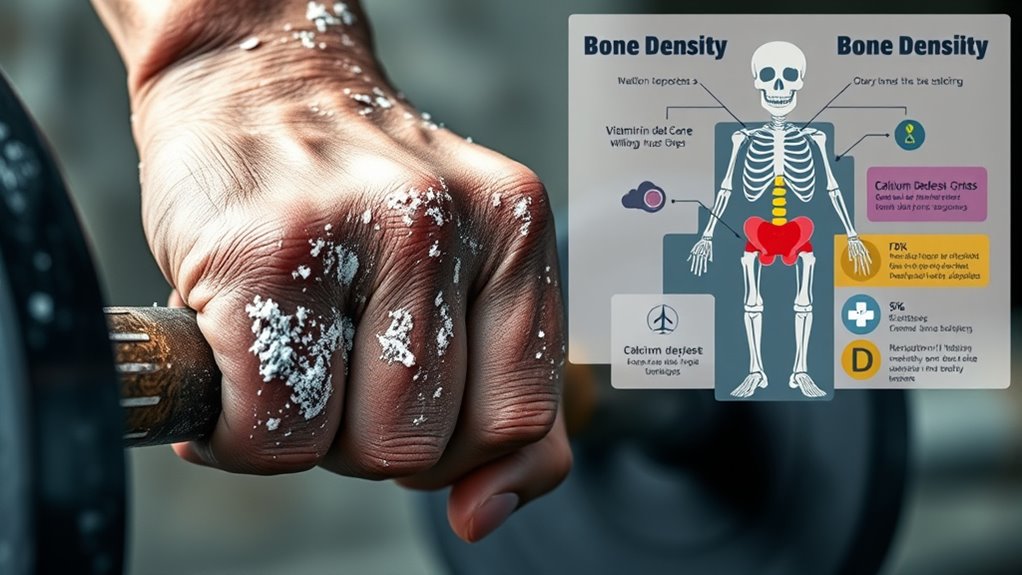
Have you ever wondered why maintaining strong bones is so important? Your skeletal system supports your body, protects essential organs, and allows you to move freely. As you age, bone density naturally declines, increasing your risk of fractures and osteoporosis. That’s why understanding the basics of bone health, especially how calcium absorption and exercise impact your bones, is fundamental for maintaining strength over time.
Maintaining strong bones is vital for mobility, protection, and overall health as you age.
Calcium is the primary mineral responsible for bone density, making it indispensable to your skeletal health. But simply consuming calcium isn’t enough; your body needs to absorb it effectively. Factors like vitamin D levels, age, and overall health influence calcium absorption. Without proper absorption, your bones won’t get the nutrients they need to stay strong. Ensuring adequate vitamin D intake helps your body utilize calcium better, making your bones more resilient. You should aim for a balanced diet with calcium-rich foods like dairy, leafy greens, and fortified products, paired with sufficient sunlight exposure or supplements if necessary. When your body absorbs calcium efficiently, it can deposit it into your bones, helping to maintain or even increase your bone density.
Exercise plays a pivotal role in preserving and improving bone density. Weight-bearing activities, such as walking, running, or lifting weights, create mechanical stress on your bones. This stress signals your body to strengthen the bones, increasing their density over time. Resistance training, in particular, has a significant impact because it challenges your skeletal system directly, promoting bone growth and preventing loss. Regular exercise not only enhances calcium absorption by boosting circulation and nutrient delivery to your bones but also stimulates osteoblast activity—the cells responsible for building new bone tissue. The impact of exercise on your bones is cumulative; the more consistent you are, the more you reinforce your skeletal structure against age-related decline. Incorporating weight-bearing exercises into your routine can significantly improve your bone health and help prevent osteoporosis.
Incorporating strength training into your routine can make a noticeable difference in your bone health. Even moderate activity, performed consistently, can improve your bone density and reduce fracture risk. Remember, the key is consistency—doing weight-bearing exercises several times a week creates the best impact. Combining proper nutrition, especially adequate calcium and vitamin D intake, with a well-rounded exercise routine provides a powerful strategy to maintain strong bones. By understanding how calcium absorption and exercise impact your bones, you empower yourself to make choices that support your skeletal health now and in the future. Protecting your bones is an investment in your overall well-being, helping you stay active, independent, and pain-free as you age.
Frequently Asked Questions
How Does Smoking Affect Bone Density?
Smoking negatively affects your bone density by impairing calcium absorption and disrupting bone remodeling. When you smoke, tobacco’s impact on bone cells slows down the process of rebuilding and maintaining healthy bones. This increases your risk of osteoporosis and fractures. To protect your bones, it’s important to quit smoking and focus on calcium-rich foods, vitamin D, and weight-bearing exercises that support stronger bones.
Can Exercise Reverse Osteoporosis?
Can exercise reverse osteoporosis? While it can’t completely undo the damage, it’s a powerful tool in your arsenal. Regular weight-bearing and strength-training exercises boost bone density, helping prevent further loss. Think of exercise as a shield, strengthening your bones against osteoporosis. By embracing these benefits, you’re not just preventing osteoporosis—you’re actively fighting it. So, yes, exercise can markedly improve your bone health and slow the progression of osteoporosis.
What Are the Best Supplements for Improving Bone Health?
You should consider calcium supplements and vitamin D sources to improve your bone health. Calcium helps strengthen bones, while vitamin D enhances calcium absorption. Look for supplements with at least 500-1,000 mg of calcium daily, and get vitamin D from sunlight, fatty fish, or supplements. Combining these with weight-bearing exercises can further boost your bone density and reduce osteoporosis risk effectively.
How Does Alcohol Consumption Impact Bone Strength?
Alcohol effects your bone strength by interfering with the balance of cells that build and break down bone tissue. Excessive drinking causes bone weakening, increasing your risk of fractures and osteoporosis. When you consume alcohol regularly, it hampers calcium absorption and hormone production essential for bone health. To protect your bones, limit alcohol intake and focus on a balanced diet rich in calcium and vitamin D, along with weight-bearing exercises.
Are There Genetic Factors Influencing Bone Density?
Coincidentally, your genetic predisposition and hereditary factors can substantially influence your bone density. These genetic factors may determine how your bones develop and respond to lifestyle choices, making some individuals naturally more resilient or susceptible to bone loss. While you can improve bone strength through calcium, D, and weightlifting, your genes set the baseline. Understanding your family history helps you tailor your approach for ideal bone health.
Conclusion
Now that you understand the essentials of bone density—calcium, vitamin D, and strength training—you can take charge of your health. Think of it like upgrading your old trusty DeLorean; with the right care, your bones can stay strong and resilient for years to come. Don’t wait for a “Back to the Future” moment—start today, and build a foundation that keeps you moving smoothly through life’s adventures. Your future self will thank you!