Achieving true darkness in your bedroom isn’t just about hanging thick curtains; it’s about understanding light angles and entry points. Light can seep in from gaps, bounce off surfaces, or enter from streets and nearby buildings at different angles. Managing these pathways — through sealing gaps, adding exterior shades, or repositioning furniture — can drastically improve darkness. If you want to discover effective strategies to block all unwanted light and sleep better, keep exploring these ideas.
Key Takeaways
- Light enters at various angles depending on external sources, requiring angle-focused blocking strategies.
- Gaps around curtains and window frames allow light to seep in at different times of day.
- External reflections and bounce off surfaces can cause diffuse light, undermining curtain effectiveness.
- Using exterior shading and repositioning furniture can redirect or block light pathways effectively.
- Active management of all light entry points ensures true darkness beyond just thick curtains.
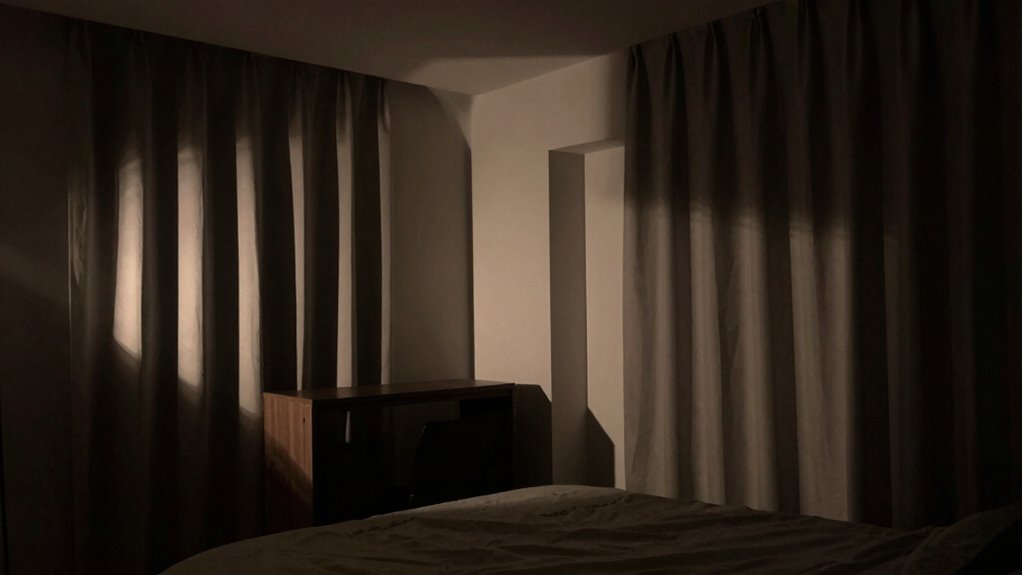
When it comes to achieving true darkness in your bedroom, curtains alone often aren’t enough. Even the thickest blackout drapes can leave gaps through which light sneaks in, especially if your windows face streetlights or nearby buildings. Light pollution from outside sources can seep into your space, disrupting your circadian rhythm and making it harder to fall asleep or stay asleep. That’s why understanding the angles of light and how they enter your room is just as important as choosing the right curtains. You need to think about how light hits your windows at different times of day and from various sources, and how it interacts with your room’s layout.
Achieving true darkness requires managing light angles and entry points, not just blackout curtains.
Light pollution is a major culprit in reducing sleep quality. It’s not just about bright streetlights; it’s about any unwanted light that reaches your eyes during the night. Even small amounts of ambient light can interfere with melatonin production, the hormone responsible for regulating your sleep cycle. When light enters your room from an angle, it can bounce off surfaces or seep through tiny gaps, creating a diffuse glow that makes your bedroom less dark than you might think. This is why it’s crucial to consider the positioning of your windows relative to external light sources. If your window faces a busy street or a brightly lit building, simply closing curtains may not cut it. You need to block light at the source or redirect it.
To truly optimize darkness, you should focus on the angles of your window setups and the placement of your furniture. For example, installing light-blocking window inserts or exterior shading can significantly reduce the amount of light that enters through the sides and top of your windows. Additionally, positioning furniture or wall-mounted light barriers can prevent stray light from bouncing around the room. Remember, light can enter from unexpected angles, especially through gaps in window frames or under doors. Sealing these gaps with weatherstripping or draft stoppers can help, too. The goal is to create a space where light doesn’t reach your eyes from any direction, ensuring your sleep isn’t compromised by external light pollution. Understanding light dynamics and how they affect your space can help you design more effective solutions. Incorporating light control strategies that address all potential entry points is essential for achieving complete darkness. Recognizing the importance of light entry points and how they influence overall room darkness can make a significant difference. Paying attention to surface reflections within your room can also help prevent stray light from bouncing in ways that disrupt your sleep.
Additionally, understanding how light bounces off surfaces within your room can help you prevent stray reflections that compromise darkness. Ultimately, achieving bedroom darkness isn’t just about curtains — it’s about controlling the angles and pathways through which light enters your space. When you understand how light interacts with your room’s layout and external environment, you can take targeted steps to block it effectively. This attention to detail will improve your sleep quality, helping you wake up feeling more rested and refreshed each morning. Darkness isn’t just a matter of covering windows; it’s an active process of managing light’s entry points from all angles.

Petaholic 100% Blackout Curtains for Bedroom, Portable DIY Window Blinds, No Drill Window Shades & Blackout Blinds with Stickers & Tabs for Travel, Dorm Room, Media Room (118" x 57")
- Blackout Level: Blocks 100% of sunlight and UV rays
- Customizable Size: Cut to any shape or size
- Easy Installation: Setup in under 10 minutes
As an affiliate, we earn on qualifying purchases.
As an affiliate, we earn on qualifying purchases.
Frequently Asked Questions
How Can I Measure My Room’s Angles Accurately?
To measure your room’s angles accurately, start with angle measurement tools like a protractor or digital angle finder. Place the tool firmly on the surfaces or corners you want to measure, ensuring it’s aligned properly. Keep the tool steady and read the measurement carefully. For better accuracy, double-check with a different tool or method. This way, you’ll get precise measurements essential for planning or decorating your room effectively.
Are There Specific Lighting Types Better for Angled Darkness?
Certain lighting types excel at creating angled darkness through subtle shadow play and light diffusion. You should opt for adjustable, directional lights like LED spotlights or wall-mounted sconces, which cast precise shadows and accentuate angles. Avoid harsh overhead lights, as they flatten space. Instead, experiment with warm-toned, diffuse lamps that soften light, enhancing the mystery of shadows and deepening the room’s angular depths, transforming darkness into an artful element.
Do Window Shapes Affect How Dark a Room Can Get?
Yes, window shapes influence how dark a room can get. Unusual shapes like arches or octagons can create gaps that let in light, despite your window treatments. To maximize darkness, you should consider color contrast in your window treatments, such as blackout curtains or shades that fit snugly. These options help block out light more effectively, especially when combined with the right window shape considerations to minimize gaps.
Can Furniture Placement Influence Room Darkness?
Yes, furniture placement can influence room darkness by affecting lighting design and room aesthetics. If you position bulky furniture or blocking pieces near windows, they can obstruct natural light, making the room appear darker. To maximize brightness, arrange furniture to allow light to flow freely and enhance the room’s visual appeal. Thoughtful placement helps you achieve a well-lit, inviting space that balances functionality with aesthetic charm.
What Are Some DIY Solutions for Controlling Angles?
Think of controlling angles like painting a mural—strategic color blocking guides the eye and light. You can DIY by layering blackout fabrics at key points and using bold, contrasting colors to block unwanted light. Attach these fabrics to window frames with clips or velcro for flexibility. This approach allows you to manipulate light angles effectively, creating a cozy, dark retreat tailored to your preferred ambiance.
Conclusion
Remember, creating the perfect bedroom darkness isn’t just about curtains—it’s about understanding the angles at play. Think of your room like a dance floor, where every angle and shadow moves in harmony to block out unwanted light. When you master these angles, you’ll find it easier to drift into restful sleep, like sinking into a soft, dark cloud. So, experiment with positioning and angles, and let your room become a sanctuary of perfect darkness.