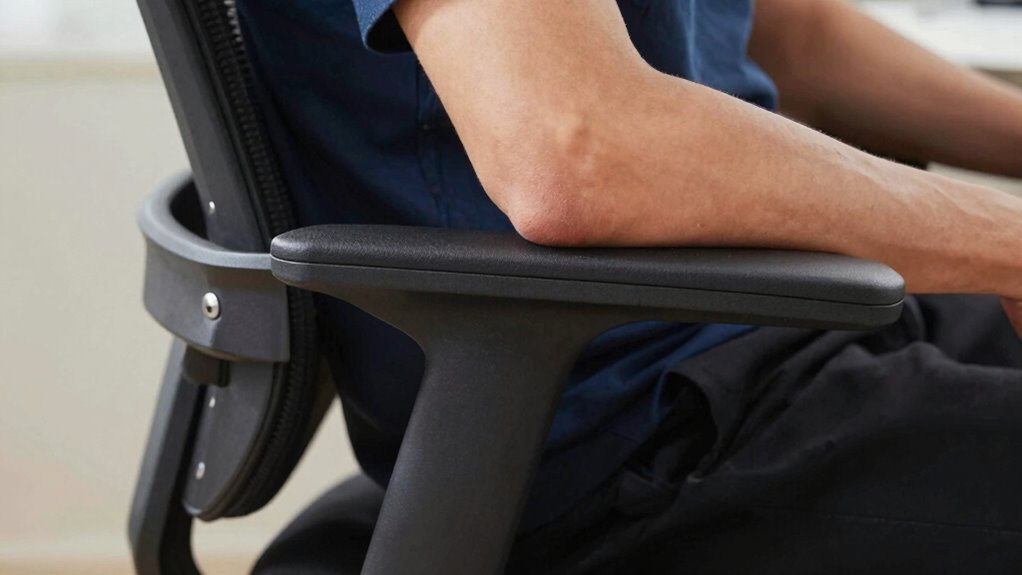

If your armrests are too wide or narrow, they can silently cause shoulder tension over time. Wide armrests push your shoulders up, leading to fatigue and strain, while narrow ones make you hunch or lean, increasing muscle tension. Proper armrest width keeps your arms supported and shoulders relaxed, helping to prevent long-term discomfort. Understanding the right setup can considerably improve your posture and reduce muscle strain—stay with us to discover how to optimize your workspace.
Key Takeaways
- Improper armrest width forces shoulders to elevate or hunch, increasing muscle tension over time.
- Narrow armrests fail to support arms, leading to leaning and shoulder strain.
- Excessively wide armrests elevate shoulders, causing fatigue and discomfort.
- Incorrect armrest spacing disrupts natural shoulder alignment, contributing to tension and imbalance.
- Properly adjusted armrests promote relaxed shoulders and reduce long-term muscle strain.

If you often experience shoulder tension while sitting, the width of your armrests might be to blame. Many people overlook how important armrest design is for overall comfort and health. An armrest that’s too wide can force your shoulders into an unnatural, raised position, straining muscles over time. Conversely, narrow armrests can cause you to hunch forward or lean awkwardly to find support, which also leads to tension. The key is finding an armrest width that promotes ergonomic design—a setup that aligns your body comfortably and encourages proper posture.
Proper armrest width supports natural posture and reduces shoulder strain during prolonged sitting.
When armrests are too broad, your shoulders tend to elevate, which can lead to fatigue and pain. This is especially true if you’re sitting for long periods. Over time, this improper positioning can cause muscle imbalances and contribute to discomfort that radiates down your neck and arms. On the other hand, armrests that are too narrow might not support your arms adequately, prompting you to hunch your shoulders forward or lean to one side. This misalignment can compromise your posture correction efforts and increase muscle strain. Using ergonomic principles can help you determine the ideal armrest width for your body. Additionally, ergonomic testing devices can be valuable tools in assessing and refining your workspace setup for optimal health benefits. Recognizing body mechanics is essential for understanding how different setups impact muscle tension.
The goal is to choose an armrest width that supports your arms without forcing your shoulders into unnatural positions. Ideally, your elbows should be close to your body and form roughly a 90-degree angle when resting. When your armrests are correctly spaced, they help distribute your weight evenly and keep your shoulders relaxed. Properly adjusted armrests also help prevent slouching, which is a common cause of shoulder and neck pain among desk workers. Ensuring the correct ergonomic setup can significantly improve your overall comfort and reduce tension.
Adjusting your workspace to optimize armrest width isn’t just about comfort—it’s about health. When your armrests are properly aligned, they encourage posture correction naturally, making it easier to sit upright without effort. This alignment reduces unnecessary muscle strain and helps you maintain a neutral spine position. Over time, this can prevent chronic tension and improve your overall well-being. Remember, the right armrest width supports your body’s natural structure, allowing you to focus on your work without discomfort.
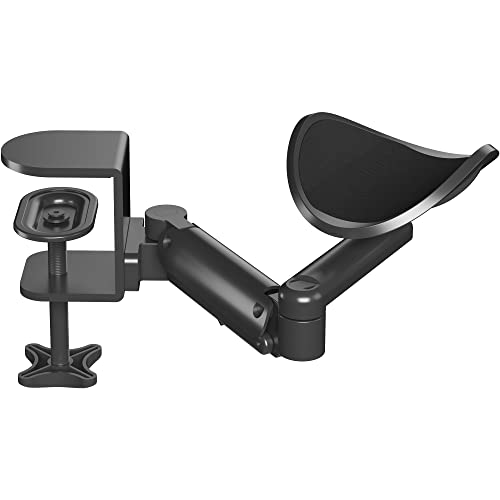
BONTEC Adjustable Arm Rest for Desk, Ergonomic Elbow Rest Pad, 360° Rotating & Extendable Desk Arm Support, Durable Aluminum, Keyboard & Computer Arm Rest Pad, Office & Gaming Desk Accessories
ARM SUPPORT SOLUTIONS – Designed for both left-and right-handed users, this support provides stability for your arm and…
As an affiliate, we earn on qualifying purchases.
As an affiliate, we earn on qualifying purchases.
Frequently Asked Questions
How Do I Measure My Ideal Armrest Width?
To measure your ideal armrest width, sit comfortably with your shoulders relaxed. Use a tape measure to find the distance between the outer edges of your elbows when your arms are at a 90-degree angle. Opt for armrest materials that provide soft support, and guarantee your office ergonomics promote natural arm positioning. Your armrests should support your arms without raising your shoulders, reducing tension and improving comfort throughout your workday.
Can Armrest Height Affect Shoulder Tension?
They say, “A stitch in time saves nine,” and proper armrest ergonomics are key to preventing shoulder tension. Yes, armrest height can affect shoulder strain prevention. If your armrests are too high or low, they force your shoulders into awkward positions, causing discomfort over time. Adjusting your armrest height guarantees your shoulders stay relaxed, reducing tension and promoting better posture during long work sessions.
Are There Specific Chair Brands With Optimal Armrest Widths?
Yes, some office chair brands prioritize armrest ergonomics, offering ideal armrest widths that reduce shoulder tension. Look for brands like Steelcase, Herman Miller, and Humanscale, which design chairs with adjustable armrests to suit your body. When selecting an office chair, focus on armrest adjustability and width to guarantee comfortable support, preventing strain and promoting better posture during long hours at your desk.
How Long Should I Sit Before Adjusting My Armrest?
You should adjust your armrest as soon as you notice discomfort or your posture feels off, ideally within the first 15 to 30 minutes of sitting. Imagine a gentle breeze aligning a sail—your ergonomic posture depends on timely tweaks. Use chair adjustment tips to guarantee your armrests support your shoulders without forcing them up or down. Regularly reassess and fine-tune for comfort, preventing tension before it starts.
Does Armrest Padding Influence Shoulder Comfort?
Yes, armrest padding considerably influences shoulder comfort. Well-padded armrests enhance arm support, reducing shoulder strain and promoting better arm ergonomics. When your armrests are cushioned, you’re less likely to hunch or tense your shoulders, preventing discomfort over long periods. Prioritize adjustable, padded armrests to maintain proper shoulder posture, which is essential for shoulder strain prevention. Comfortable padding helps you stay relaxed and supports your body during extended sitting sessions.
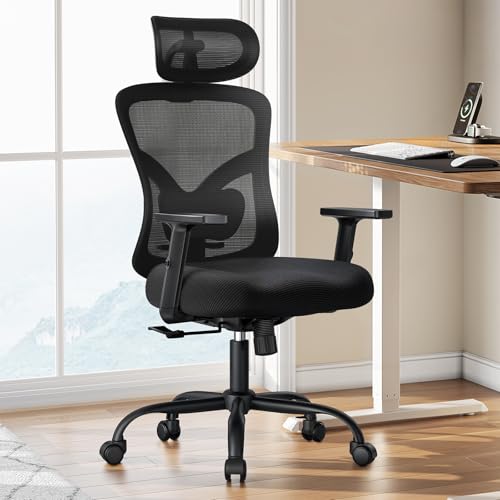
Marsail Ergonomic Office Chair Ergonomic Gaming Chair with Lumbar Support, 2D Headrest, Adjustable Armrests, Contoured Seat Cushion, Computer Desk Chair with Wheels for Home and Office
Adjustable Lumbar Support: This ergonomic office chair is designed to align with the natural curve of your spine….
As an affiliate, we earn on qualifying purchases.
As an affiliate, we earn on qualifying purchases.
Conclusion
To prevent persistent shoulder pain, prioritize perfect armrest positioning. Keep your armrest width well-worn and wisely adjusted, avoiding awkward angles and undue strain. Small shifts make considerable strides in safeguarding your shoulders from soreness and stress. Stay savvy with your setup, and sustain comfort and care. Simple, smart adjustments can substantially soothe shoulder strain, so don’t overlook the importance of armrest width—your shoulders will thank you!

Bush Business Furniture Articulating Keyboard Tray with Galaxy Finish, Ergonomic Workspace Accessory, Adjustable Office Computer Key Board Support for Home Office
Accommodates both keyboard and mouse
As an affiliate, we earn on qualifying purchases.
As an affiliate, we earn on qualifying purchases.

Aloudy Ergonomic Memory Foam Office Chair Armrest Pads, Comfy Gaming Chair Arm Rest Covers for Elbows and Forearms Pressure Relief(Set of 2), Stretch Fit, Black
PLEASE MEASURE FIRST: Our pad size 9.5'' x 4.5'' x 1.5'' fits chair arms from 6 to 10.5…
As an affiliate, we earn on qualifying purchases.
As an affiliate, we earn on qualifying purchases.