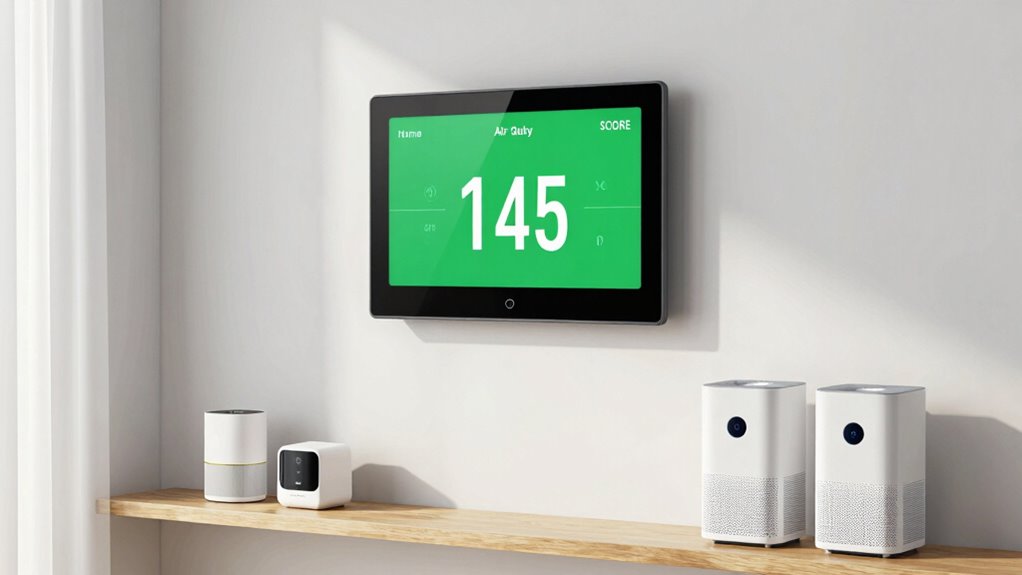

Home air quality scores might look simple—just good or bad, high or low—but they hide complex details that matter. They don’t reveal specific pollutants like VOCs, particulate matter, or mold that affect your health. External factors like outdoor pollution, ventilation quality, and humidity also influence your score. Understanding these details helps you take targeted steps to improve your indoor environment. Keep exploring to uncover the full story behind your air quality.

Get the latest gadgets delivered free — and shop member deals
- Fast, free delivery on millions of items
- Access to Prime Big Deal Days deals on October 6–7
- Prime Video, Amazon Music and more included
Key Takeaways
- Air quality scores provide a quick overview but don’t reveal specific pollutants or sources affecting indoor air.
- Multiple factors like outdoor pollution, ventilation, and humidity influence scores beyond indoor pollutant levels.
- Continuous monitoring is essential to detect fluctuations and identify underlying causes of score changes.
- Recognizing pollutant sources such as cooking, cleaning, or pets helps target effective improvements.
- Proper ventilation and air circulation are crucial for maintaining and improving overall indoor air quality.
Understanding your home’s air quality score is essential because it directly impacts your health and comfort. At first glance, these scores seem straightforward—high or low, good or bad. But beneath that simple number, there’s a complex web of factors that influence your indoor environment. One of the key elements to consider is indoor pollutant sources, which include everything from cooking fumes and cleaning chemicals to pet dander and mold. These sources continuously release particles or gases into your indoor air, affecting your air quality score in subtle but significant ways. Recognizing these sources helps you understand what might be lowering your score and what steps you can take to improve it.
Air quality monitoring plays a crucial role in revealing what’s really happening inside your home. Modern sensors and devices measure various pollutants—such as particulate matter (PM), volatile organic compounds (VOCs), carbon monoxide, and humidity levels—that contribute to your overall air quality. While the score provides a quick snapshot, it doesn’t tell you exactly what pollutants are present or where they’re coming from. That’s why continuous air quality monitoring is vital; it helps you identify patterns and pinpoint specific indoor pollutant sources that may be causing fluctuations in your score. Without this detailed data, you might overlook the real culprits behind poor air quality, believing your environment is healthier than it actually is. Indoor pollutant sources can vary widely and often require targeted solutions for effective improvement. Additionally, understanding how ventilation systems influence pollutant removal can help you optimize your indoor air quality. Proper ventilation can also help reduce stale air, which can contribute to discomfort and poor air quality. Maintaining good air circulation is essential for preventing the buildup of indoor pollutants and ensuring fresh air exchange.
You should also keep in mind that many factors can influence your home’s air quality score beyond obvious pollutant sources. For example, outdoor air pollution can seep indoors, especially if your windows are open or if your ventilation system isn’t filtering properly. Humidity levels can promote mold growth, which releases spores into the air and impacts your score. Even household activities like smoking or using certain cleaning products can temporarily skew the readings. Because scores are a composite measure, they don’t always reflect the nuances of your indoor environment. That’s why understanding the details behind the score—by considering indoor pollutant sources and employing air quality monitoring—is essential for making meaningful improvements. Additionally, proper ventilation plays a critical role in maintaining healthy indoor air quality and reducing pollutant buildup.
As an affiliate, we earn on qualifying purchases.
Frequently Asked Questions
How Are Home Air Quality Scores Calculated?
Your home air quality scores are calculated using data from air quality sensors that measure pollutants like particulate matter, VOCs, and humidity. These sensors collect real-time data, which is then processed to generate a score. Data accuracy is vital, so reliable sensors and calibration are essential. The score simplifies complex data, helping you understand your indoor air quality at a glance, but it’s important to take sensor reliability into account for accurate insights.
Do Different Air Quality Scores Measure the Same Pollutants?
Oh, absolutely, different air quality scores measure the same pollutants—said no scientist ever. In reality, pollutant diversity varies widely among scores, influencing their scoring accuracy. Some focus solely on particulate matter, while others include gases like VOCs or carbon monoxide. So, if you’re comparing scores, don’t expect them to tell the same story; they’re tailored to different pollutant profiles, making cross-score comparisons as reliable as a weather forecast in a hurricane.
How Often Should I Check My Home’s Air Quality Score?
You should check your home’s air quality score regularly, ideally once a month, to guarantee your air purifier effectiveness and ventilation habits are maintaining safe levels. Frequent checks help you spot changes caused by new sources of pollution or seasonal shifts. If you notice poor scores, improve ventilation or upgrade your air purifier. Consistent monitoring keeps your indoor air safe, comfortable, and healthier for everyone in your home.
Can Air Quality Scores Reflect Indoor Versus Outdoor Pollution?
Yes, air quality scores can reflect indoor allergens and outdoor pollutants, but they might not show the full picture. Indoor allergens like dust or mold can lower your score, while outdoor pollutants such as vehicle emissions or pollen can also impact it. Keep in mind, some monitors focus more on outdoor air quality, so it’s essential to use a device that measures both indoor and outdoor pollutants for an accurate assessment.
Are There Health Risks Associated With Misleading Air Quality Scores?
Yes, misleading air quality scores can pose health risks by downplaying indoor allergens and other pollutants. When scores focus only on outdoor pollution, you might overlook indoor air quality myths that suggest your home is safe. This false sense of security can lead you to ignore necessary ventilation, filters, or allergen control, increasing your exposure to harmful indoor allergens and risking respiratory issues or allergies. Stay vigilant and look beyond simple scores.
Conclusion
Think of home air quality scores as a lighthouse guiding you through foggy waters. They seem straightforward, but hidden currents can steer you wrong if you don’t look closer. Just like a lighthouse’s beam reveals unseen dangers, digging deeper into these scores uncovers essential details about your home’s air. Don’t settle for the surface—navigate with awareness and clarity, ensuring your home remains a safe harbor for you and your loved ones.
Fall Picks
fall essentials
As an affiliate, we earn on qualifying purchases.