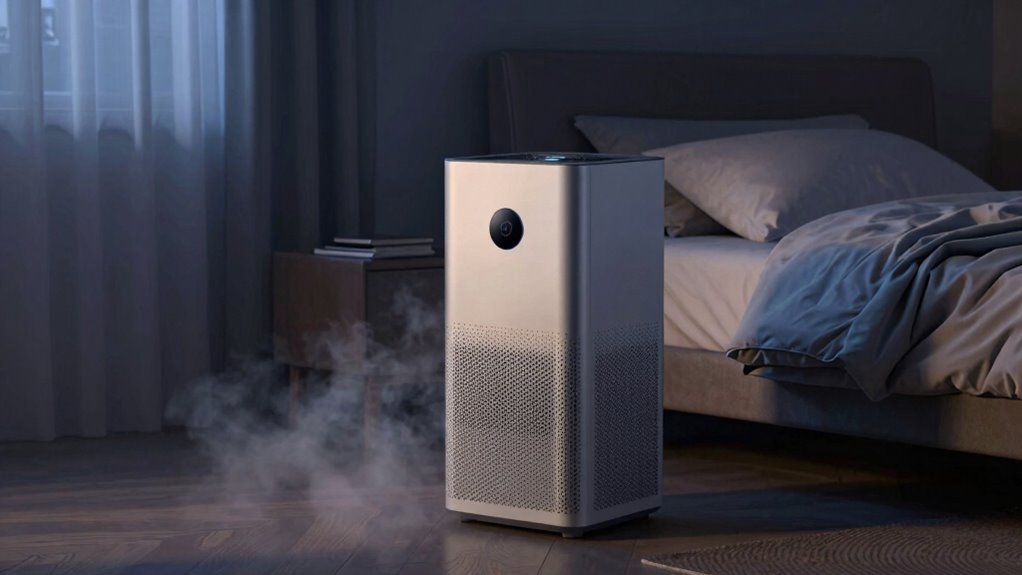

Using an air purifier can help improve your sleep by reducing airborne irritants like dust, pollen, and pet dander that cause congestion and coughing. These irritants disturb your rest and can lead to fatigue. While air purifiers aren’t magic, they create a healthier environment for better sleep. To get the most benefits, you need the right filters and proper maintenance. Keep going to discover how to optimize your sleep environment with these simple tips.

Get the latest gadgets delivered free — and shop member deals
- Fast, free delivery on millions of items
- Access to Prime Big Deal Days deals on October 6–7
- Prime Video, Amazon Music and more included
Key Takeaways
- Air purifiers reduce airborne irritants like dust, pollen, and pet dander that can disrupt sleep.
- They improve sleep quality by decreasing immune responses and inflammation caused by indoor pollutants.
- Proper maintenance and filter choice are essential for air purifiers to effectively minimize irritants.
- While helpful, air purifiers alone do not address all sleep issues; good sleep hygiene also matters.
- Creating a cleaner indoor environment supports overall health and enhances restful sleep.
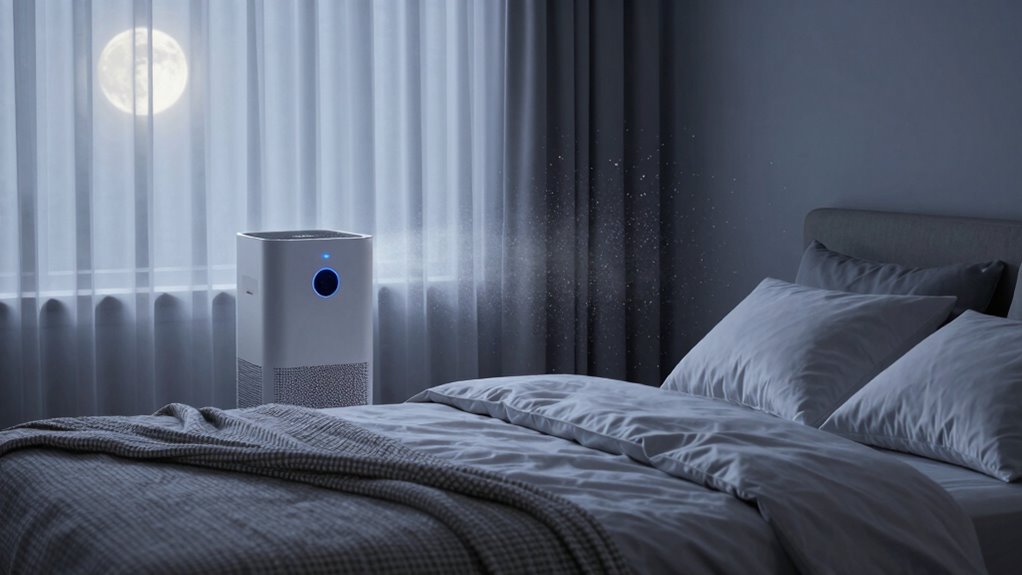
Many people underestimate how much air quality affects their sleep, but using an air purifier can make a noticeable difference. When you’re trying to rest, your sleep environment plays an essential role, and clean air is a key component. Poor air quality can lead to irritation of your respiratory system, making it harder to fall asleep and stay asleep through the night. If your room is filled with dust, pollen, pet dander, or other airborne irritants, you might wake up feeling tired, congested, or even with a headache. An air purifier helps remove these particles, creating a cleaner, healthier environment that supports better sleep.
Using an air purifier can significantly improve sleep by reducing airborne irritants and creating a healthier environment.
Your sleep environment isn’t just about comfort; it’s about reducing the triggers that interfere with rest. When the air contains irritants, your body reacts by activating your immune system or causing inflammation, both of which can disturb your sleep cycles. Using an air purifier effectively reduces these triggers, especially if you’re sensitive to allergens or live in an area with high pollution levels. It doesn’t work magic, but it can markedly decrease the amount of irritants you breathe in, leading to fewer disruptions during the night.
However, it’s important to understand what an air purifier can and can’t do. Many people think that just having a device running will solve all sleep-related issues, but that’s not quite true. The key is choosing the right purifier for your needs—one that filters out airborne irritants relevant to your environment. HEPA filters are highly effective at trapping pollen, dust, and pet dander, while activated carbon filters can reduce odors and chemical pollutants. Regular maintenance, like changing filters, is essential to keep the device working efficiently. Otherwise, the purifier might simply circulate the same irritants without reducing them.
While an air purifier can improve your sleep environment, it’s just one piece of the puzzle. Good sleep hygiene, such as maintaining a consistent schedule, limiting screen time before bed, and controlling room temperature and humidity, also matters. But if allergy or respiratory irritation is causing your sleep troubles, investing in a quality air purifier can make a real difference. It’s not a cure-all, but it’s a practical step toward cleaner air, fewer irritations, and more restful nights. Incorporating knowledge about air quality science can help you make more informed decisions about your sleep environment. Recognizing that airborne irritants are a primary cause of sleep disturbances emphasizes the importance of maintaining good indoor air quality. Understanding how indoor pollution impacts your health can motivate you to take proactive measures.
By understanding how indoor pollutants accumulate and persist indoors, and the role of proper filtration and ventilation, you can better appreciate the significance of these practices. Ultimately, better air quality in your sleep environment sets the foundation for more peaceful, uninterrupted sleep.
As an affiliate, we earn on qualifying purchases.
Frequently Asked Questions
Can Air Purifiers Improve Sleep for Allergy Sufferers?
Yes, air purifiers can improve your sleep if you suffer from allergies. They enhance air quality by removing allergens like dust and pollen, reducing your body’s irritation. This decrease in irritation can minimize sleep disruptions caused by allergy symptoms. When your air quality improves, you’re less likely to wake up coughing, sneezing, or congested, helping you enjoy more restful, uninterrupted sleep through the night.
Do All Air Purifiers Reduce Nighttime Respiratory Irritation?
Not all air purifiers reduce nighttime respiratory irritation. Those with HEPA filters are most effective because they trap airborne allergens, dust, and pollutants, improving your air quality. If you want to minimize irritation while sleeping, choose a purifier with a high-efficiency HEPA filter and run it consistently. Keep the device well-maintained for peak performance, ensuring better air quality and potentially a more restful night’s sleep.
How Loud Should an Air Purifier Be During Sleep?
You should aim for an air purifier with noise levels around 20-30 decibels during sleep. This range minimizes sleep disruption, so you stay peacefully asleep while benefiting from cleaner air. Many models advertise their noise levels, so check the specifications. A quieter purifier keeps your sleep undisturbed, helping you wake up refreshed. If noise becomes an issue, consider using a fan or white noise machine to mask any sounds.
Are There Specific Air Purifier Features Beneficial for Sleep?
Yes, certain air purifier features can improve your sleep environment by enhancing air quality. Look for models with quiet operation, adjustable fan speeds, and air quality sensors that automatically optimize performance. Some purifiers have sleep modes that reduce noise and dim lights, creating a calmer atmosphere. These features help reduce irritation caused by airborne particles, making it easier for you to breathe comfortably and enjoy restful sleep.
How Long Does It Take for an Air Purifier to Impact Sleep Quality?
You’ll notice an air purifier’s impact on your sleep quality within a few nights, as fresh, clean air boosts your sleep hygiene. It’s not instant magic, so don’t expect to breathe your worries away overnight. Typically, air quality improves quickly—sometimes within hours—reducing irritants that disrupt sleep. Keep it running consistently, and over time, your sleep will become more restful, proving that clean air isn’t just a luxury, but an essential part of good sleep hygiene.
Conclusion
Imagine drifting into sleep, the air around you feeling crisp and clean, free from the irritants that once disturbed your rest. While air purifiers can help clear the air, they’re not magic wands. Instead, think of them as gentle guardians, reducing irritation and creating a calmer environment. With cleaner air, you’ll breathe easier and fall asleep more peacefully, waking refreshed. Remember, a good night’s sleep starts with understanding what your air truly needs.
Fall Picks
fall essentials
As an affiliate, we earn on qualifying purchases.