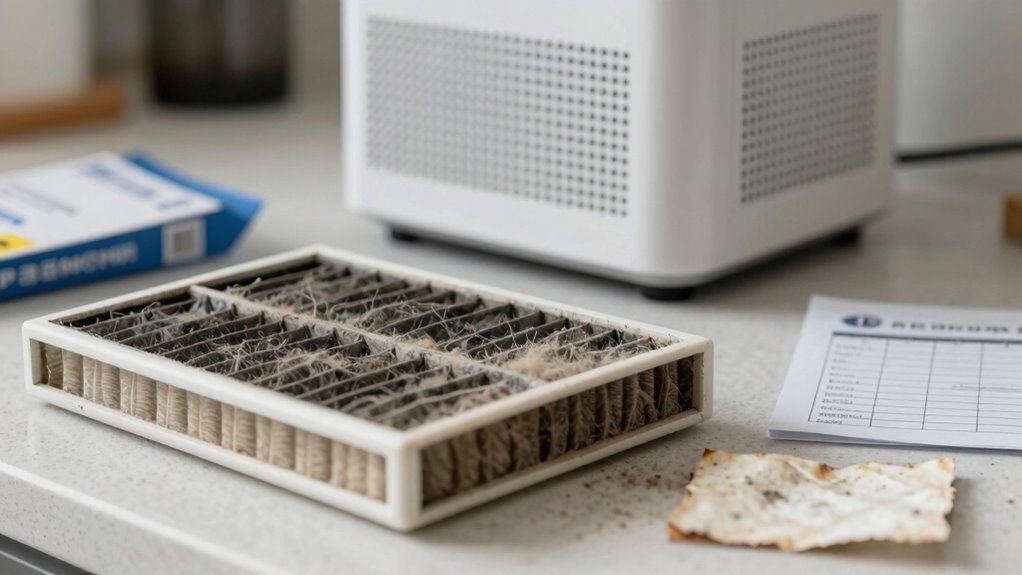

Many people mess up their air purifier filter schedule by waiting too long to replace or neglecting regular maintenance. Usually, filters should be changed every 6 to 12 months, but dust, pets, and environmental factors can shorten that time. Ignoring indicator lights or failing to check filters can lead to clogged filters, reduced airflow, and poorer air quality. If you want to keep your air healthy and your device running smoothly, staying on top of replacements is key—learn more to get it right.
Key Takeaways
- Many people delay replacing HEPA filters, reducing air purifier efficiency and indoor air quality.
- Ignoring manufacturer recommended schedules often leads to clogged filters and motor strain.
- Not monitoring filter indicators or setting reminders causes missed timely replacements.
- Neglecting pre-filter maintenance shortens HEPA filter lifespan and decreases overall performance.
- Overstretching replacement intervals can result in ineffective filtration and increased energy use.
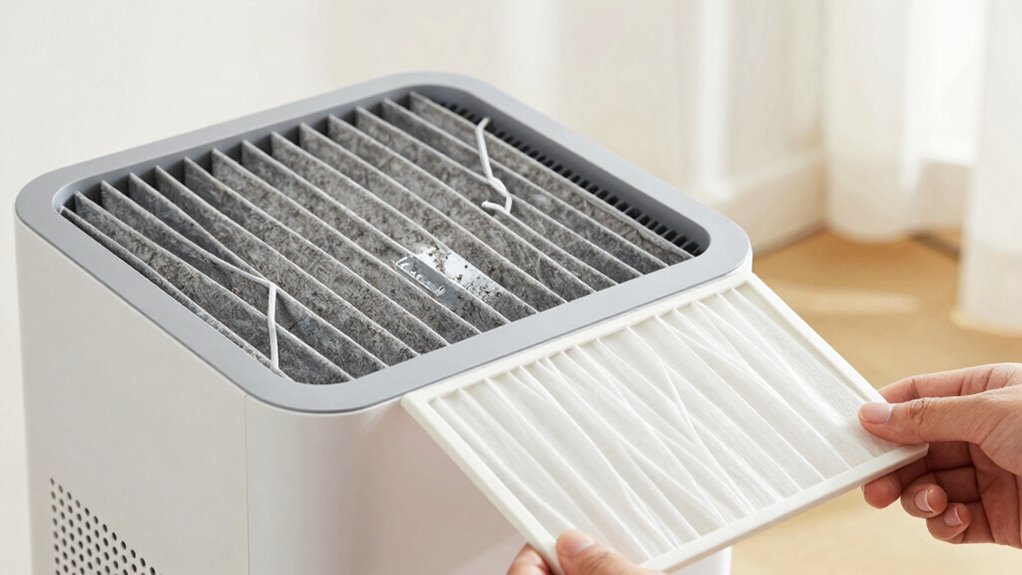
Air purifier filters play a essential role in improving indoor air quality by capturing pollutants, allergens, and airborne particles. When you’re using a HEPA filter, proper maintenance becomes necessary to guarantee it continues to work effectively. HEPA maintenance isn’t just about replacing the filter at the right time; it’s about understanding how long it will perform at its best before it needs a change. If you neglect this, you risk the filter becoming clogged, which not only reduces its efficiency but can also cause strain on your air purifier’s motor. Knowing the typical filter lifespan helps you plan replacements before your air quality declines.
Most HEPA filters are designed to last anywhere from six to twelve months with regular use, but this can vary depending on your environment. If you live in a dusty area or have pets, the filter’s lifespan shortens because it accumulates pollutants faster. Conversely, in cleaner environments, you might get a year or more out of each filter. It’s tempting to stretch the replacement period, especially since filters can be expensive, but doing so often backfires. When filters are overdue, they become less effective at trapping tiny particles, which defeats the purpose of having an air purifier in the first place.
HEPA filters typically last 6-12 months, shorter in dusty or pet-heavy environments.
To get the most out of your HEPA filter, establish a routine for checking its condition. Many models feature indicator lights that signal when it’s time for a change, but if yours doesn’t, set a reminder based on the manufacturer’s recommended lifespan. Consistently replacing the filter at the right time guarantees you’re maintaining peak airflow and filtration. Remember, a dirty filter doesn’t just lose efficiency; it can also cause your device to work harder, increasing energy consumption and wear over time.
Another key part of HEPA maintenance is cleaning or replacing pre-filters if your unit has them. These capture larger particles and extend the life of your main HEPA filter, delaying the point at which you need a full replacement. Regularly checking your filters and following the manufacturer’s guidelines keeps your air purifier functioning at highest performance. Neglecting these steps, however, can lead to decreased indoor air quality and higher operational costs.
In addition, understanding the filter lifespan and maintaining your HEPA filters diligently ensures you’re not wasting money or compromising your health. Changing filters at the right intervals isn’t just a chore; it’s a essential step toward cleaner, healthier indoor air. Stay proactive about HEPA maintenance, and your air purifier will reward you with consistently fresh and safe air to breathe.
Frequently Asked Questions
Can I Wash and Reuse My Air Purifier Filters?
You shouldn’t wash and reuse most air purifier filters because it can jeopardize their filter maintenance and air quality performance. Many filters, like HEPA or carbon filters, are designed for single use and washing can damage their structure, reducing effectiveness. Always check your filter’s instructions first. Properly replacing filters ensures your air purifier continues to improve air quality and keeps your home safe and healthy.
How Do I Know When My Filter Is No Longer Effective?
You’ll know your filter is no longer effective when its lifespan reaches its limit or if effectiveness indicators, like reduced airflow or persistent odors, appear. Check your manufacturer’s recommended replacement schedule and monitor these signs regularly. If your purifier’s performance drops despite cleaning, it’s time to replace the filter. Ignoring these cues can compromise air quality, so stay attentive to filter lifespan and effectiveness indicators to keep your air clean.
Are There DIY Methods to Extend Filter Life?
Imagine your filter as a brave knight fighting off dust dragons—sure, you can give it a quick DIY cleaning to extend its life. Just vacuum or gently wash non-HEPA filters as part of filter maintenance. However, don’t rely on this forever; eventually, the filter’s strength wanes. Regularly check for dirt buildup, and replace when it looks worn or performance drops. DIY tricks only buy time, not eternity.
Do Different Filter Brands Have Varying Replacement Schedules?
Yes, different filter brands have varying replacement schedules, so you should always follow manufacturer recommendations. Brand consistency matters because each brand designs filters with specific materials and performance standards, impacting how often you need to replace them. Don’t assume one brand’s schedule applies to another; always check the instructions provided. Staying within the recommended timeline guarantees your air purifier functions efficiently and maintains good air quality.
How Does Filter Type Impact Replacement Frequency?
Your filter type directly impacts how often you need to replace it. HEPA filters, made of dense filter material, typically last 6 to 12 months, while carbon filters may need replacing every 3 to 6 months. To keep your air purifier working efficiently, follow maintenance tips like checking filter status regularly and replacing filters as recommended. Proper filter material and maintenance help guarantee cleaner air and ideal device performance.
Conclusion
Think of your air purifier filters like the brakes on a car—they keep your air clean, but only if you replace them on time. I once ignored mine, and after months, my home’s air quality plummeted, making me realize neglect costs more than just money. Don’t wait until it’s too late; setting reminders or marking your calendar can save you from breathing in unseen pollutants. Keep your filters fresh, and breathe easy every day.