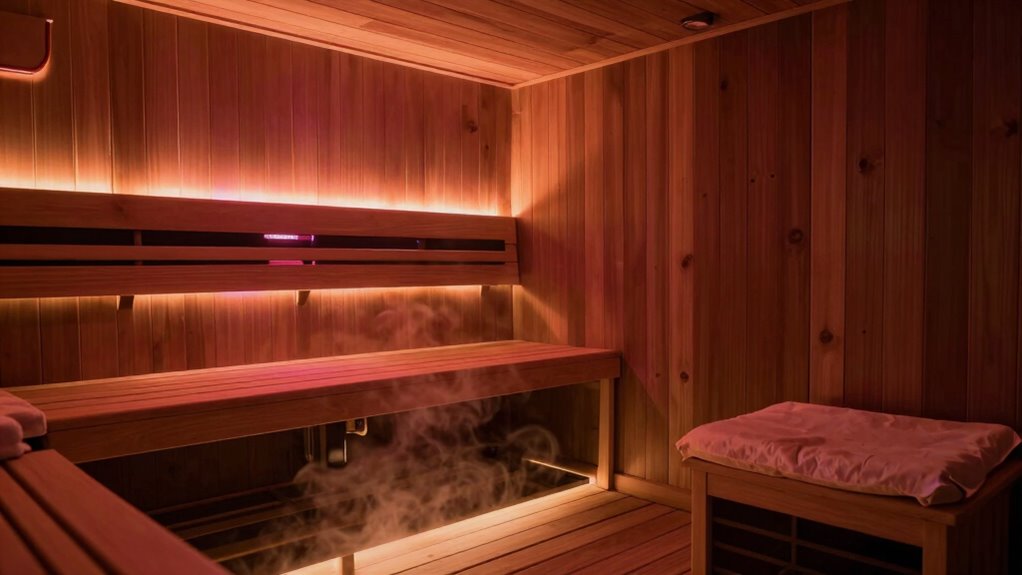

Infrared saunas feel different from traditional ones because they use infrared light to directly warm your tissues at lower temperatures, which creates a gentler and more comfortable experience. Unlike traditional saunas that heat the surrounding air and cause intense heat, infrared heats your muscles and joints deep below the surface. This deeper penetration offers a soothing warmth without the overwhelming heat. Keep exploring to discover how these differences can impact your wellness journey.
Key Takeaways
- Infrared saunas use direct light to penetrate tissues, creating a gentler, more comfortable warmth compared to the high-temperature environment of traditional saunas.
- The lower operating temperatures of infrared saunas produce a profound, soothing warmth without overwhelming heat sensations.
- Infrared heat stimulates cellular activity and deep tissue healing, leading to different health effects than the surface-level sweating in traditional saunas.
- Traditional saunas rely on convection and radiation, resulting in a hotter, drier environment that feels more intense than infrared saunas.
- The distinct heat transfer mechanisms and penetration depths cause infrared saunas to feel milder yet more deeply therapeutic.
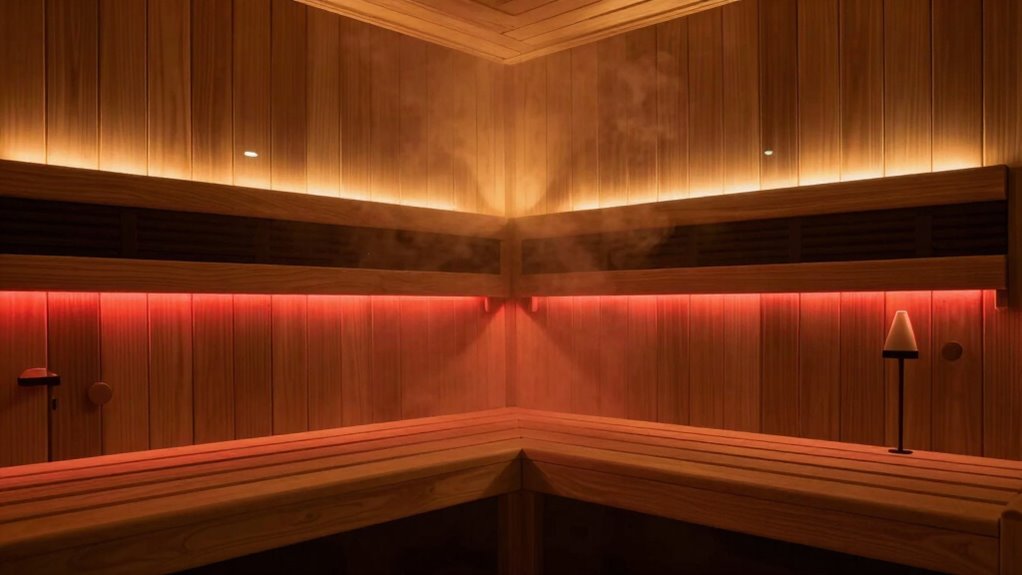
When choosing between infrared saunas and traditional saunas, understanding their differences can help you make an informed decision. One of the key distinctions lies in how heat penetrates your body. Infrared saunas use infrared light to directly warm your tissues, allowing the heat to penetrate deeper into your muscles and joints. This targeted heat transfer can lead to a more comfortable experience, especially if you’re sensitive to high temperatures. Traditional saunas, on the other hand, heat the air around you, which then transfers heat to your body through convection and radiation. This often results in a hotter, drier environment that can feel more intense, especially since the heat isn’t as deeply absorbed.
Infrared saunas heat tissues directly, offering a gentler, more comfortable experience than traditional, air-heated saunas.
You might notice that infrared saunas tend to operate at lower temperatures—typically between 120°F to 150°F—yet still produce a profound sense of warmth. This is because infrared heat directly affects your body’s internal tissues, creating a sensation of sweating and warmth without the overwhelming heat of a traditional sauna, which can sometimes reach 180°F or higher. The difference in heat penetration is why infrared saunas often feel gentler and more tolerable, especially for those new to sauna bathing or with respiratory sensitivities. Additionally, the infrared light technology used in these saunas can stimulate cellular activity, which may enhance overall health benefits. Some studies suggest that cellular stimulation can support detoxification processes and improve immune responses. Moreover, the energy transfer methods involved in infrared therapy can influence the overall effectiveness and comfort level experienced by users. A better understanding of heat transfer mechanisms can help you appreciate how each sauna type impacts your body differently.
When it comes to health benefits, the deeper heat absorption offered by infrared saunas can lead to several unique advantages. Many users find that infrared therapy promotes better circulation, muscle recovery, and pain relief. The infrared rays stimulate blood flow at a cellular level, which can help reduce inflammation and speed up healing processes. Traditional saunas also offer health benefits—such as relaxation, detoxification through sweating, and cardiovascular improvements—but they do so through a different mechanism. The intense heat of traditional saunas causes your body to sweat profusely, flushing out toxins and improving skin health. Understanding the mechanisms of heat transfer involved can help you better appreciate how each sauna type affects your body.
The choice between the two often comes down to personal preference and specific health goals. Infrared saunas may appeal if you’re looking for a milder, more comfortable experience with a focus on deep tissue therapy. Traditional saunas might be your choice if you prefer the classic, intense heat with a more traditional sweating experience. Both offer valuable health benefits, but understanding how each method works, especially regarding heat penetration, helps you find the one that suits your needs best. Ultimately, whether you choose infrared or traditional, both can contribute positively to your wellness routine.

KASUE Infrared Sauna Tent for Home with 3L Steamer
- Personal Indoor Infrared Sauna: Create private home sauna space
- 3L Steam Generator: Steady steam with adjustable heat levels
- 9 Temperature Settings: Customize heat for comfort and seasons
As an affiliate, we earn on qualifying purchases.
As an affiliate, we earn on qualifying purchases.
Frequently Asked Questions
Do Infrared Saunas Require Less Maintenance Than Traditional Saunas?
Yes, infrared saunas generally require less maintenance than traditional saunas. You’ll find cleaning frequency is lower because infrared units have fewer components like water reservoirs or vents to clean. Plus, they tend to use less energy, which reduces wear and tear on the system. This simplicity means you spend less time on upkeep and enjoy consistent performance, making infrared saunas a more convenient, low-maintenance option for your wellness routine.
Can Infrared Saunas Help With Specific Medical Conditions?
Yes, infrared saunas can help with specific medical conditions like chronic pain through thermal therapy. The deep heat penetrates your muscles and tissues, promoting blood flow and reducing inflammation. Many users find relief from joint pain, muscle soreness, and even arthritis symptoms. While they aren’t a cure, infrared saunas offer a natural, relaxing way to support your health and manage discomfort effectively.
Are There Any Safety Concerns Unique to Infrared Saunas?
You might wonder if infrared saunas pose unique safety concerns, and they do have some infrared safety considerations. Unlike traditional concerns about overheating or dehydration, infrared saunas operate at lower temperatures, reducing risk. However, prolonged exposure can still cause skin irritation or overheating. Always listen to your body, stay hydrated, and consult your doctor if you have health conditions. Infrared safety is about mindful use, ensuring a safe, relaxing experience.
How Do Infrared Saunas Affect Skin Health Differently?
Infrared saunas promote skin health by enhancing skin detoxification through deep heat penetration, helping to remove toxins and impurities. They also stimulate collagen production, which can improve skin elasticity and reduce wrinkles over time. You might notice a clearer, more youthful complexion after regular use. Unlike traditional saunas, infrared therapy offers targeted benefits, making your skin healthier and more vibrant by supporting natural renewal processes.
What Is the Environmental Impact of Infrared Versus Traditional Saunas?
Infrared saunas generally have a smaller environmental impact than traditional saunas. They consume less energy, leading to a lower carbon footprint because they operate at lower temperatures and use less water and heating resources. In contrast, traditional saunas require more energy to heat up larger spaces and maintain high temperatures. By choosing infrared, you help reduce overall energy consumption and minimize your environmental impact.
Conclusion
So, next time you’re pondering between an infrared and traditional sauna, remember: one’s like basking in a gentle, modern hug, while the other’s a steamy, old-school hug from grandma. Both will make you sweat, but only one will make you feel like you’ve just stepped into a sci-fi movie. Choose wisely—your sweat glands and your sense of style will thank you. Happy sweating, future sauna connoisseur!