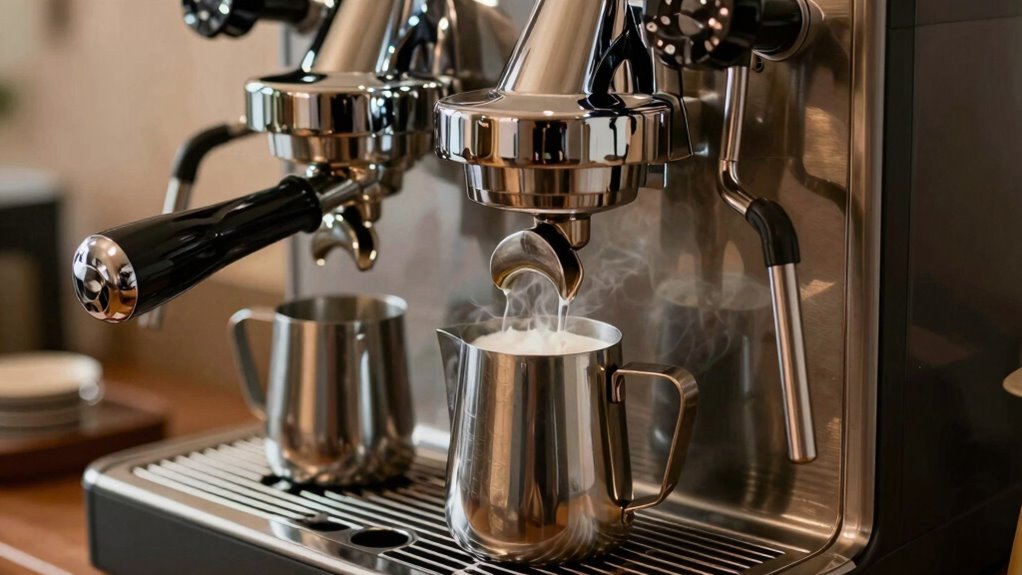

If you make lots of milk drinks like lattes or cappuccinos, a dual boiler is your best bet because it offers precise temperature control and faster steam recovery, ensuring better flavor and consistency. A heat exchanger works well if you value convenience and speed most and don’t mind less exact temperature control. To understand how your brewing habits can influence your choice, keep exploring your options further.
Key Takeaways
- Dual boilers offer precise temperature control, ideal for consistently making milk-based drinks like lattes and cappuccinos.
- Heat exchangers allow simultaneous brewing and steaming, suitable for quick milk drinks but may slightly compromise flavor precision.
- Dual boilers provide faster recovery times, ensuring better performance during high-volume milk drink preparation.
- Heat exchangers are energy-efficient with lower power consumption, making them practical for everyday, routine milk coffee drinks.
- Choice depends on priorities: for consistent, high-quality milk drinks, dual boilers are preferable; for convenience, heat exchangers suffice.
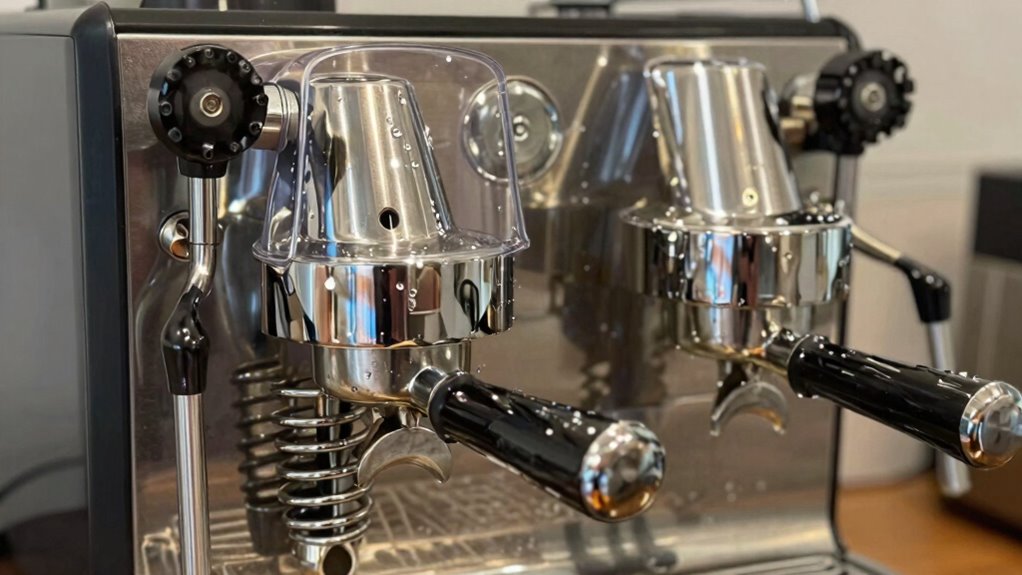
Are you trying to decide between a heat exchanger and a dual boiler for your espresso setup? This choice can significantly impact your daily coffee routine, especially when it comes to milk drinks. Both systems have their strengths, but understanding how they influence coffee flavor and energy efficiency will help you make the right decision. A heat exchanger machine allows you to brew espresso and steam milk simultaneously, which is convenient and speeds up your workflow. However, because it shares a single boiler between brewing and steaming, temperature stability can sometimes be less precise. This can subtly affect the coffee flavor, especially if you’re aiming for complex, nuanced shots. On the other hand, a dual boiler setup offers separate, dedicated boilers for brewing and steaming. This separation ensures more precise temperature control, leading to more consistent espresso extraction and richer, more vibrant flavors. If you’re particular about your coffee’s flavor profile, a dual boiler can help you achieve that perfect shot every time, especially when working with delicate beans or intricate recipes. Additionally, temperature stability is crucial for extracting optimal flavors and avoiding sour or bitter notes in your espresso.
Energy efficiency is another crucial factor. Heat exchanger machines tend to be more energy-efficient because they operate with a single boiler, reducing power consumption. They heat water for brewing and steaming in the same vessel, which minimizes energy waste. Conversely, dual boiler machines require more power since they maintain two separate boilers at optimal temperatures continuously. While this means higher energy consumption, it also guarantees faster recovery times and more consistent performance during busy mornings or large batches. If you’re concerned about electricity bills or environmental impact, a heat exchanger might be the better choice. But if you prioritize top-tier quality and consistency, investing in a dual boiler can be justified despite the increased energy use.
Ultimately, your decision hinges on how much importance you place on flavor and efficiency. If quick, convenient brewing with decent flavor is enough, a heat exchanger provides a solid balance. But if you’re a serious enthusiast or professional who demands precise temperature control for exceptional flavor, the dual boiler stands out. It’s a trade-off: convenience and lower energy bills versus superior consistency and taste. Consider your routine, how often you make milk drinks, and your flavor expectations. Both systems can produce excellent espresso, but your priorities will guide you toward the right choice. Whether you lean toward simplicity or perfection, understanding these key differences makes your decision clearer and helps you craft better coffee every day.
As an affiliate, we earn on qualifying purchases.
Frequently Asked Questions
Which Machine Is More Energy-Efficient for Home Use?
A heat exchanger espresso machine is typically more energy-efficient for home use because it consumes less energy overall. Its quicker warm-up time and lower standby power reduce energy consumption, making it a cost-effective choice. When considering a cost comparison, you’ll find that heat exchangers often have lower operating costs. So, if energy efficiency matters most, a heat exchanger machine is the better option for your home.
Can Both Machines Brew Espresso and Steam Simultaneously?
Imagine juggling two balls effortlessly—that’s what dual boilers do, brewing espresso and steaming milk simultaneously. So, yes, both machines can brew espresso and steam at the same time, providing better temperature stability and brew consistency. With a heat exchanger, you might need to pause briefly between tasks, affecting consistency. If you want seamless multitasking, a dual boiler is your best bet for maintaining ideal temperature stability during both processes.
How Long Does It Take to Heat up Each Machine?
A heat exchanger heats up faster, typically within 10-15 minutes, because of its smaller boiler capacity, providing quicker temperature stability for brewing. Dual boilers usually take about 15-20 minutes to reach the right temperature, but they offer superior temperature stability once heated, thanks to larger boiler capacity. Your choice depends on whether you prioritize quick readiness or consistent temperature control during your espresso and milk drinks.
Are Dual Boilers Easier to Maintain Than Heat Exchangers?
Dual boilers generally are easier to maintain because their maintenance complexity is lower, thanks to separate compartments for brewing and steaming. This design reduces wear and tear on individual components, making durability factors more favorable over time. You’ll find it simpler to troubleshoot and service, as each boiler operates independently. In contrast, heat exchangers require more frequent cleaning and careful monitoring, making them a bit more demanding to maintain.
What Is the Typical Price Difference Between the Two?
You’ll find that dual boilers typically cost more than heat exchangers, with a price difference often around $500 to $1,500, depending on brand and features. This price comparison reflects cost factors like separate heating chambers, build quality, and advanced controls. While dual boilers offer precise temperature control, heat exchangers are generally more affordable, making them appealing for those on a tighter budget who still want quality espresso.
Conclusion
Choosing between a heat exchanger and a dual boiler depends on your brewing style. For instance, imagine you’re a busy barista needing quick, consistent shots—dual boilers might suit you best. But if you prefer flexibility and energy efficiency, a heat exchanger could be ideal. Ultimately, understanding your needs guarantees you pick the right machine. So, consider how each system aligns with your routine, and you’ll be brewing perfect drinks with confidence every time.