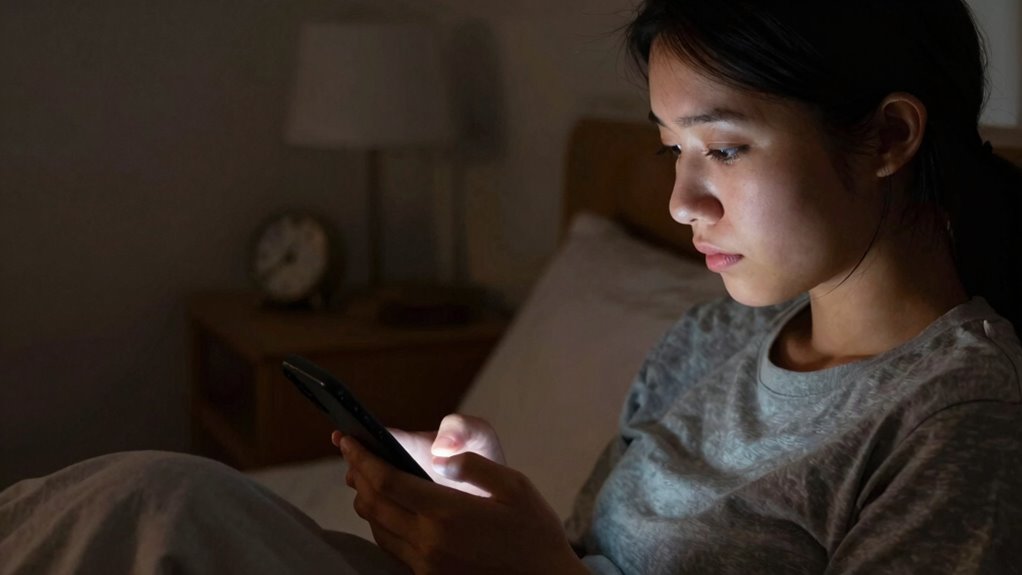
Exposure to blue light from screens in the evening can seriously delay your sleep. This small habit signals your brain that it’s still daytime, suppressing melatonin—the hormone that helps you feel sleepy. As a result, you may find it harder to fall asleep and wake up feeling tired. The good news is, making simple changes can protect your sleep cycle. Keep going to discover effective strategies to improve your sleep and overall health.

Get the latest gadgets delivered free — and shop member deals
- Fast, free delivery on millions of items
- Access to Prime Big Deal Days deals on October 6–7
- Prime Video, Amazon Music and more included
Key Takeaways
- Evening light, especially blue light from screens, signals the brain that it’s daytime, delaying sleep onset.
- Small habits like using screens before bed suppress melatonin, reducing sleep quality and duration.
- Dimming lights an hour before sleep helps maintain natural melatonin production, promoting better rest.
- Regular evening light exposure disrupts circadian rhythm, leading to long-term health issues.
- Managing evening light exposure is a simple yet effective way to improve sleep hygiene and overall health.
In today’s fast-paced world, many people overlook the impact of evening light exposure on their health. You might stay glued to your screens late into the night, scrolling through social media or watching shows, without realizing how this habit disrupts your body’s natural processes. Your body operates on a circadian rhythm, a 24-hour internal clock that governs sleep-wake cycles, hormone release, and other vital functions. Light exposure in the evening, especially blue light emitted by screens, can interfere with this rhythm, delaying sleep and reducing sleep quality.
Evening screen time disrupts your circadian rhythm and hampers sleep quality.
When you’re exposed to bright light during the evening, it signals to your brain that it’s still daytime, which suppresses the production of melatonin—the hormone responsible for making you feel sleepy. This melatonin suppression doesn’t just delay your ability to fall asleep; it can also shorten the overall duration of restorative sleep, leaving you feeling tired and less refreshed in the morning. The longer your melatonin levels stay low due to evening light exposure, the more your circadian rhythm becomes misaligned, making it harder to fall asleep at your usual time and disrupting your sleep cycle over the long term.
You might not notice the immediate effects, but consistently exposing yourself to bright light late at night can shift your internal clock, causing you to go to bed later and wake up feeling groggy. This delay isn’t just inconvenient; it can have a significant impact on your health, mood, and cognitive performance. Over time, circadian disruption has been linked to increased risks of metabolic issues, cardiovascular problems, and weakened immune function. The small habit of checking your phone or turning on bright lights before bed might seem harmless, but it’s quietly sabotaging your ability to get quality sleep. Recognizing the importance of light’s effect on melatonin can help you make better choices for your sleep hygiene.
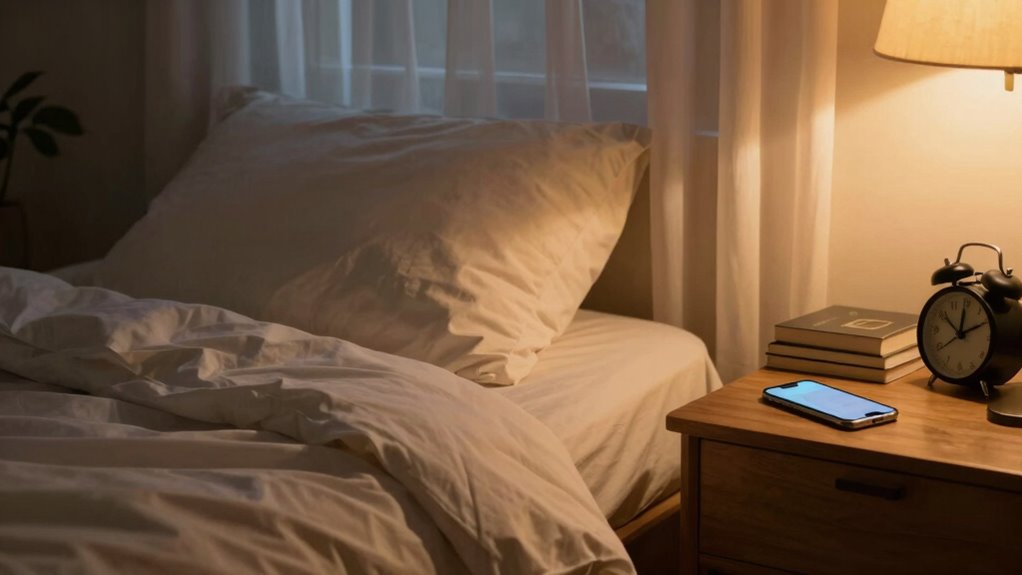
To protect your circadian rhythm, consider establishing a wind-down routine that minimizes evening light exposure. Dimming the lights an hour before bed, avoiding screens, or using blue light filters can help maintain melatonin production. Creating a sleep-friendly environment signals to your body that it’s time to relax and prepares you for a restful night. Additionally, understanding how light exposure impacts your internal clock emphasizes the importance of creating habits that promote natural sleep patterns. Incorporating light management strategies into your routine can further support your circadian health. Reducing evening light exposure not only helps preserve melatonin levels but also supports overall circadian health, making it easier to fall asleep and wake up refreshed. Being mindful of the impact of light on your sleep can motivate you to develop healthier evening habits. Remember, your sleep quality depends not just on how long you sleep but also on when you sleep and how well your body’s internal clock remains synchronized. Small habits, like reducing evening light exposure, can make a big difference in restoring your natural sleep cycle and improving your overall health.
blue light blocking glasses for sleep
As an affiliate, we earn on qualifying purchases.
As an affiliate, we earn on qualifying purchases.
Frequently Asked Questions
How Does Evening Light Exposure Affect Melatonin Production?
Exposure to evening light suppresses melatonin production, disrupting your circadian rhythm. When you stay in bright light, your body perceives it’s still daytime, leading to circadian disruption. This suppression hampers the hormone’s role in signaling sleep, causing hormonal imbalance and delaying your sleep onset. To improve sleep, minimize evening light exposure, allowing melatonin levels to rise naturally and maintain your internal clock’s harmony.
Are There Specific Types of Light That Are More Disruptive?
Blue light, with its high color temperature and intense light, is especially disruptive. It suppresses melatonin production more than warmer, lower-color-temperature lights. You should avoid screens emitting blue light before bed, as their high light intensity and cool tones interfere with your natural sleep signals. Instead, opt for dim, warm-colored lights in the evening to help your body prepare for restful sleep.
Can Evening Light Exposure Influence Overall Sleep Quality?
Imagine blue light streaming from your screen like a lighthouse piercing the night, signaling your brain to stay alert. This evening light, especially from screens, can substantially influence your overall sleep quality. Excess screen time exposes you to blue light, which suppresses melatonin and delays sleep onset. To improve sleep, limit screen time before bed and use blue light filters, helping your body wind down naturally and enjoy restorative rest.
What Are the Long-Term Effects of Delayed Sleep Caused by Light?
Delayed sleep caused by evening light exposure can lead to long-term circadian disruption, making it harder for your body to regulate sleep-wake cycles. This disruption may cause hormonal imbalances, affecting mood, energy, and overall health. Over time, you might experience increased stress, weakened immunity, and higher risks for chronic conditions like diabetes or heart disease. To protect your health, consider reducing evening light and maintaining a consistent sleep schedule.
How Can I Minimize Evening Light Exposure Effectively?
Did you know that over 90% of people use screens before bed? To minimize evening light exposure, cut down on screen time at least an hour before sleep. Use light filters or blue light glasses when you do need to use devices. dim your screens and switch to warmer, softer lighting in your home. These small changes can help your body produce melatonin naturally and improve your sleep quality.
Conclusion
So, the next time you reach for your phone at sunset, remember—you’re not just scrolling; you’re sabotaging your sleep. Ironically, the very habit that keeps you connected might be the reason you’re tossing and turning all night. Small changes, like dimming screens or avoiding bright lights, could actually help you get better rest. Sometimes, the simplest habits—like turning off your evening glow—are the biggest sleep savers. Who knew?
Fall Picks
fall essentials
As an affiliate, we earn on qualifying purchases.