

Modern mixes emphasize immersive sound effects, music, and atmospheric sounds, often at the expense of dialogue clarity. They use a broader dynamic range, making loud scenes louder and quieter moments softer, which can drown out spoken words. Speaker placement and advanced audio processing also affect how well you hear dialogue, especially on smaller systems or streaming platforms. If you want to learn how these changes impact your listening experience, there’s more to discover.
Key Takeaways
- Modern mixes prioritize immersive effects and atmospheric sounds over clear dialogue, often overshadowing spoken words.
- Increased dynamic range results in louder action scenes, making dialogue harder to hear without proper balancing.
- Surround sound setups focus on environmental effects, which can divert attention from dialogue and reduce clarity.
- Advanced audio processing emphasizes spatial effects, sometimes distorting or obscuring speech intelligibility.
- Streaming compression reduces subtle volume differences, making quiet dialogue less audible during loud scenes.
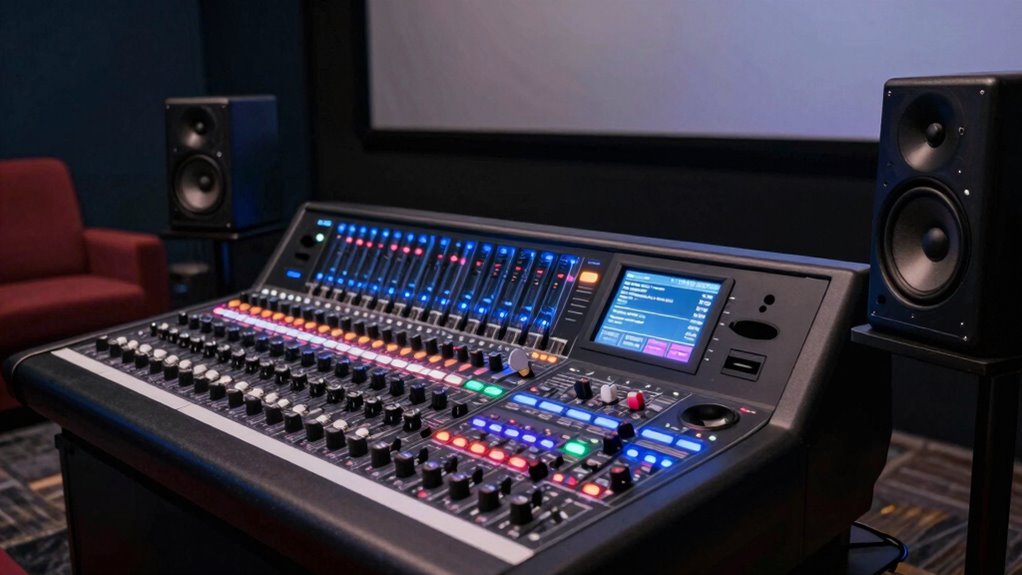
These days, it’s common to struggle hearing dialogue clearly in movies and TV shows, and many wonder why. One major factor is how modern mixes are crafted, often prioritizing immersive sound effects and music over dialogue clarity. The key elements influencing this are the dynamic range and speaker placement, which have evolved markedly over time. Dynamic range refers to the difference between the quietest and loudest sounds in a soundtrack. In older films, a more balanced dynamic range meant you could hear dialogue even during loud action scenes. Today’s mixes tend to have a broader dynamic range to create a more cinematic, immersive experience. While that can be impressive, it also means dialogue can get lost when explosions or music surge in volume.
Speaker placement also plays a critical role. In traditional setups, speakers were positioned to evenly distribute sound, making dialogue easy to follow. Modern sound systems often experiment with speaker placement to enhance surround effects, but this can inadvertently make dialogue less clear. For example, surround speakers might be positioned to emphasize atmospheric sounds or directional effects, pulling dialogue away from your direct line of hearing. If your speakers aren’t ideally placed, or if you’re watching on a device with limited sound capabilities, you’re more likely to miss key conversations. Additionally, advancements in audio processing technology sometimes prioritize spatial effects over dialogue clarity, which can impact how well you hear spoken words.
Many streaming platforms and modern mixes lean toward emphasizing immersive sound design that boosts environmental effects and music, sometimes at the expense of dialogue clarity. This shift means you might need to adjust your settings or position yourself differently to catch every word. Additionally, the use of sound compression in streaming content can reduce the subtle differences in volume, making quiet dialogue even harder to hear during loud scenes. It’s a balancing act: creating a rich, dynamic soundscape without sacrificing intelligibility.
Streaming and modern mixes often prioritize immersive effects over dialogue clarity, requiring adjustments for better listening.
If you want to improve your listening experience, pay attention to your speaker placement—try to keep your speakers directly in front of you, at ear level, and avoid obstructing them. You can also tweak your audio settings, turning on dialogue enhancement modes if your system offers them. Using high-quality speakers or headphones with good sound staging can make a big difference. Ultimately, understanding how dynamic range and speaker placement influence sound design helps you recognize why dialogue gets drowned out and what you can do to hear those conversations more clearly.

VIZIO 5.1 Soundbar SE, Wireless Subwoofer, Surround Sound w/Dolby Atmos & DTS:X, Bluetooth Speaker, QuickFit™ Compatible – SV510X-08 (New, 2024 Model)
Three full-range speakers inside the soundbar, two surround speakers, and one wireless compact subwoofer deliver 96dB of detailed...
As an affiliate, we earn on qualifying purchases.
Frequently Asked Questions
How Do Different Genres Affect Dialogue Clarity?
Different genres influence dialogue clarity through genre mixing techniques and dialogue compression. For example, pop and hip-hop often prioritize bass, so dialogue might get compressed or buried, reducing clarity. On the other hand, cinematic mixes emphasize clear dialogue, utilizing space and EQ adjustments. Your listening experience depends on these choices; understanding genre-specific mixing techniques helps you recognize how dialogue is shaped to fit each style’s aesthetic.
Can Headphones Improve My Understanding of Dialogue?
Yes, headphones can improve your understanding of dialogue. Modern headphone technology enhances audio clarity by isolating sounds and reducing background noise, making speech more distinct. High-quality headphones with features like noise-canceling and detailed sound reproduction help you focus on dialogue without distractions. If you struggle to hear conversations or dialogue in media, investing in good headphones with advanced audio clarity can make a significant difference.
What Role Does Room Acoustics Play in Dialogue Perception?
A stitch in time saves nine, and room acoustics considerably impact dialogue clarity. When room reflections bounce sound unevenly, it becomes harder to distinguish voices. Proper acoustic treatments, like diffusers and absorbers, minimize these reflections, sharpening dialogue perception. You can enhance your listening experience by optimizing your space; reducing unwanted echoes allows speech to stand out clearly, making every word easier to understand and enjoy.
Are Older Movies Easier to Understand Than Modern Mixes?
Older movies are generally easier to understand because they feature more vocal prominence and less dialogue compression. In modern mixes, dialogue often gets compressed and blended with sound effects, making it harder to catch every word. You’ll notice that older films prioritize clear speech, whereas contemporary mixes focus on immersive soundscapes, which can drown out dialogue. To improve comprehension, try adjusting your audio settings or using subtitles.
How Do Streaming Platforms Impact Dialogue Audio Quality?
Streaming platforms often reduce dialogue clarity through heavy audio compression, like squeezing a sponge to fit more sound into a small space. This limits dynamic range, making quiet dialogue harder to hear against background noise. Imagine listening to a concert with the volume constantly turned up and down—it’s exhausting. So, streaming can diminish audio quality, leaving you struggling to catch every word, especially when dialogue gets buried under music or effects.

ULTIMEA 7.1ch Sound Bar with Dolby Atmos, Surround Sound System for TV with 4 Surround Speakers, Sound Bar for Smart TV with App Control, Soundbar with Subwoofer for Home Theater, HDMI eARC, Aura A60
7.1ch Surround Sound System for TV with Dolby Atmos: This 7.1ch sound bar includes 3 main channels for...
As an affiliate, we earn on qualifying purchases.
Conclusion
So, next time you struggle to catch every word in a movie, remember that the sound mix has shifted, often prioritizing effects and music over dialogue. It’s like chasing shadows—you might think you’re getting the full story, but sometimes you have to look a little closer. By understanding these changes, you can better appreciate modern film sound design and, maybe, even find new ways to tune in. Don’t let the noise drown out what really matters.

ULTIMEA 5.1.2ch Sound Bar with Dolby Atmos, Surround Sound System for TV with 2 Surround Speakers, Sound Bar for Smart TV, Soundbar for Home Theater, BT 5.4, HDMI eARC, Skywave F40 (New, 2025 Model)
5.1.2ch Surround Sound System: A 5.1.2-channel system featuring up-firing speakers, surround sound, and a powerful subwoofer creates lifelike,...
As an affiliate, we earn on qualifying purchases.

Samsung 9250S Wireless Rear Speaker Kit, Black (SWA-9250S/ZA, 2025)
SIMPLE, CLUTTER-FREE SETUP: Enjoy surround sound that doesn't clutter your room. The wireless rear speakers connect to your...
As an affiliate, we earn on qualifying purchases.