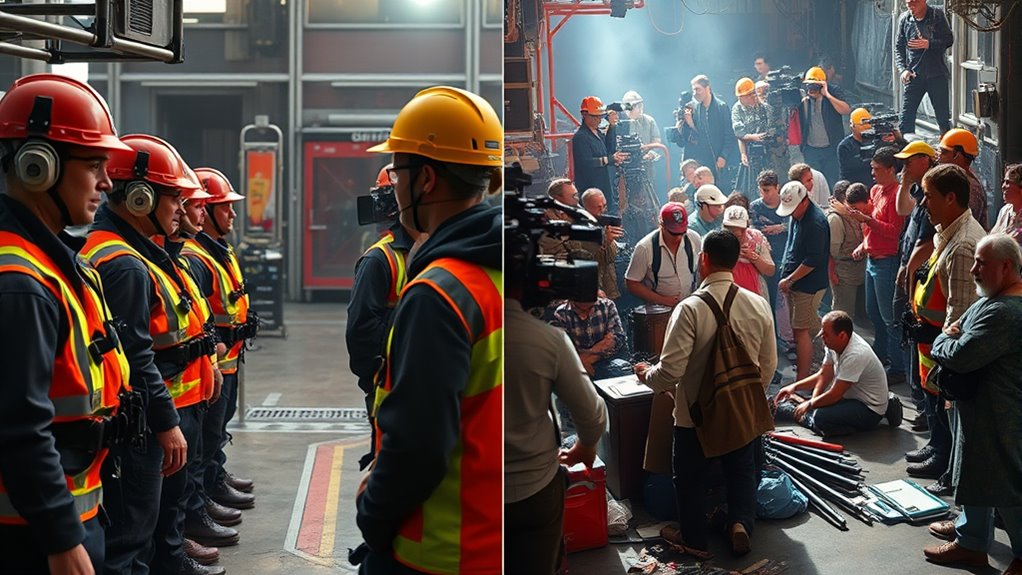

In union productions, you benefit from strong labor protections, fair wages, and extensive benefits like health insurance and safety protocols. These environment standards promote safer working conditions and clear career paths. Non-union projects often offer more flexibility and immediate opportunities but lack guaranteed safeguards, fair pay, and structured benefits. Understanding these key differences can help you make informed choices about your work experience and long-term stability as you explore further.
Key Takeaways
- Union productions enforce labor rights, safety standards, and grievance procedures through collective bargaining agreements.
- Wages and benefits, including health insurance and pensions, are negotiated to ensure fairness and job security.
- Union workers enjoy structured roles, clear career progression, and protections against overwork and unsafe conditions.
- Non-union projects often lack formal safety protocols, guaranteed benefits, and standardized wages.
- Union environments promote equitable treatment and worker protections, while non-union settings may offer more flexibility but increased risks.

When choosing between union and non-union productions, understanding the key differences can substantially impact your experience and rights on set. One of the most significant factors to contemplate is how labor rights are protected. In union productions, labor rights are typically well-defined and enforced through collective bargaining agreements. These agreements guarantee you certain protections, such as safe working conditions, reasonable working hours, and timely breaks. They also provide mechanisms for addressing grievances and disputes, giving you a formal avenue to seek resolution if issues arise. Non-union productions, on the other hand, often lack these structured protections, leaving you more vulnerable to overwork, unsafe environments, or unfair treatment. Without a union, you might find it harder to advocate for yourself and enforce your rights, which can lead to exploitation or burnout. Additionally, union standards often include training and safety protocols, which help ensure a safer working environment for all cast and crew members.
Union productions protect workers with enforceable rights, safe conditions, and grievance mechanisms, unlike non-union projects that leave workers more vulnerable.
Wage standards are another critical aspect that differentiates union from non-union projects. In union productions, wages are typically set through negotiated contracts, ensuring you receive a fair and standardized rate for your work. These wage standards often include provisions for overtime pay, holiday pay, and health benefits, which can considerably improve your overall compensation and job security. Conversely, non-union productions usually set wages at their discretion, which can lead to inconsistent pay rates that may be lower than union standards. Without a guaranteed minimum wage, you might accept lower pay just to get a gig, but at the expense of fair compensation for your skills and effort. This lack of wage regulation also means you have less leverage when negotiating your pay, especially if you’re just starting out or working in a highly competitive environment.
Another key difference relates to job stability and benefits. Union members often enjoy access to health insurance, pension plans, and other benefits negotiated as part of their collective agreement. These benefits can provide a safety net, especially during periods of unemployment or injury. Non-union workers generally don’t have these benefits unless they negotiate them individually, which can be challenging and less secure. Additionally, union productions tend to have structured hierarchies and clear job classifications, making it easier to understand your role and career progression. Non-union projects may have more fluid or ambiguous roles, potentially leading to confusion or undervaluation of your work.
Ultimately, your decision between union and non-union productions hinges on how much you value labor rights, wage standards, benefits, and job security. Union productions often prioritize worker protections and fair pay, creating a safer and more equitable environment. Non-union work might offer more flexibility or immediate opportunities, but it often comes with fewer safeguards. Being aware of these differences helps you make informed choices that align with your career goals and personal needs on set.
Frequently Asked Questions
How Does Union Membership Impact an Actor’s Career Growth?
Union membership boosts your career advancement by providing access to better roles and higher pay. It also opens up valuable networking opportunities, helping you connect with industry professionals and stay informed about auditions and projects. As a union member, you gain support and resources that can accelerate your growth, making it easier to build a sustainable and successful acting career. Overall, union membership offers significant advantages for your professional development.
What Are the Legal Implications of Working on Non-Union Projects?
When you work on non-union projects, you’re not protected by union regulations, which can expose you to legal liabilities if agreements aren’t followed. Without union oversight, you might face issues like inadequate pay, unsafe working conditions, or unresolved disputes. It’s important to understand that working outside union rules means you assume more legal risks, and you might have limited recourse if problems arise during filming or production.
Do Union Productions Have Higher Production Costs Than Non-Union?
Union productions generally have higher production costs due to stricter wage requirements, benefits, and work conditions. These costs influence your budget considerations and require careful cost management to stay on track. While union crews might demand more, they often bring experienced professionals, which can lead to smoother workflows and potentially save money in the long run. So, yes, union productions tend to be more expensive upfront, but they can offer quality and reliability.
How Do Pay Rates Compare Between Union and Non-Union Roles?
Oh, the joy of wage disparity! When you work in a union production, your pay scale is usually higher and more standardized, ensuring fairer wages. Non-union roles often have more flexible pay, which can mean lower rates or inconsistent wages. So, if you’re after predictable, livable wages, union roles tend to offer better pay compared to their non-union counterparts. It’s all about securing that fair share, after all.
Are There Differences in Working Hours Between Union and Non-Union Crews?
You’ll find that union crews generally have stricter working hours, with enforced rest period regulations to prevent overwork. Overtime policies are clearly defined, ensuring fair pay when hours extend beyond standard limits. In contrast, non-union productions may have more flexible hours, but often lack formal rest period rules, which could lead to longer workdays and less predictable schedules. Always check specific contracts for precise policies.
Conclusion
Understanding the key differences between union and non-union productions helps you navigate the entertainment world with confidence. Think of union productions as a sturdy oak tree—offering stability and protection—while non-union projects are like a swift river, flexible but unpredictable. By knowing what to expect, you can make informed choices that align with your goals. Whether you prefer the safety of the roots or the freedom of the flow, your journey in entertainment starts with awareness.