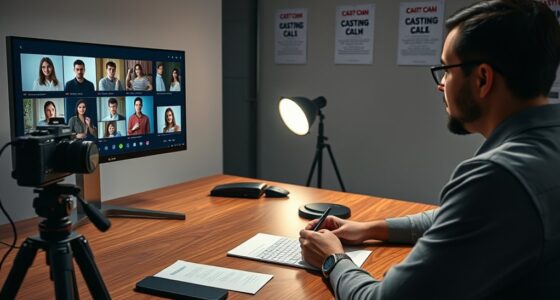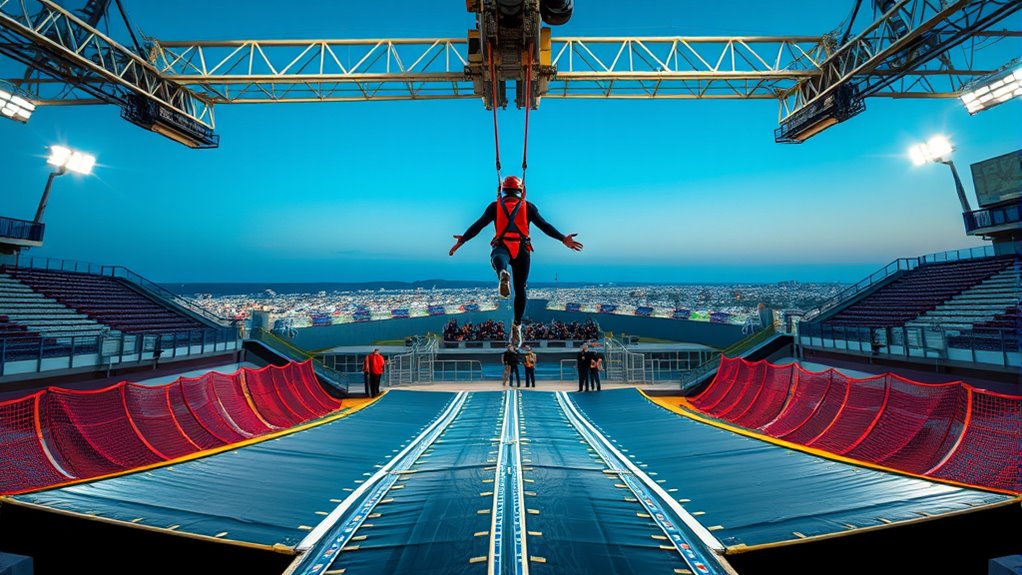

To design and safely execute stunts, you first work closely with safety coordinators to assess hazards and develop thorough safety protocols. You plan detailed choreography, breaking it into manageable parts, and rehearse repeatedly to guarantee precision. Using proper safety equipment and effective camera angles helps minimize risks while maintaining visual impact. Always prioritize risk management and contingency plans. If you keep exploring, you’ll discover how meticulous planning and teamwork create thrilling yet safe stunts.
Key Takeaways
- Develop detailed stunt plans with choreography, rehearsing segments thoroughly to ensure precision and safety.
- Conduct comprehensive safety assessments, including equipment checks and hazard identification, before filming.
- Collaborate with safety coordinators to create contingency plans and implement safety protocols throughout the stunt.
- Use appropriate safety gear and specialized equipment to minimize injury risks during execution.
- Coordinate camera angles and timing to maximize visual impact while maintaining control and safety.
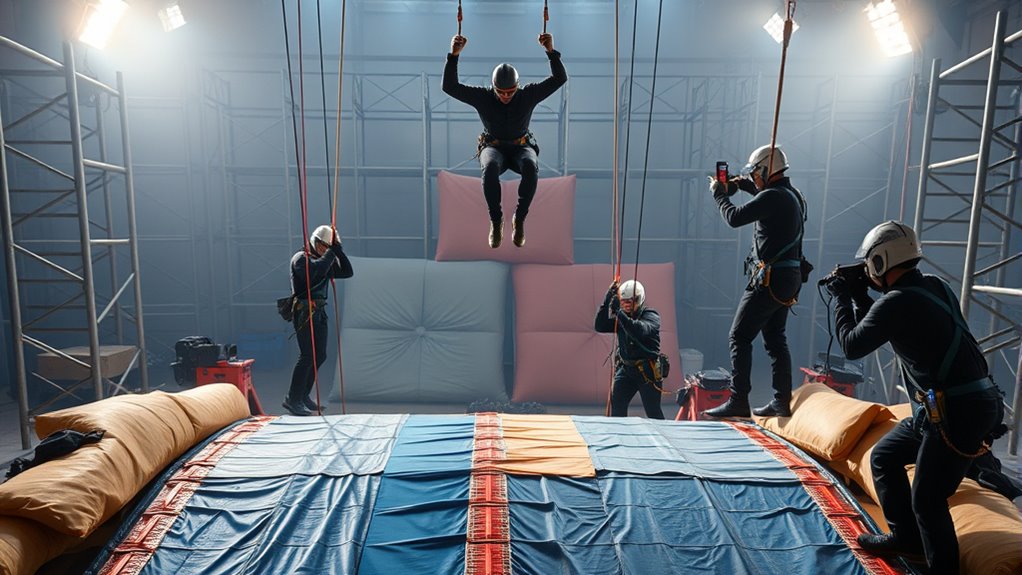
Stunt work can be thrilling and visually impressive, but it also comes with significant risks that must be carefully managed. When designing a stunt, your first priority is establishing thorough safety protocols. These protocols serve as the foundation for every step of the process, ensuring that everyone involved understands their responsibilities and the measures in place to prevent accidents. Safety protocols cover everything from proper equipment checks to emergency procedures, and they are strictly enforced throughout the stunt’s planning and execution. You’ll need to work closely with safety coordinators, who assess potential hazards and develop contingency plans. This proactive approach minimizes risks and creates a safer environment for stunt performers and crew members alike.
Next, you focus on stunt choreography, which is the blueprint for how the stunt will unfold. Choreography isn’t just about making a scene look dynamic; it’s about designing each move with safety in mind. You break down complex actions into manageable segments, rehearsing each part multiple times to perfect timing and technique. During choreography sessions, you consider the physical capabilities of performers, the distance from hazards, and the use of safety equipment such as harnesses, pads, or airbags. Every move is carefully planned to reduce the chance of injury, with alternative options ready if something doesn’t go as planned. When choreographing stunts, you also coordinate camera angles to maximize visual impact while maintaining safety. This meticulous planning ensures the stunt looks impressive without sacrificing safety. Additionally, understanding risk management is essential to identify and mitigate potential dangers throughout the stunt process.
Every detail, from the setup of safety equipment to the timing of each movement, is checked and double-checked before filming begins.
Frequently Asked Questions
What Are the Key Legal Considerations for Stunt Coordination?
You need to prioritize insurance requirements to cover potential accidents and damages during stunts. Make sure liability waivers are signed by all participants, releasing you from legal responsibility if something goes wrong. Always verify that your stunt team complies with local regulations and safety standards. These steps help protect you legally, ensuring that your stunt coordination is responsible and minimizes risks, so everyone stays safe and legally covered.
How Do Stunt Coordinators Communicate Safety Plans to Performers?
You’re kept in the loop through clear visual signaling and detailed safety briefings. Stunt coordinators use hand signals, flags, or flashlights to communicate during takes, ensuring everyone stays coordinated. They also hold exhaustive safety briefings beforehand, where they explain the plan, identify hazards, and assign roles. This combination of visual cues and thorough communication helps performers understand safety measures, allowing everyone to work confidently and smoothly, even amid complex stunts.
What Are Common Mistakes to Avoid During Stunt Planning?
You should avoid rushing the risk assessment process, as missing potential hazards can lead to accidents. Don’t overlook safety protocols or assume plans are foolproof without thorough checks. Failing to communicate clearly with performers or neglecting proper equipment can increase danger. Always double-check safety measures and guarantee everyone understands their role. Staying vigilant and methodical helps prevent mistakes that could compromise stunt safety or cause injuries.
How Is Audience Safety Ensured During Live Stunt Performances?
You guarantee audience safety during live stunt performances by establishing clear audience protection measures, like barriers and designated viewing areas. You also implement strict emergency preparedness plans, including quick access to first aid and evacuation routes. Constant communication with staff helps monitor crowd behavior and address potential hazards promptly. By prioritizing these steps, you create a safe environment where spectators can enjoy the excitement without undue risk.
What New Technologies Are Being Used in Stunt Design?
Imagine you’re designing a stunt like a tightrope walk over a canyon; new tech like virtual reality helps you visualize every move beforehand, reducing risks. Drones with surveillance capabilities monitor stunts in real-time, providing instant feedback. These innovations let you plan more daring performances while maintaining safety, much like how pilots use advanced instruments to navigate storms. Embracing virtual reality and drone tech enhances precision and confidence in stunt design.
Conclusion
Now that you understand how stunts are carefully designed and executed with safety in mind, you realize how much planning and skill go into each daring move. Every detail matters, from risk assessment to precise timing. Isn’t it incredible how professionals balance danger and safety to create awe-inspiring moments? Remember, even the most spectacular stunts rely on meticulous preparation and respect for the craft. So, next time you watch a stunt, appreciate the skill and safety behind the spectacle.