
In the entertainment world, studios typically release movies first in theaters, then sell rights to cable and VOD platforms, and finally make them available on streaming services. Each window is carefully timed to maximize revenue and satisfy consumer demand. Usually, theatrical releases come first, followed by digital and VOD options, with streaming platforms getting access later. The exact timing varies based on rights deals, but if you want to know more about how these windows work together, keep exploring.
Key Takeaways
- Studios license content to theaters first, then to Video On Demand (VOD), and finally to streaming platforms, with timing dictated by strategic agreements.
- Release windows are staggered to maximize revenue, balancing theatrical exclusivity with digital availability.
- Shorter windows favor streaming and VOD, while longer theatrical runs cater to audiences valuing cinema experiences.
- Rights ownership and contractual terms determine who gets access to content at each window and when it becomes available.
- Evolving industry practices are shifting toward shorter windows to meet consumer demand for quicker digital access.
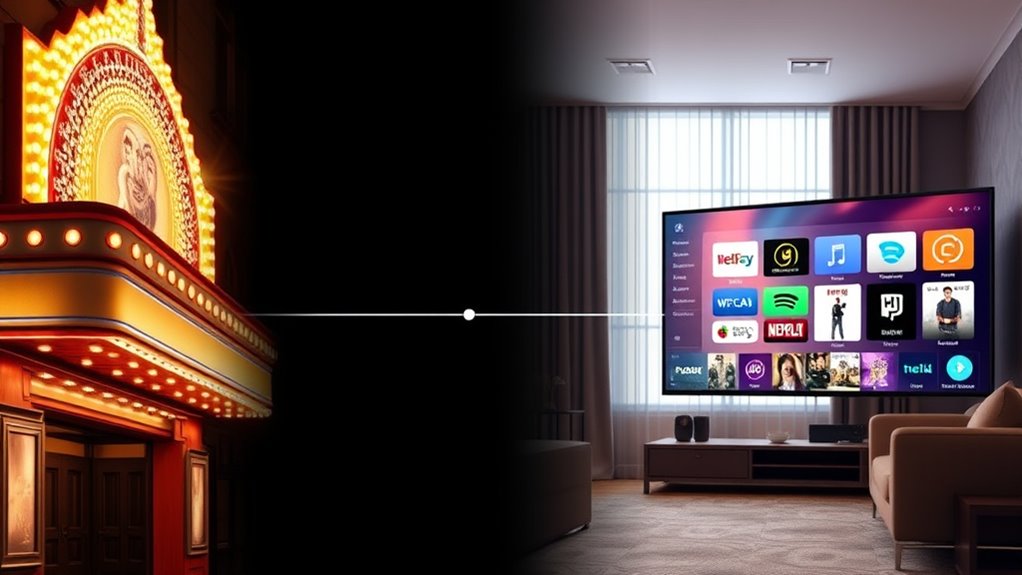
In the rapidly evolving world of streaming, understanding who gets access to content and when can feel like steering a complex puzzle. As a viewer, you might wonder why some movies appear on certain platforms before others or why some titles are released directly to streaming while others hit theaters first. The answer lies in how distribution rights are negotiated and how consumer preferences shape release strategies. Studios and content owners carefully decide who can stream a title and when, balancing contractual agreements, market demand, and their own business models. Distribution rights determine whether a film or show is available on a specific platform, in particular regions, or at particular times, giving content owners control over how and when their material reaches audiences. These rights are often sold to different platforms in various territories, which can lead to staggered release windows. For instance, a studio might license a film to a theatrical chain first, then to a cable or pay-per-view provider, and eventually to a streaming service. Each window is carefully timed to maximize revenue streams and prevent cannibalization of sales. Additionally, market segmentation influences how studios tailor their release strategies to target specific audiences more effectively. Consumer preferences play a significant role in shaping these windows. If audiences favor early streaming, studios might accelerate digital releases, reducing the theatrical window to satisfy the demand for instant access. Conversely, some viewers still prioritize the theatrical experience, prompting studios to extend the time before a film hits streaming platforms. These decisions are strategic, aiming to optimize profits from different distribution channels. The timing of these windows isn’t arbitrary — it’s a delicate balance of market trends, contractual obligations, and audience expectations. Some studios are experimenting with shorter windows, releasing content on streaming platforms shortly after theaters, while others stick to traditional, longer gaps to preserve the cinematic experience and maximize theatrical revenue. As a viewer, you benefit from this evolving landscape by gaining access to a wider variety of content through multiple windows. However, understanding the behind-the-scenes negotiations can give you insight into why some movies or shows are available on your favorite streaming platform at certain times and not others. The interplay of distribution rights and consumer preferences ultimately determines the flow of content, shaping your viewing options and experience. Navigating this complex system requires patience and awareness, but it also means that, over time, you’ll likely see more flexibility and innovation in how and when your favorite content becomes accessible.
Frequently Asked Questions
How Do Licensing Agreements Influence Window Timings?
Licensing agreements directly influence window timings by setting regional exclusives and negotiating release dates. When you’re involved in licensing negotiations, you determine when a film or show can appear on different platforms or regions. These agreements often specify strict schedules, ensuring exclusivity for certain territories or platforms during specific timeframes. As a result, licensing negotiations shape the entire release window, balancing rights and revenue for studios, distributors, and streaming services.
What Are the Financial Differences Between Windows?
You’ll notice significant financial differences between windows, driven by pricing models and revenue sharing. Theatrical releases command higher prices, with studios sharing revenue based on box office performance. VOD and streaming windows typically involve lower pricing, often using rental or subscription models, with revenue shared between platforms and content owners. This structure helps maximize profits at each stage, balancing upfront payments and ongoing royalties to optimize overall earnings.
How Do International Markets Impact Window Strategies?
International markets are like diverse musical instruments, each adding unique notes to your global distribution strategy. You adapt culturally to resonate with local audiences, extending your window strategy’s reach. By understanding regional preferences, you orchestrate when and how your content hits screens worldwide. This careful timing guarantees revenue, respects cultural nuances, and ensures your film’s symphony plays harmoniously across borders, capturing audiences and profits alike.
Are There Any Recent Shifts in Traditional Window Sequencing?
Yes, there are recent shifts in traditional window sequencing. You’ll notice more studios releasing digital exclusives shortly after theatrical premieres, shortening the gap between theatrical and digital availability. This approach aims to capitalize on initial buzz and maximize revenue. Streaming platforms are also pushing for earlier access, challenging traditional windows. As a result, the scheduling of releases is becoming more flexible, blending theatrical, VOD, and streaming strategies to meet evolving audience demands.
How Do Consumer Viewing Habits Affect Window Scheduling?
Your viewing habits directly influence window scheduling by shaping audience preferences. As you prefer earlier access through streaming or VOD, companies adjust marketing strategies to meet these demands, often shortening traditional windows. This shift aims to capture your interest quickly and retain your engagement. By understanding your habits, studios and streamers tailor release timings, ensuring content reaches you when you’re most likely to watch, maximizing revenue and satisfaction.
Conclusion
Understanding the theatrical, VOD, and streaming windows is like maneuvering a complex dance. Each platform gets its moment to shine, shifting the spotlight as time progresses. You now see how rights and timing shape what you watch and when. By staying informed, you can better appreciate the evolving landscape. Just as a masterful conductor guides an orchestra, rights holders orchestrate these windows to keep audiences engaged and enthusiastic for what’s next.