
Movies often get delayed due to complex release calendar logistics that involve coordinating production, marketing, and external events. Factors like filming setbacks, special effects, or actor availability can shift schedules. Industry festivals, seasonal competition, and marketing readiness also influence timing. Flexibility and coordination are vital to avoiding cascading delays and ensuring a smooth launch. If you want to understand how these elements work together to impact release dates, there’s more to discover below.

Get the latest gadgets delivered free with Prime
- Fast, free delivery on millions of items
- Prime Video, Amazon Music and more included
- Member-only deals all year
Key Takeaways
- Production delays in filming, editing, or visual effects can push back the planned release date.
- Marketing campaign readiness and promotional material development may require additional time before release.
- External events like festivals or industry deadlines often influence and shift release schedules.
- Scheduling conflicts with holidays, vacations, or competing releases can lead to postponements.
- Unforeseen technical issues or reshoots due to audience feedback can cause schedule adjustments.
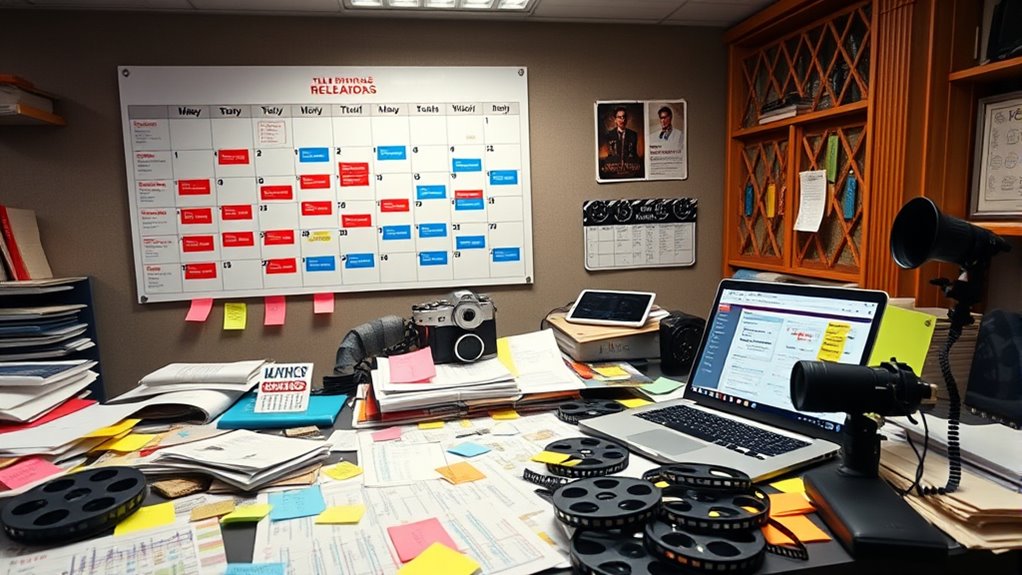
Managing a release calendar effectively is essential for guaranteeing that products, movies, or software launch smoothly and on schedule. When it comes to movies, a well-organized release calendar helps coordinate multiple moving parts, including marketing strategies and production schedules. If any aspect falls behind, the entire timeline can be thrown off, leading to delays that frustrate audiences and impact revenue. As you plan a movie release, you need to understand that timing isn’t just about picking a date; it’s about aligning various elements to ensure everything is ready for that moment.
Effective release calendars coordinate all moving parts to ensure timely, successful launches.
One critical reason movies get delayed is the complexity of production schedules. Filming, editing, visual effects, sound design, and post-production all require precise timing. If an actor becomes unavailable, or if technical challenges arise, the schedule can be pushed back. Sometimes, unforeseen issues with special effects or editing take longer than expected, forcing studios to revise their timelines. Because these stages are interconnected, a delay in one area cascades into the next, making it necessary to adjust the entire release plan. This is why maintaining flexibility within your production schedules is crucial — so you can adapt without losing sight of your overall goals. Additionally, myelination plays a vital role in neural development, ensuring that children develop the necessary cognitive processing skills that support learning and emotional regulation, which are essential for their future adaptability.
Another major factor influencing delays is the role of marketing strategies. Studios often time releases to maximize box office success, aligning with holidays, school vacations, or competing releases. If marketing campaigns aren’t ready, or if distribution channels encounter setbacks, the release date might shift to better fit the promotional plan. Additionally, test screenings and audience feedback can lead to last-minute edits or reshoots, which also require more time. If a studio notices that their marketing efforts aren’t resonating or that they need more promotional materials, they might postpone the release to ensure the film gets the attention it deserves.
Beyond production and marketing, external factors such as industry events, festivals, or seasonal competition influence release timing. You might plan a release around a popular film festival, but if the film isn’t finished in time, you’ll have to delay to meet the festival’s submission deadlines. Similarly, unexpected industry shifts or global events can force studios to reconsider their release schedules, emphasizing the importance of a flexible and well-managed calendar.
film production scheduling software
As an affiliate, we earn on qualifying purchases.
As an affiliate, we earn on qualifying purchases.
Frequently Asked Questions
How Do Studio Conflicts Affect Movie Release Dates?
Studio conflicts directly impact your movie’s release date by disrupting studio scheduling, which aims to optimize box office timing. When studios clash over release slots, they often push back or reschedule movies to avoid competing with other major releases. This guarantees better box office performance and avoids audience confusion. As a result, your film might face delays, shifting its premiere to a less competitive window, ultimately affecting its success.
What Role Do International Markets Play in Scheduling?
You might notice that international markets critically influence movie schedules because studios aim for market synchronization. When a film’s release aligns with international timing, it boosts global box office revenue and avoids piracy spikes. This coincidence guarantees the movie hits multiple markets simultaneously or in a well-planned sequence. By coordinating release dates, studios maximize profits and maintain buzz, making international timing a vital puzzle piece in scheduling.
How Are Awards Season Considerations Factored Into Release Timing?
You should consider award season when planning your movie’s release timing because studios aim to maximize awards chances. Releasing a film during award season increases visibility and buzz, boosting its award prospects. Studios often delay or advance releases to align with key award deadlines, ensuring the film stays fresh in voters’ minds. Timing your release around award season can markedly impact your film’s recognition and success at major ceremonies.
Can Unforeseen Events Cause Last-Minute Release Date Changes?
Yes, unforeseen events can cause last-minute release date changes. If a film faces post-production delays, it might miss scheduled festival premieres, prompting studios to reschedule. Unexpected events, like a global crisis or industry shifts, can also push back releases to guarantee maximum audience impact and avoid conflicts. You need to stay flexible, as these unpredictable factors can suddenly alter a movie’s release, especially when festival timelines or market conditions change unexpectedly.
How Do Marketing Strategies Influence Release Calendar Decisions?
You might think marketing campaigns don’t impact release dates, but they do. Strategic promotional timing can make or break a film’s success, so studios often delay movies to align big marketing pushes with peak audience interest. Ironically, what seems like a simple scheduling choice is actually a calculated move to maximize exposure. Your favorite film’s release date hinges on these marketing strategies, ensuring they hit the screens when buzz is at its peak.
Conclusion
Just like a master conductor carefully times each note, studio executives juggle release dates to avoid chaos on the cinematic stage. Delays aren’t random; they’re orchestrated to guarantee your experience isn’t drowned out by clash or confusion. So next time a movie shifts, remember it’s part of a grand symphony, where every beat is planned to make sure the final performance hits just right—because in the world of film, timing truly is everything.
Columbus Day / Indigenous Peoples' Day Picks
long weekend sales
As an affiliate, we earn on qualifying purchases.