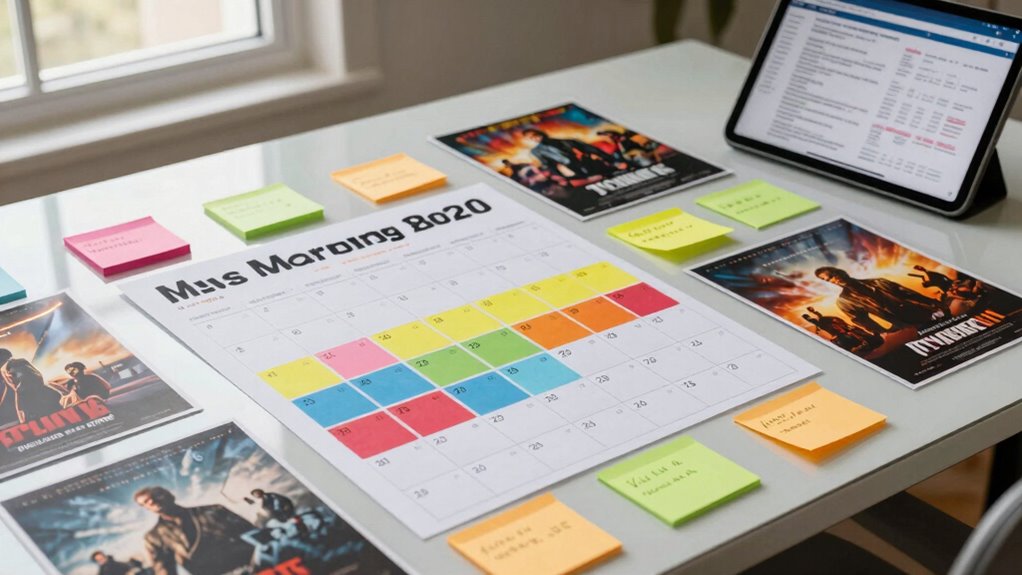

Building a movie marketing calendar involves planning your promotional activities around key dates, industry trends, and audience behavior. You’ll schedule trailers, posters, interviews, and social media posts to keep engagement steady and build anticipation. Coordination with different teams and industry events is vital to amplify your message. Track performance and stay flexible to adjust tactics as needed. If you keep exploring, you’ll discover how to craft a calendar that maximizes your film’s success.

Get the latest gadgets delivered free — and shop member deals
- Fast, free delivery on millions of items
- Access to Prime Big Deal Days deals on October 6–7
- Prime Video, Amazon Music and more included
Key Takeaways
- Identify key release and industry dates to align promotional activities with audience engagement peaks.
- Schedule content releases strategically, including trailers, posters, and behind-the-scenes glimpses, over an extended timeline.
- Coordinate with cross-functional teams and leverage industry events to amplify promotional efforts.
- Incorporate audience behavior trends and seasonal factors to optimize timing for maximum impact.
- Monitor engagement metrics continuously and adjust the calendar to enhance campaign effectiveness.

Creating a successful movie marketing campaign requires careful planning and timing. One of the most effective tools you can use is a movie marketing calendar, which helps you organize and execute promotional activities strategically. Building this calendar begins with understanding your target audience and their preferences. You want to maximize audience engagement, so every step you take should be tailored to resonate with viewers at different stages of their movie-watching journey. By mapping out key dates and activities, you can guarantee your messaging stays consistent and impactful, building anticipation and excitement as release day approaches.
Content scheduling plays a crucial role in this process. You need to decide the ideal times to release trailers, posters, interviews, and social media posts. Spreading content evenly and thoughtfully keeps your audience engaged without overwhelming them. For example, you might plan teaser trailers months before the release, followed by more detailed previews closer to launch. Regular updates and behind-the-scenes glimpses can maintain interest, but timing is everything—if you bombard your audience early, they might lose interest before the movie even hits theaters. Conversely, if you wait too long to promote, you risk missing the window to build momentum. Carefully scheduling your content creates a steady stream of engagement, nurturing anticipation and keeping your campaign fresh in viewers’ minds. Additionally, understanding how to map out key dates ensures your promotional activities align with audience behavior and industry trends. Recognizing the importance of content timing can significantly influence the success of your campaign. Proper planning and awareness of industry trends can help you capitalize on peak interest periods and maximize visibility. Integrating market research into your calendar can further refine your promotional efforts and target the right segments at optimal moments.
A movie marketing calendar also helps you coordinate with various teams—PR, social media, advertising, and distribution—so everyone works in sync. This ensures that promotional efforts align with key industry events, holidays, or awards season, which can greatly boost visibility. You’ll want to identify critical milestones, such as trailer launches, press tours, and premiere dates, and align your marketing activities accordingly. By doing so, you can leverage these moments to amplify your message and reach broader audiences.
Moreover, a well-structured calendar allows you to monitor and adjust your strategy as needed. You can track engagement metrics and see which content resonates most with your audience, prompting you to tweak your schedule for better results. Flexibility is essential—if a particular campaign element isn’t performing well, you can pivot and try new approaches without disrupting the overall plan. This proactive approach ensures your marketing efforts remain effective throughout the entire campaign.
movie marketing calendar planner
As an affiliate, we earn on qualifying purchases.
As an affiliate, we earn on qualifying purchases.
Frequently Asked Questions
How Do Marketing Calendars Adapt to Unexpected Film Delays?
When faced with unexpected film delays, you adapt your marketing calendar through contingency planning, allowing flexibility for rescheduling. You quickly assess the best new release dates and adjust your promotional efforts accordingly. This might involve shifting advertising campaigns, social media teasers, or press events to align with the new schedule. By proactively managing release rescheduling, you guarantee your marketing stays relevant and maintains audience interest despite delays.
What Metrics Are Used to Evaluate Calendar Effectiveness?
Think of your marketing calendar as a ship steering the seas of audience engagement. You track metrics like social media integration, audience engagement levels, and campaign reach to evaluate its effectiveness. If engagement drops or social interactions decline, you adjust course. These metrics act as your compass, guiding you to optimize timing and content, ensuring your marketing voyage reaches the right ports—your target audience—at the perfect moments.
How Are International Release Strategies Integrated Into the Calendar?
You integrate international release strategies into the calendar by coordinating global distribution plans and considering cultural nuances. You research regional holidays, local customs, and market trends to determine best release windows. You also tailor marketing campaigns to resonate culturally, ensuring promotional activities align with local tastes. By collaborating with regional teams and analyzing market data, you create a synchronized schedule that maximizes global reach and minimizes conflicts, boosting overall box office success.
Who Are the Key Stakeholders Involved in Calendar Creation?
You’re at the center of creating the calendar, working with diverse stakeholders like marketing teams, distributors, and international partners. While they focus on audience segmentation, you handle content scheduling to guarantee each market gets the right message at the right time. Together, you coordinate timing, promotional pushes, and regional releases, balancing creative input and logistical planning to make sure the movie’s marketing hits its mark worldwide.
How Do Seasonal Trends Influence Marketing Timing Decisions?
Seasonal trends heavily influence your marketing timing decisions because they determine when audiences are most receptive. You should align your campaigns with holidays, school breaks, and seasonal events to maximize engagement. By analyzing past trends, you can plan your marketing efforts to peak during high-interest periods, ensuring your movie gets the attention it deserves. Proper timing based on seasonal trends boosts visibility and increases the chances of box office success.
Conclusion
Now that you understand how movie marketing calendars are constructed, you see the meticulous planning behind the scenes. It’s a mix of strategic timing and creative bursts—like a symphony of anticipation. But beneath the buzz, it’s also about passion and hope, connecting audiences to stories that move them. In this dance of deadlines and dreams, you realize that every release is more than a date—it’s a chance to inspire, entertain, and bring people together.
Fall Picks
fall essentials
As an affiliate, we earn on qualifying purchases.