
TL;DR
A new game called ‘Don’t Wordle’ prompts players to avoid solving Wordle puzzles intentionally. It has quickly gained attention on social media, sparking debate about its influence on players.
The game ‘Don’t Wordle’ has emerged as a viral challenge, encouraging players to avoid solving the popular word puzzle game Wordle. The game, which launched in early April 2024, has rapidly gained a following on social media platforms, sparking discussion among players and critics alike. You can check out our Wordle Review No. 1,824 for more insights into popular word games. This development matters because it represents a shift in how players interact with the widely popular Wordle, raising questions about gaming behavior and mental engagement with casual puzzles. For related content, visit our 15 Best Kindle Unlimited Deals of 2025 You Don’t Want to Miss for more entertainment options.
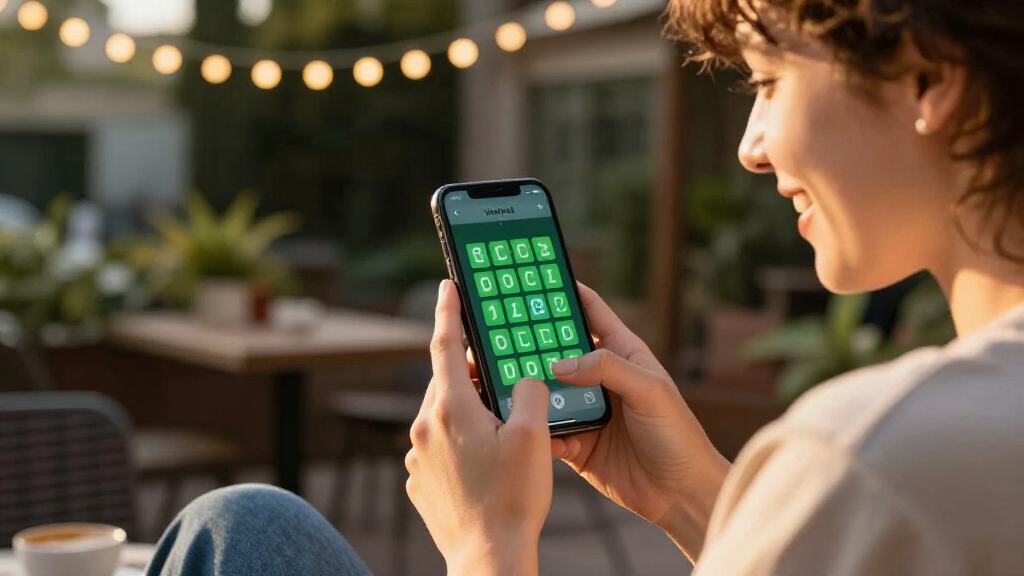
‘Don’t Wordle’ is a game that instructs players to deliberately avoid solving the daily Wordle puzzle. Unlike traditional Wordle, where the goal is to solve the five-letter word within six attempts, this new variant challenges users to resist the urge to play or to leave the puzzle unsolved intentionally. The game has been promoted through social media posts and online forums, where users share their attempts to ‘not solve’ the puzzle, often with humorous or competitive undertones.
According to reports from players and online communities, the game has attracted thousands of participants within weeks of its launch. No official developer or company has claimed responsibility for creating ‘Don’t Wordle,’ but it has become a trending topic on platforms like Twitter and Reddit, where players exchange strategies and share their progress. The game appears to be a simple modification of the original Wordle interface, with added instructions or prompts to discourage solving the puzzle.
Experts in gaming psychology have begun analyzing the phenomenon, noting that ‘Don’t Wordle’ taps into the human tendency for challenge and resistance, often associated with ‘reverse psychology.’ Meanwhile, some educators and mental health advocates express concern about the potential for such games to promote avoidance behaviors or increase frustration among casual players. For more tips on engaging with word puzzles, see our Wordle Hint guide. However, there is no evidence yet that ‘Don’t Wordle’ is causing widespread negative effects or addictive behaviors.
Implications for Player Engagement and Gaming Trends
The emergence of ‘Don’t Wordle’ highlights how casual games can evolve rapidly and attract diverse audiences. It raises questions about how players engage with popular puzzles and whether such challenges influence gaming habits, attention spans, or mental health. For some, the game serves as a humorous protest or a test of self-control; for others, it may foster avoidance or frustration. The phenomenon underscores the importance of understanding the psychological effects of alternative gaming formats and their potential to shape future casual game development.
Additionally, ‘Don’t Wordle’ reflects a broader cultural trend where players seek novelty and challenge, even in simple, familiar games. Its viral spread suggests that social media can significantly amplify niche gaming ideas, creating new dynamics in digital entertainment. If the game continues to grow, it could inspire similar variants or challenge formats, influencing how casual games are designed and marketed.
As an affiliate, we earn on qualifying purchases.
Since Wordle’s rise to mainstream popularity in late 2021, numerous variants and spin-offs have emerged, each exploring different aspects of the original game’s mechanics. These include solutions-focused versions, themed puzzles, and challenge modes designed to test players’ skills or endurance. ‘Don’t Wordle’ is part of this broader trend of experimentation with the game’s format, emphasizing avoidance rather than achievement.
Social media platforms have played a significant role in spreading these variants. Early April 2024 saw a surge in posts on Twitter, Reddit, and TikTok, where users shared their experiences with ‘Don’t Wordle’ and encouraged others to try it. The viral nature of these posts has contributed to the game’s rapid popularity, despite its unofficial status. Experts note that such trends often reflect larger cultural shifts toward playful resistance and irony in digital spaces.
Prior to ‘Don’t Wordle,’ other unofficial Wordle variants included ‘Wordle Battle’ and ‘Wordle Solo,’ which altered the rules to create competitive or solitary challenges. The new ‘avoidance’ format adds a different dimension, emphasizing psychological resistance rather than puzzle-solving. This evolution demonstrates how casual gaming communities continually adapt and remix existing games to create social engagement and entertainment.
“”Don’t Wordle’ taps into our innate challenge-seeking behavior, but it also raises questions about avoidance and frustration in casual gaming.'”
— Jane Smith, gaming psychologist
Unclear Long-Term Effects and Developer Intent
It remains unclear whether ‘Don’t Wordle’ will have lasting influence on casual gaming or if it is merely a fleeting social media trend. There is no official confirmation of who created the game or whether it is sanctioned by any major game developer. Experts warn that without further research, the psychological impact—such as potential increases in avoidance behavior or frustration—cannot be fully assessed. Additionally, the game’s future development and whether it will evolve into a more formalized product are still unknown.
Next steps include observing how the trend develops over the coming weeks, especially whether more players adopt the avoidance challenge or if official versions or variants emerge. Researchers and mental health professionals may study user reactions to understand its psychological effects better. If the game continues to grow, developers might consider creating official versions or similar challenge modes that explore psychological resistance in casual gaming.
Meanwhile, social media platforms will likely remain the primary venue for sharing experiences, strategies, and memes related to ‘Don’t Wordle.’ Public discussion may also influence whether the game persists or fades as a passing internet fad.
Key Questions
Who created ‘Don’t Wordle’?
The creator of ‘Don’t Wordle’ has not been publicly identified, and the game appears to be an unofficial variation spreading through social media.Is ‘Don’t Wordle’ officially endorsed or developed by the original Wordle creators?
No, there is no official endorsement or connection between ‘Don’t Wordle’ and the original Wordle game. It is an unofficial variation.Could playing ‘Don’t Wordle’ have negative psychological effects?
Potential effects are not yet studied, but experts suggest that avoidance-based challenges could influence frustration or avoidance behaviors in some players.Will ‘Don’t Wordle’ become a permanent or mainstream game?
It is uncertain. Its popularity may decline as a social media trend, or it could inspire official versions or similar challenges if interest persists.How does ‘Don’t Wordle’ compare to other Wordle variants?
‘Don’t Wordle’ is unique in that it challenges players to avoid solving the puzzle, contrasting with variants that modify rules to increase difficulty or thematic content.Source: hn