
Shows change aspect ratios mid-story to help you understand different narrative layers, evoke emotions, or highlight key moments. For example, a wider ratio might signal a grand scene, while a narrower one can create intimacy or signify flashbacks and dream sequences. These shifts guide your perception and deepen your emotional experience without words. If you keep exploring, you’ll discover how filmmakers use this technique to craft engaging, layered stories that draw you in even more.
Key Takeaways
- To visually signal shifts in narrative layers, such as flashbacks or dream sequences.
- To evoke specific emotions or moods, like intimacy or grandeur, through aspect ratio manipulation.
- To distinguish between different story elements or realities without using dialogue.
- To create stylistic or nostalgic effects, referencing classic films or genres.
- To enhance storytelling by guiding viewer perception and emotional engagement subtly.
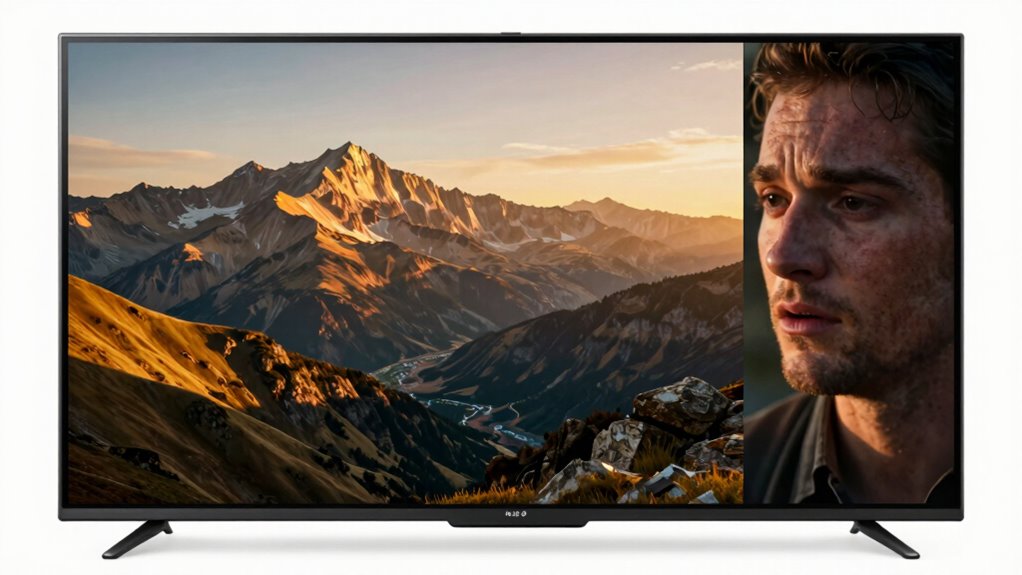
You might have noticed that some TV shows switch aspect ratios partway through, and understanding why can enhance your viewing experience. When a show changes its aspect ratio, it’s not just a random stylistic choice; it’s a deliberate cinematic technique aimed at shaping viewer perception. Filmmakers and showrunners use these shifts to evoke specific emotions, highlight certain scenes, or create a sense of immersion. By adjusting the frame size, they guide you to interpret what’s happening on screen in a particular way, making the storytelling more impactful.
Changing aspect ratios can serve multiple storytelling purposes. For instance, a wide, letterboxed format often signals a scene of grandeur or importance, emphasizing the scope or significance of what’s unfolding. Conversely, shifting to a narrower aspect ratio can create a feeling of intimacy or confinement, drawing you closer to the characters’ personal experiences. These variations are carefully choreographed to manipulate viewer perception—prompting you to feel awe, tension, or vulnerability at just the right moments. This technique underscores how cinematic choices extend beyond dialogue and visuals to influence your emotional journey through the story. Recognizing visual storytelling techniques like aspect ratio shifts deepens your understanding of the director’s craft.
Changing aspect ratios guides your emotions, emphasizing grandeur or intimacy to deepen storytelling impact.
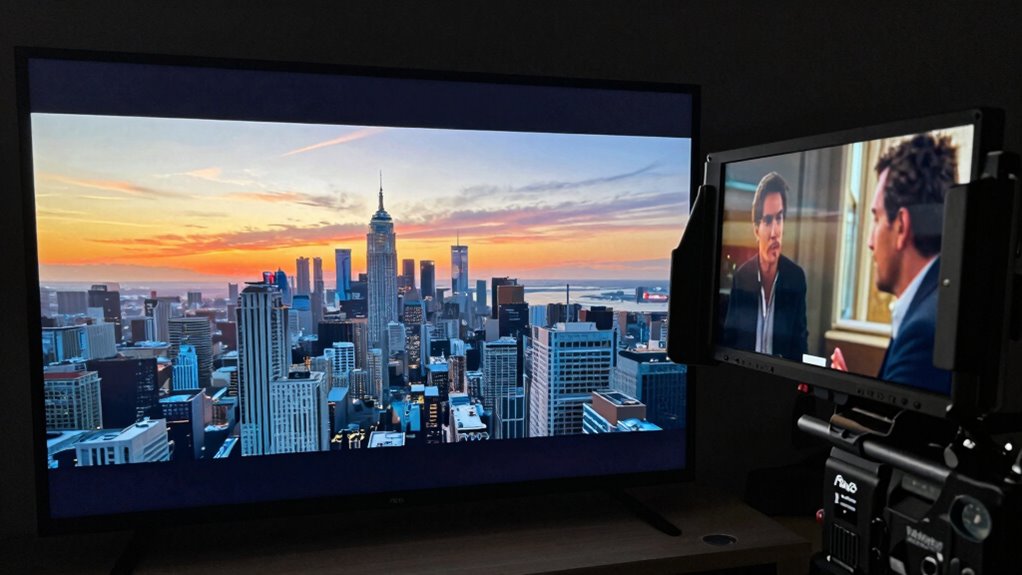
The seamless shift between aspect ratios also helps differentiate between different narrative layers or realities within the show. For example, a show may employ a wide ratio for the main storyline but switch to a more claustrophobic aspect ratio during flashbacks or dream sequences. This visual cue signals a shift in perspective, making it easier for you to follow complex narratives or understand the emotional undercurrents. Such technical decisions serve as visual storytelling tools, subtly guiding your interpretation without the need for explicit dialogue or narration. These choices can also evoke a nostalgic or stylistic feel, reminiscent of classic films or specific genres.
adjustable aspect ratio monitor
As an affiliate, we earn on qualifying purchases.
As an affiliate, we earn on qualifying purchases.
Frequently Asked Questions
Do Viewers Notice Aspect Ratio Changes While Watching?
Yes, you often notice aspect ratio changes while watching, especially if you’re visually aware of cinematic details. These shifts can catch your attention and affect viewer engagement, making scenes feel different or more immersive. While some viewers might overlook these changes, many subconsciously recognize the visual shift, which can influence how you interpret the story or mood. Your visual awareness plays a key role in noticing subtle filmmaking techniques like aspect ratio adjustments.
Are Aspect Ratio Shifts Always Intentional?
Think of aspect ratio shifts as a director’s secret brushstrokes, often intentional, using cinematic techniques to evoke emotion or highlight moments. While some changes are deliberate, rooted in historical practices or storytelling goals, others might be less planned. As a viewer, you might not always notice, but these shifts are carefully crafted tools to guide your experience and deepen your connection to the story.
How Do Aspect Ratio Changes Affect the Viewing Experience?
Aspect ratio changes considerably impact your viewing experience by influencing visual continuity and viewer immersion. When the aspect ratio shifts, it can highlight specific scenes or emotions, drawing you deeper into the story. These shifts may feel jarring or seamless, depending on their execution. Ultimately, changing aspect ratios can heighten storytelling, making you more engaged and connected to the narrative, especially when used thoughtfully to complement the mood or perspective.
Can Aspect Ratio Changes Be Applied to Streaming Platforms?
Yes, aspect ratio technology can be applied to streaming platforms, and many already do. You may notice adjustments during a show, requiring your viewer adaptation to different ratios. Streaming services use this technology to enhance your viewing experience, especially for films or shows shot in specific ratios. These changes can improve immersion and visual clarity, but it might take a moment for you to adjust to the new framing.
Do All Genres Utilize Aspect Ratio Changes Equally?
Not all genres utilize aspect ratio changes equally; in fact, only about 15% of dramas and thrillers employ this technique to enhance storytelling. You’ll notice filmmakers use aspect ratio shifts as a film technique to heighten viewer engagement or emphasize tension. Action and horror films often leverage this, while comedies rarely do. By understanding these choices, you can better appreciate how visual storytelling impacts your viewing experience.
home theater projector with aspect ratio control
As an affiliate, we earn on qualifying purchases.
As an affiliate, we earn on qualifying purchases.
Conclusion
So, next time you’re watching a show and notice the aspect ratio shifting like a chameleon, remember it’s all about enhancing your experience. These changes aren’t random; they’re carefully crafted to immerse you deeper into the story or mimic real-life cinematic styles. Think of it as a secret weapon in filmmaking—transforming your viewing world in ways that are almost too incredible to believe. Keep your eyes peeled; the visual magic is happening right before you!
cinematic aspect ratio viewer
As an affiliate, we earn on qualifying purchases.
As an affiliate, we earn on qualifying purchases.
video editing software for aspect ratio
As an affiliate, we earn on qualifying purchases.
As an affiliate, we earn on qualifying purchases.